Here’s a truth that should alarm you: the sales methodologies being taught in your onboarding, reinforced by your manager, and measured by your CRM were designed for a world that no longer exists.
Let me be specific.
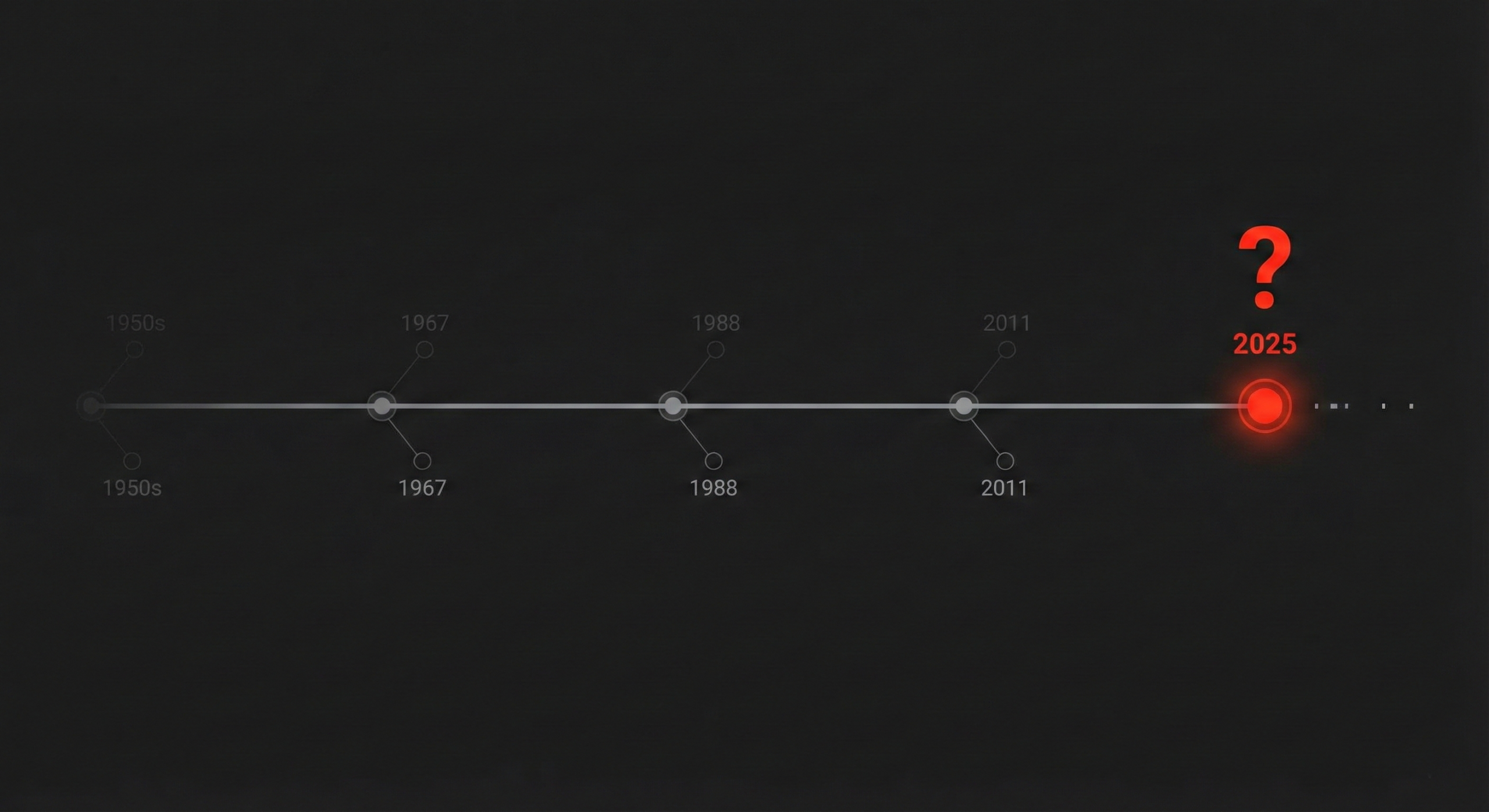
BANT – the qualification framework your manager demands you use – was created in the 1950s. Eisenhower was president. Alaska wasn’t a state. Buyers had zero independent access to product information.
SPIN Selling was published in 1988. Email didn’t exist in business. The internet was a military research project. Buyers relied entirely on salespeople for product information.
The Challenger Sale arrived in 2011. LinkedIn had 100 million users versus over 1 billion today. Cold email response rates were 10-15% versus today’s 5.8%.
These weren’t bad methodologies. They were brilliant – for their era. But the era has changed. And the playbook hasn’t.
The Archaeology of Your Playbook
Every major sales methodology still in wide use was built for a world where sellers controlled information.
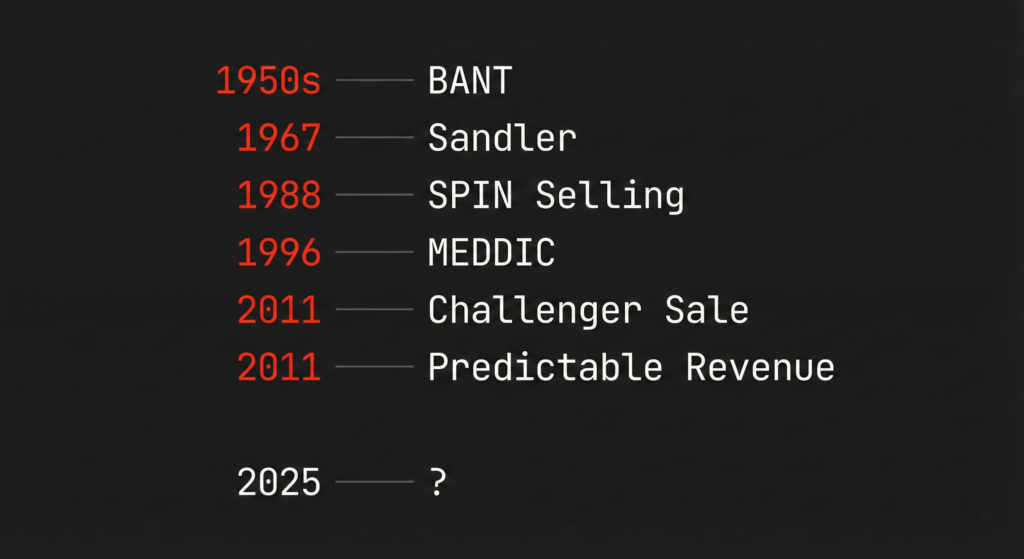
BANT (1950s)
Created by IBM when salesmen wore fedoras and carried briefcases. BANT assumes buyers will volunteer their budget, authority, need, and timeline to a stranger who calls them.
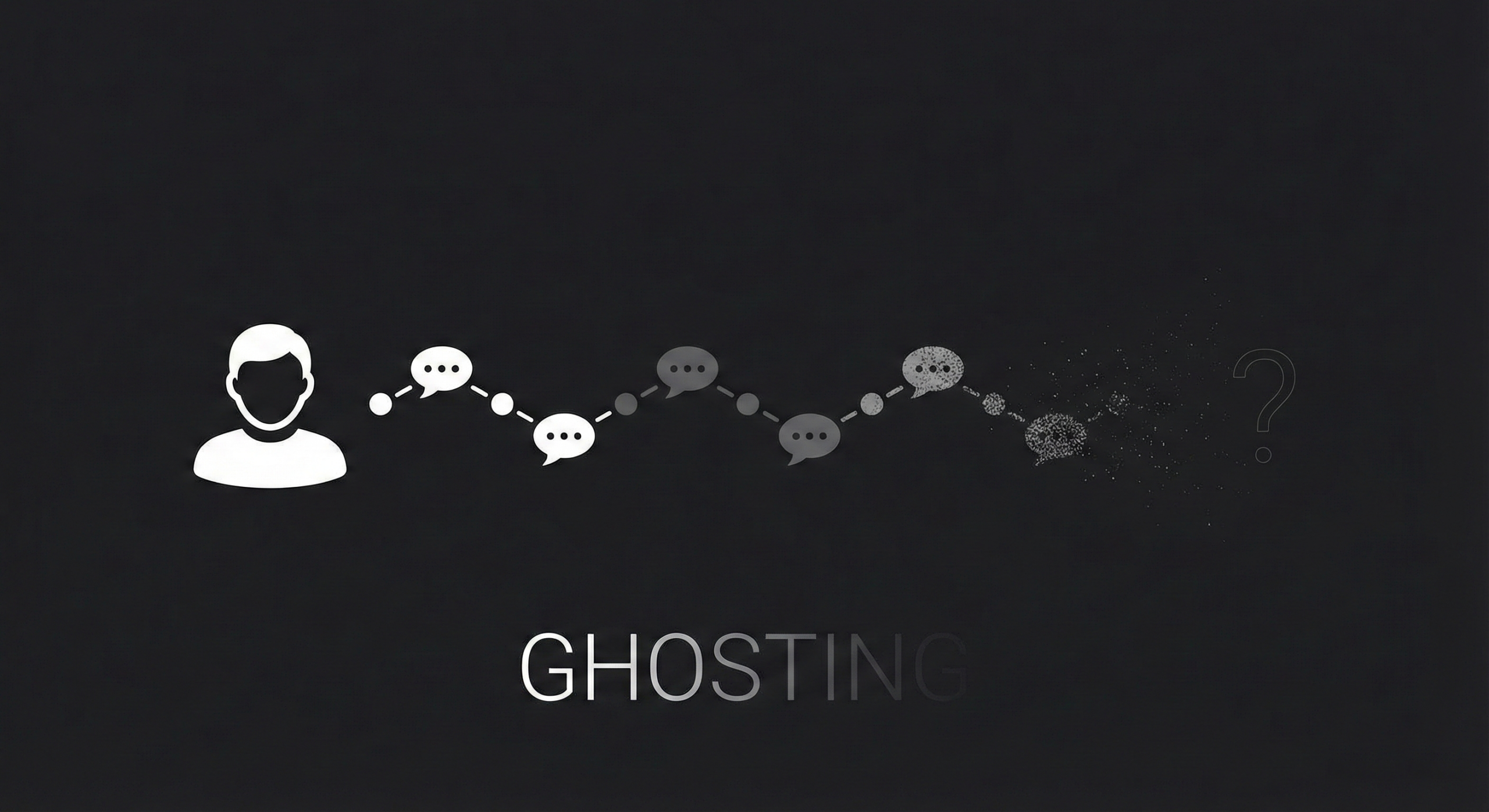
In 1955, when salespeople were the only source of product information, buyers had no choice but to engage. In 2025, asking “What’s your budget?” in a first call is the fastest way to get classified as a vendor and ghosted.
Sandler Selling (1967)
Developed the year of the first Super Bowl, before humans walked on the moon. The “pain funnel” was designed for an era when buyers had no internet, no peer reviews, no way to research solutions independently.
The pain funnel worked because buyers genuinely needed salespeople to help them understand their problems. Today’s buyer has already diagnosed their pain. They’ve read the G2 reviews. They’ve talked to peers who implemented your competitor. They don’t need your funnel – they need your validation.
SPIN Selling (1988)
Published the year George H.W. Bush was elected and Rain Man won Best Picture. Email didn’t exist in business. Buyers relied entirely on salespeople for product information.
SPIN’s genius was teaching reps to ask questions instead of pitch features. Revolutionary then. Table stakes now. The modern buyer doesn’t need your Situation questions – they’ve already done that research before agreeing to the call.
The Challenger Sale (2011)
Arrived the same year the iPhone 4S launched. The insight was real: “teaching” buyers worked because they still valued vendor expertise they couldn’t get elsewhere.
By 2025, buyers have access to the same analyst reports, peer reviews, and case studies that sellers do. “Teaching” them something they can Google in 30 seconds feels patronizing. They don’t need a teacher. They need a peer who respects that they’ve already done their homework.
What Changed While the Playbook Stayed the Same
The buyer changed. Completely.
According to Forrester, B2B buyers now complete 70-80% of their purchase journey before they ever talk to a salesperson. They’ve read your website, your reviews, your competitors’ case studies. They’ve talked to their network. They’ve formed opinions.
They don’t need you for information. They have more information than your pitch deck.
Gartner’s 2024 research shows that 61% of B2B buyers prefer completing purchases without any sales rep interaction. Not “less” interaction – none.
Meanwhile, the methodologies we’re trained on still assume:
That buyers will answer qualification questions from strangers (BANT)
That buyers need us to diagnose their problems (Sandler)
That buyers need us to explore implications they haven’t considered (SPIN)
That buyers need us to teach them something new (Challenger)
Every one of these assumptions was true in 1988. None of them are reliable in 2025.
The Numbers Don’t Lie
If these methodologies still worked, the numbers would show it. They don’t.
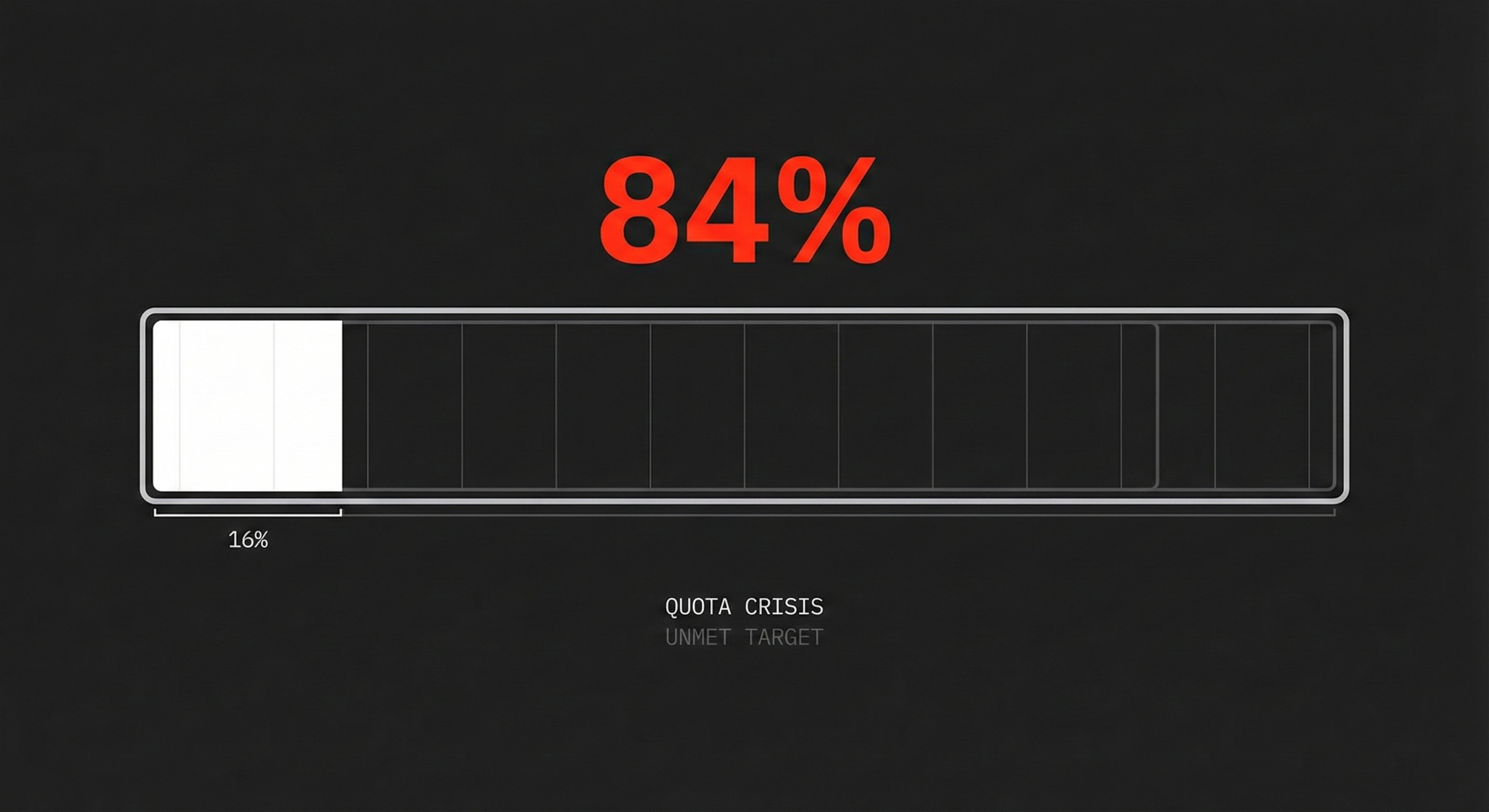
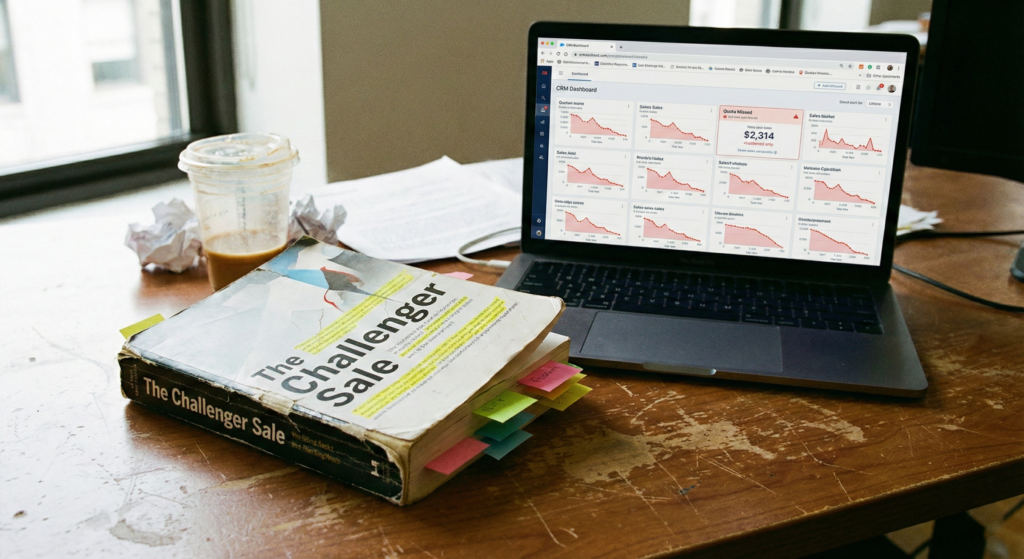
Quota attainment has dropped to 43% (RepVue Q4 2024). Cold email reply rates collapsed to 5.8% (Belkins 2024). Cold call conversion sits at 0.3% dial-to-meeting (Cognism 2024). 73% of buyers actively avoid sales outreach (G2 2024).
In 2010, it took 8 dials to reach a decision-maker. Today it takes 18-25.
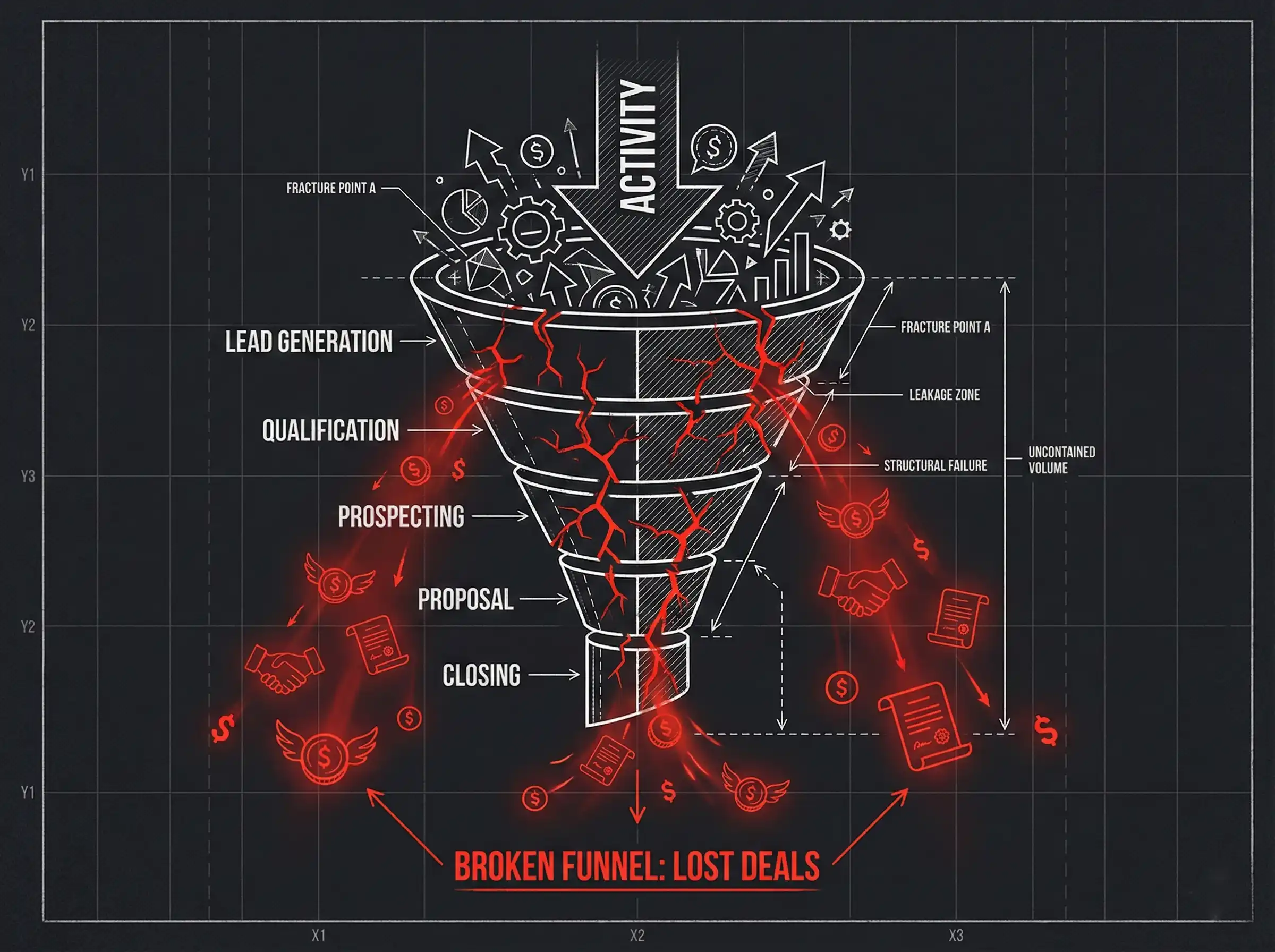
We’re doing 400% more work for the same result. And the response to declining returns has been to demand even more volume.
That’s not a strategy. That’s a symptom.
The Core Problem: Push in a Pull Era
Every methodology on that list shares the same fatal assumption: the seller pushes, and the buyer responds.
BANT pushes qualification questions. The buyer gives guarded answers.
SPIN pushes implication questions. The buyer feels manipulated.
Challenger pushes insights. The buyer feels lectured.
In every case, the seller owns the narrative. The math. The logic. The urgency.
The buyer owns nothing. So they commit to nothing.
That’s why 60% of deals end in “no decision.” Not because buyers chose a competitor – because they chose nothing. They never owned enough of the process to commit to any outcome.
What Needs to Change
The methodologies of the past weren’t wrong. They were right – for a world where sellers had information advantages over buyers.
That world is gone.
What replaces it isn’t more pushing. It’s inverting the entire dynamic.
Instead of pushing qualification questions, let buyers qualify themselves.
Instead of pushing implications, help buyers quantify their own cost of inaction.
Instead of pushing insights, earn peer status by demonstrating you’ve done your homework.
Instead of pushing for commitment, create conditions where buyers pull toward decision.
The question isn’t which methodology is “right.” The question is which methodology fits the physics of today’s market.
More on that soon.
The Best Closers Don't Close.
They create the conditions for buyers to close themselves. The book shows you how.
Instant access. No spam. Unsubscribe anytime.