“Let me show you what our platform can do.”
With those eight words, you just killed your deal.
Not visibly. The prospect will sit through your 45-minute feature tour. They’ll nod at the right moments. They’ll say “that’s really cool” when you show them the dashboard. They might even ask a few questions.
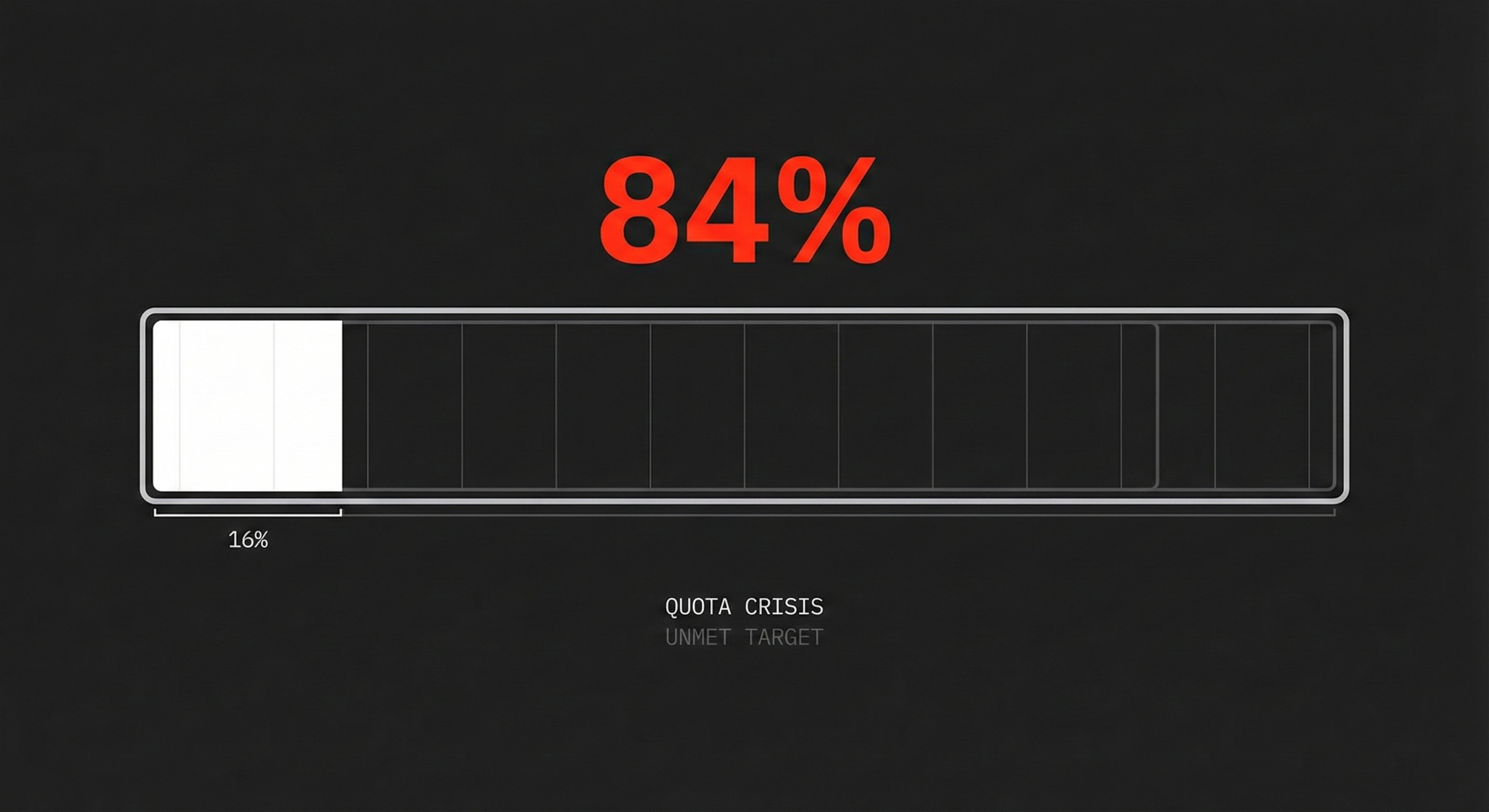
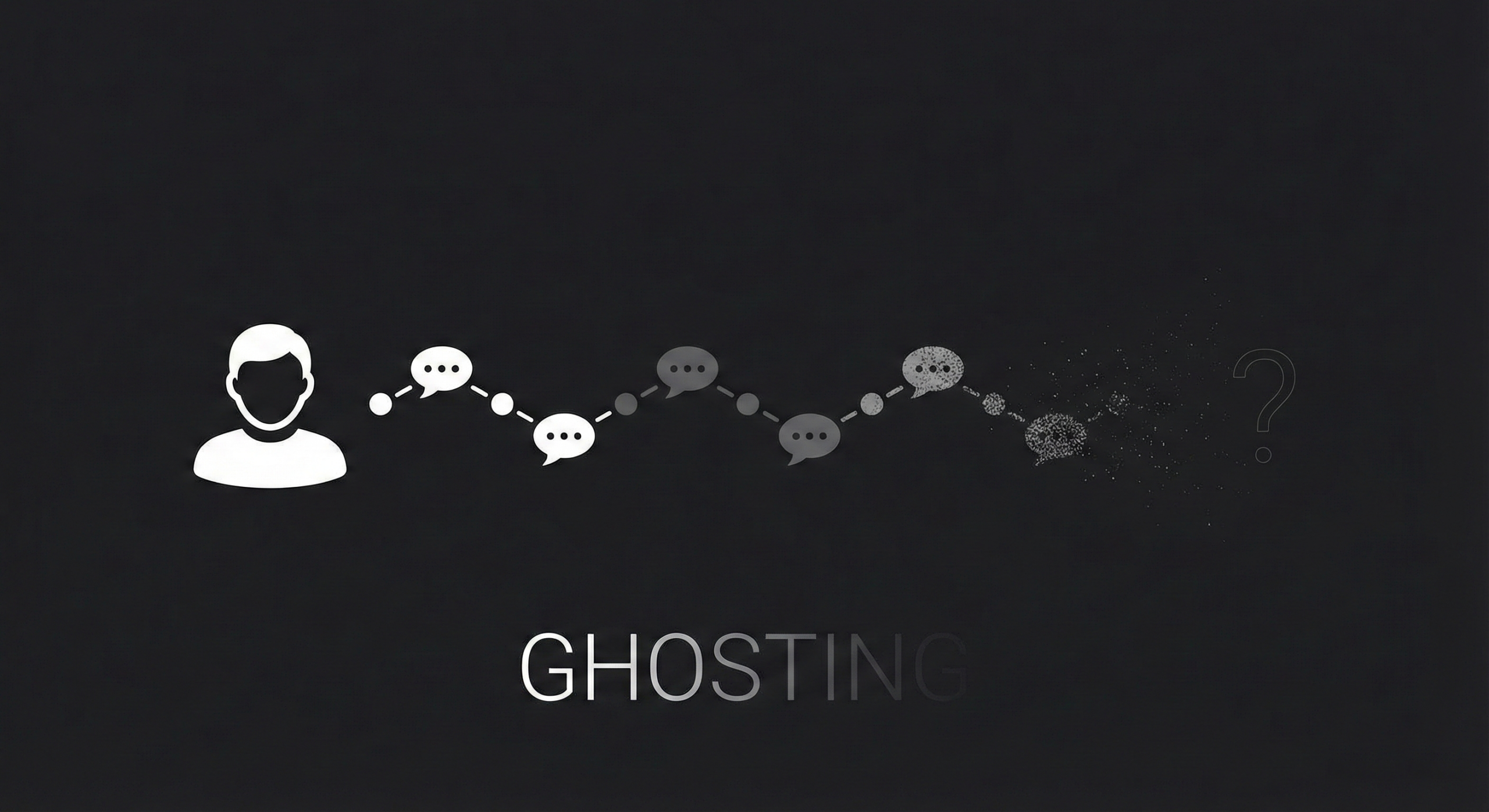
Then they’ll go dark. Or they’ll ask for “more time to think about it.” Or they’ll loop in someone else who “needs to see this” – which means you’ll give another demo to another person who will also go dark.
Your demo didn’t fail because your product is bad. It failed because the demo itself is broken.
The Performance Trap
Watch what happens the moment a demo begins.
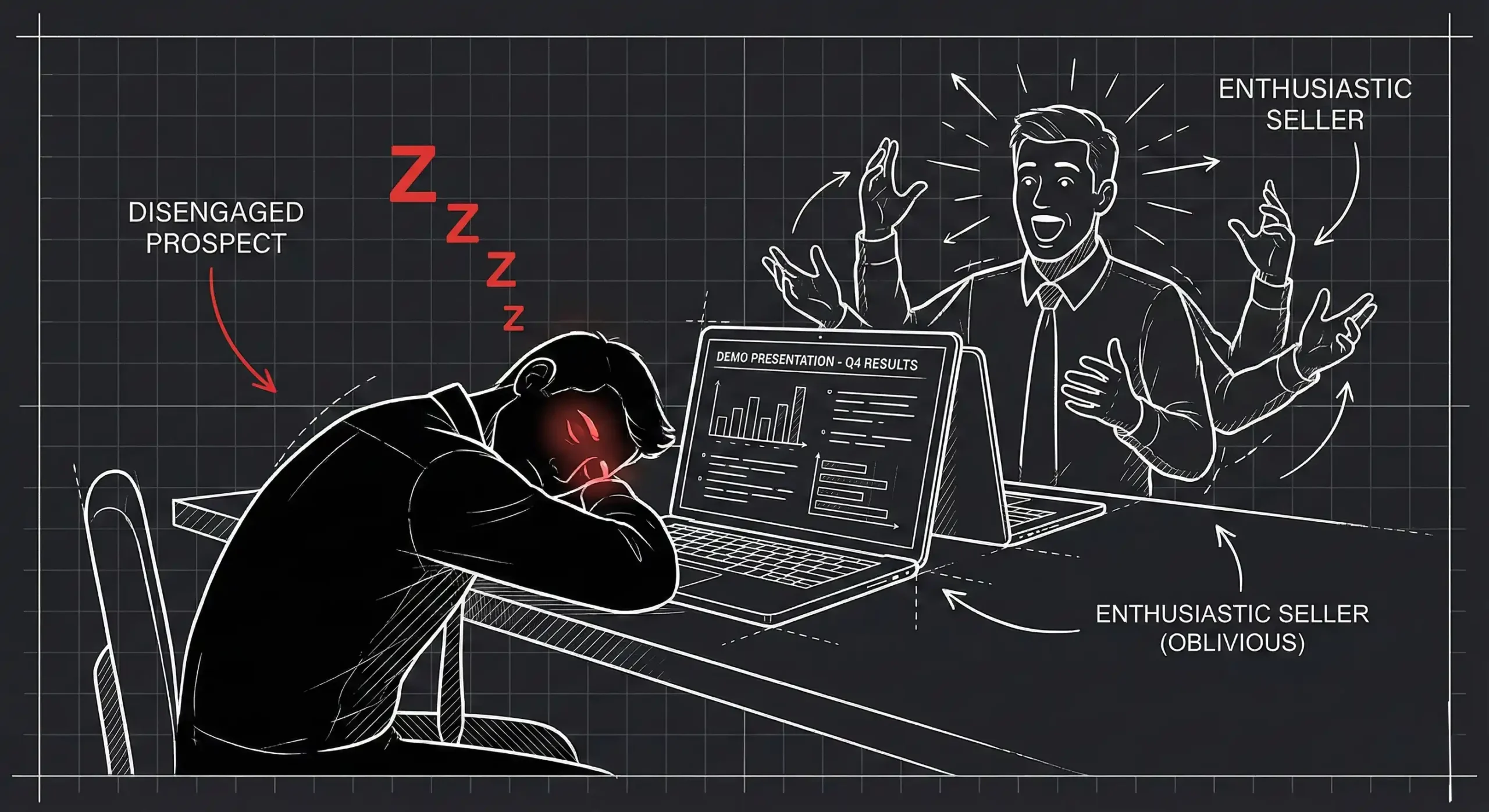
The seller shares their screen. The buyer leans back. The dynamic shifts completely – the seller becomes a performer, the buyer becomes an audience. The seller talks, the buyer watches. The seller hopes for applause, the buyer waits for it to end.
This is backwards. In every other part of the sales process, you’re trying to get the buyer to talk. You’re asking questions. You’re listening. You’re letting them articulate their pain.
Then you get to the demo and suddenly you’re doing a one-person show.
Gong’s research on 300,000+ sales calls found that top performers maintain a talk ratio where the buyer speaks 43% of the time or more. But in demos? Most sellers flip to 80%+ talk time. The buyer becomes passive exactly when you need them most engaged.
You’ve trained them to watch instead of participate. And watchers don’t buy.
The Feature Parade Problem
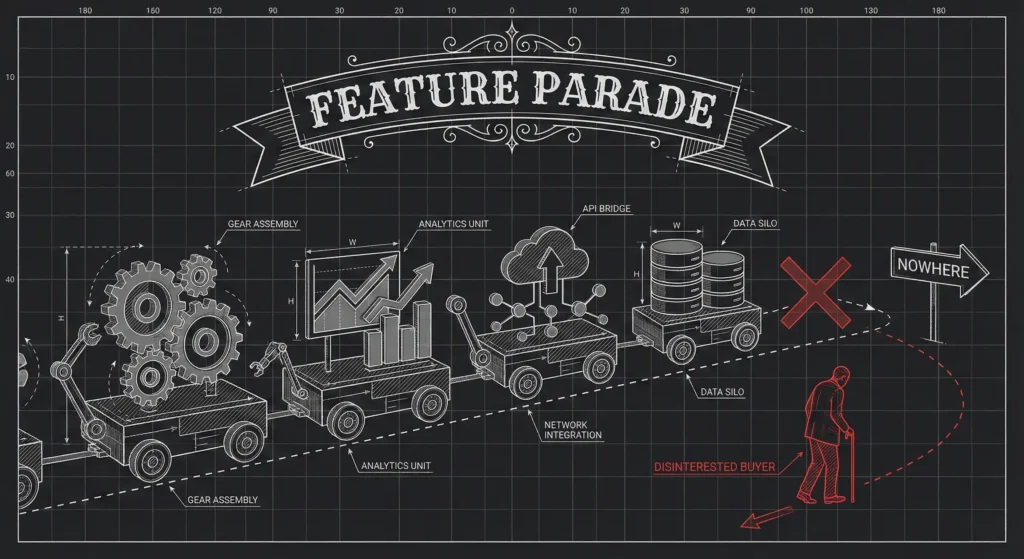
Here’s how most demos go:
“So this is the main dashboard. As you can see, you can customize these widgets. Let me show you the reporting module – you can run any report you want, export to Excel, schedule automated delivery. Now let me show you the integrations – we connect with Salesforce, HubSpot, Marketo…”
Feature. Feature. Feature. Capability. Integration. Feature.
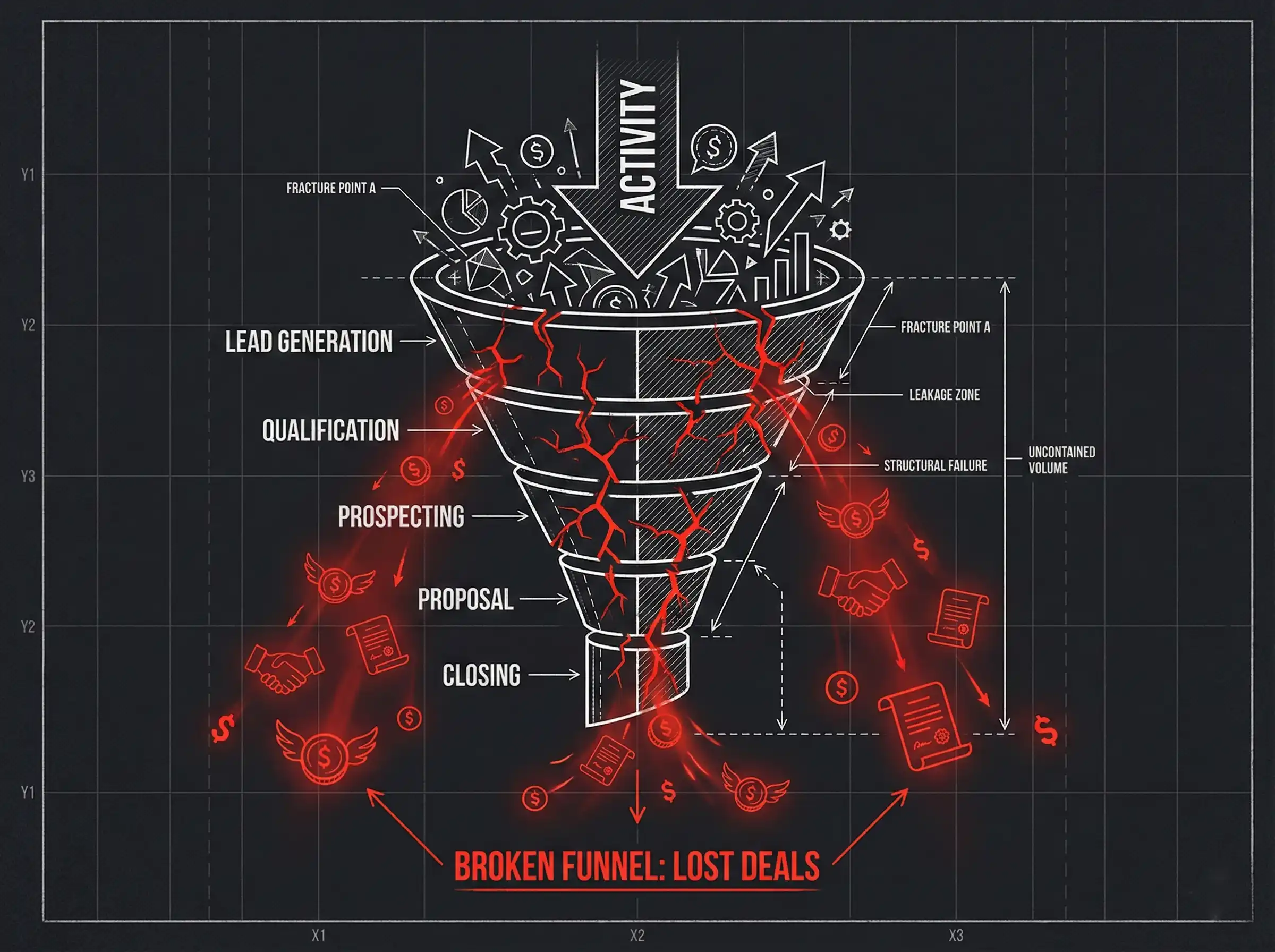
You’re showing them what your product can do. You’re not showing them what they’re losing by not having it.
This is the fundamental error. Features appeal to logic. Losses appeal to emotion. And buying decisions – especially complex B2B decisions – are driven by emotion far more than logic.
When you parade features, you’re asking the buyer to do the mental work of connecting each capability to their specific pain. Most won’t bother. They’ll nod politely and forget 90% of what you showed them within an hour.
The features that matter to them are buried in the features that don’t. And you have no idea which are which because you’re too busy performing to ask.
The Premature Demo
The most common demo mistake happens before the demo even starts: doing it too early.
Prospect fills out a form. SDR qualifies them. AE schedules a demo. Demo happens on the second or third call.
But here’s the question nobody asks: Has the buyer actually articulated their pain? Not “what are your challenges” pain – that’s surface level. Have they quantified what this problem is costing them? Have they admitted that the status quo is unbearable?
If not, your demo is a solution looking for a problem.
You’re showing them a cure before they’ve accepted they’re sick. And people who don’t think they’re sick don’t buy cures. They say “this is really impressive” and then do nothing.
A demo without established pain is just a product tour. Product tours create interest. They don’t create urgency.
The Generic Demo Death Spiral
“I’ll tailor this to your needs.”
Every seller says this. Almost none actually do it.
What they mean is: “I’ll mention your company name a few times and skip the features that obviously don’t apply to you.”
That’s not tailoring. That’s a generic demo with a thin coat of personalization paint.
A truly tailored demo would only show the three or four capabilities that directly address the specific pain the buyer articulated. It would use their language, their numbers, their scenarios. It would feel like you built the product specifically for their problem.
But that requires actually knowing their problem. Which requires discovery. Which requires the buyer to talk. Which doesn’t happen because you’re too busy performing your feature parade.
The generic demo creates a death spiral: You don’t know enough about their pain, so you show everything. Showing everything bores them. Bored buyers don’t engage. Non-engaged buyers don’t share information. So your next demo is equally generic. Repeat until the deal dies.
What Buyers Actually Remember
Here’s what your buyer remembers after your 45-minute demo:
Almost nothing.
Research on information retention shows that people forget 50% of new information within an hour and 90% within a week. Your feature parade is literally designed to be forgotten.
You know what they do remember? How you made them feel. Whether they felt understood. Whether you seemed like someone who got their problem.
They remember moments when they thought “yes, that’s exactly my situation.” They remember the one feature that made them lean forward. They remember when you articulated their pain better than they could.
None of that happens in a feature parade. All of that happens in a conversation.
Your demo shouldn’t be a presentation. It should be a diagnosis with visual aids.
The Demo That Doesn’t Kill
So what does a demo that actually works look like?
First, it happens later. Not on the second call. After you’ve established real pain. After the buyer has quantified what the problem is costing them. After they’ve admitted the status quo is unacceptable.
Second, it’s short. Twenty minutes, not forty-five. You’re showing three things, not thirty. Every minute you add is a minute the buyer spends passively watching instead of actively engaging.
Third, it’s interactive. You’re asking questions throughout. “Is this how you’d use it?” “Does this match the scenario you described?” “What would this change about your Tuesday morning?” The buyer talks as much as you do.
Fourth, it’s anchored to their pain. You don’t show features. You show how their specific problem gets solved. “You mentioned you’re losing four hours a week to manual reporting – here’s where that goes to zero.”
Fifth, it ends with consequences, not features. “So if you had this starting next month, what happens to that $200K problem you quantified?” Make them articulate the value. Make them own the math.
The Uncomfortable Truth
Most sellers love demos.
It’s the part of the job where they get to show off. Where they feel in control. Where they can impress people with how well they know the product.
But here’s the uncomfortable truth: Your demo is often more about your ego than their problem.
You want to show them everything because you’re proud of everything. You want to talk because talking feels like progress. You want to perform because performing feels like selling.
It’s not. Selling is helping the buyer convince themselves. And they can’t convince themselves while they’re watching you perform.
The best demo is the shortest one. The one where the buyer does half the talking. The one where you show them their own pain reflected back and let them realize they can’t live with it anymore.
That’s not a demo. That’s a diagnosis. And diagnoses close deals.
Feature parades kill them.
What If Everything You Were Taught Is Backwards?
Push harder, they retreat. Follow up more, they disappear. There's a physics to this.
Instant access. No spam. Unsubscribe anytime.