Chris Voss spent 24 years as an FBI hostage negotiator. He talked people out of bank robberies, kidnappings, terrorist situations. Life and death stakes, with no room for error.
Then he wrote a book called “Never Split the Difference” and started teaching negotiation to business people. I picked it up expecting tactical tips. What I got was a framework that changed how I think about objections.
The Accusation Audit
The technique that hit me hardest is what Voss calls the Accusation Audit.
The idea is simple: before the other person can voice their concerns about you, you voice them first. You name every negative thing they might be thinking.
“You’re probably thinking we’re too expensive.” “You might be worried that we’re too small to handle your scale.” “I’m sure you’re concerned about our lack of experience in your specific industry.”
It sounds insane. Why would you arm the other side with objections? Why would you highlight your weaknesses before they even mention them?
Because, Voss argues, they’re already thinking it. The concerns exist whether you name them or not. By naming them first, you change the dynamic entirely.
Why It Works
Voss developed this technique in hostage situations. Imagine you’re negotiating with someone holding hostages in a bank. They’re scared, desperate, expecting the worst from law enforcement.
If you come in with reassurances – “We just want to help, we’re on your side” – they don’t believe you. Their defenses go up. They’ve heard that before.
But if you open with: “You probably think we’re going to storm in there and someone’s going to get hurt. You’re thinking we don’t care about you, that we just want this over. You might even be thinking there’s no way this ends well for you.”
Something shifts. By articulating their fears, you demonstrate that you understand them. You take the words out of their mouth. And paradoxically, by naming the negative, you defuse it.
The neuroscience backs this up. When we feel understood – when someone accurately labels our emotional state – activity in the amygdala (the brain’s threat detector) decreases. The fight-or-flight response calms.

The Sales Application
Think about your typical sales conversation. The buyer has concerns. They’re worried about price, about implementation risk, about whether you’ll deliver what you promise. They’ve been burned by vendors before.
Normally, these concerns lurk beneath the surface. They come out as objections later – or worse, they never come out at all, and the deal just dies silently.
What if you named them upfront?
“Before we go further, I want to acknowledge some things you might be thinking. We’re probably more expensive than other options you’re looking at. Our company is newer, so you might be wondering if we’ll be around in five years. And since you’ve never worked with us, you have no real reason to trust that we’ll deliver. Am I reading that right?”
I’ve tried this. The reaction is almost always the same: a slight relaxation. A moment of surprise. And then – often – they start arguing with you.
“Well, price isn’t really the main concern…” “Actually, being newer might be an advantage for what we need…” “I’ve heard good things about your team from colleagues…”
By naming the negatives, you take ownership of them. And when you own them, the buyer doesn’t have to attack with them.
The Connection to Other Research
Voss’s technique connects to research I’ve been reading about elsewhere.
Elliot Aronson’s Pratfall Effect shows that competent people become more likable when they admit flaws. The Accusation Audit is essentially a weaponized pratfall – strategic vulnerability.
Brehm’s Reactance Theory shows that when people feel pushed, they push back. The Accusation Audit removes the push. There’s nothing to fight against when you’ve already conceded the point.
And there’s research on conflict de-escalation showing that immediate agreement with a criticism reduces subsequent aggression by 47% compared to immediate defense. You can’t fight someone who agrees with you.
When Not To Use It
I’ve learned there are limits.
The Accusation Audit works when the concerns are real and the buyer is already thinking them. If you name concerns they hadn’t considered, you’re just planting seeds of doubt.
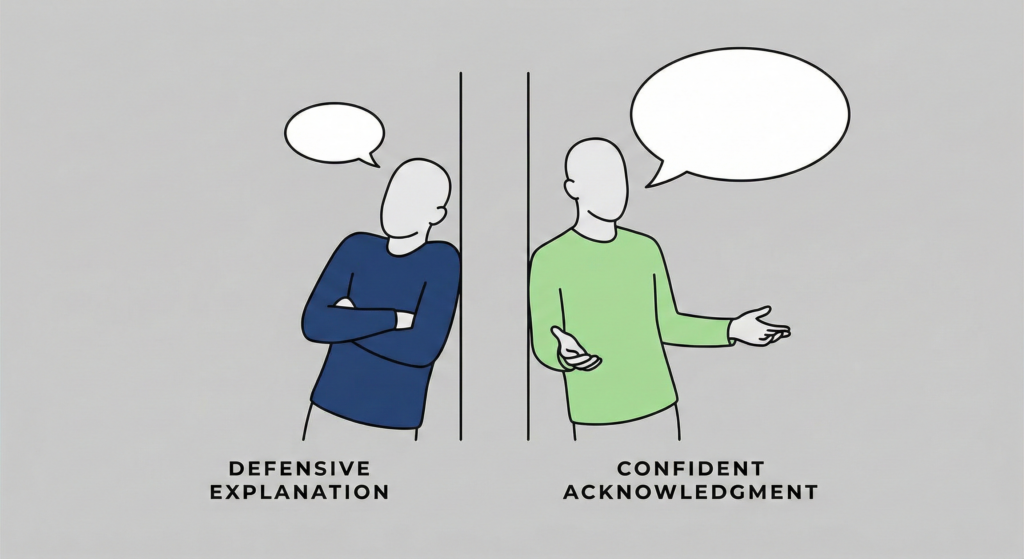
It also requires genuine confidence. If you name your weaknesses and then seem desperate to explain them away, you just look insecure. The power is in naming them and then being okay with them – even agreeing with them.
“You’re right, we’re expensive. We’re not for everyone. If budget is the primary driver, we’re probably not the right fit.” That’s different from “We’re expensive but let me explain why we’re worth it…” The first is confident. The second is defensive.
What Voss Understood
Chris Voss negotiated with people who had nothing to lose, who were desperate, who held all the power in the moment. He couldn’t force compliance. He couldn’t overwhelm them with arguments.
All he had was psychology. Understanding how humans actually work under pressure. What makes them feel heard. What defuses their defenses.
In a weird way, that’s a lot like sales. You can’t force a buyer to purchase. You can’t overwhelm them into saying yes. All you have is your understanding of how they think and feel.
The Accusation Audit is one tool. But the underlying principle is bigger: get ahead of the negative. Don’t wait for objections – surface them. Don’t hide your weaknesses – name them.
It feels like it should kill deals. Instead, it builds the trust that closes them.
This Post Hit a Nerve?
Join the waitlist if you've been asking similar questions. Or if this made you start asking them.
Instant access. No spam. Unsubscribe anytime.