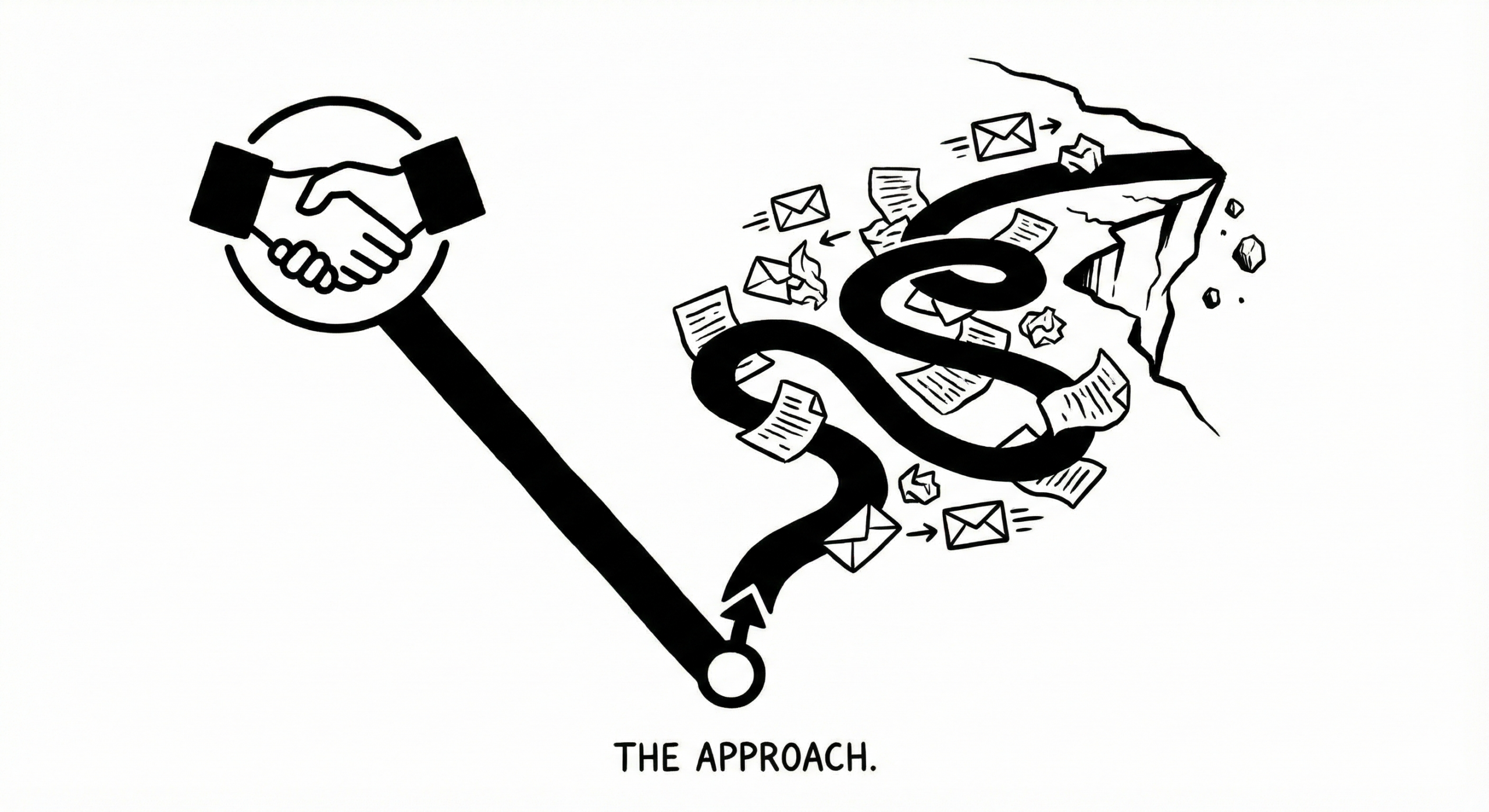
I’ve been staring at two deals in our CRM for the past hour.
Both started in January. Similar company size. Similar industry. Same product, same pricing, same competitive landscape.
Deal A closed three weeks ago. Six-figure contract. Champion is already asking about expanding.
Deal B died yesterday. Four months of work. Dozens of calls. A pilot that went well. And then… “we’ve decided to hold off for now.”
I pulled the call recordings. I read every email. I’m trying to figure out what the hell happened.
Deal A: What the Rep Did
Sarah worked Deal A. She’s been on my team for two years. Solid rep, not flashy.
First call, she asked a question I’ve never heard her ask before: “What’s this problem costing you right now? Not what could you gain – what are you actually losing every month this doesn’t get fixed?”
The buyer paused. Then spent fifteen minutes doing math out loud. Calculating the cost of the status quo. By the end of the call, he knew exactly what inaction was costing him: $47,000 a month in lost productivity and missed opportunities.
Sarah didn’t pitch after that. She just said, “That’s a big number. What do you want to do about it?”
He drove the rest of the process. Asked for a proposal. Pushed his CFO to prioritize budget. Closed in three weeks.
Sarah’s total outbound emails after the first call: four.
Deal B: What the Rep Did
Marcus worked Deal B. He’s one of my most experienced reps. Great closer. Historically high numbers.
First call, he ran a textbook discovery. Pain points, decision process, timeline, budget. All the right questions. Then he moved into a demo and showed all the ways our product would improve their operations.
The buyer seemed interested. Said the right things. Agreed to a pilot.
The pilot went great. Usage was strong. Feedback was positive.
Then the deal stalled. Marcus followed up. And followed up. And followed up. He sent case studies. ROI calculators. Customer references. He called. He emailed. He LinkedIn messaged.
The buyer went progressively quieter. Responses got shorter. Meetings got rescheduled.
Yesterday: “We’ve decided to hold off.”
Marcus’s total outbound emails after the first call: thirty-one.
The Difference I Can’t Ignore
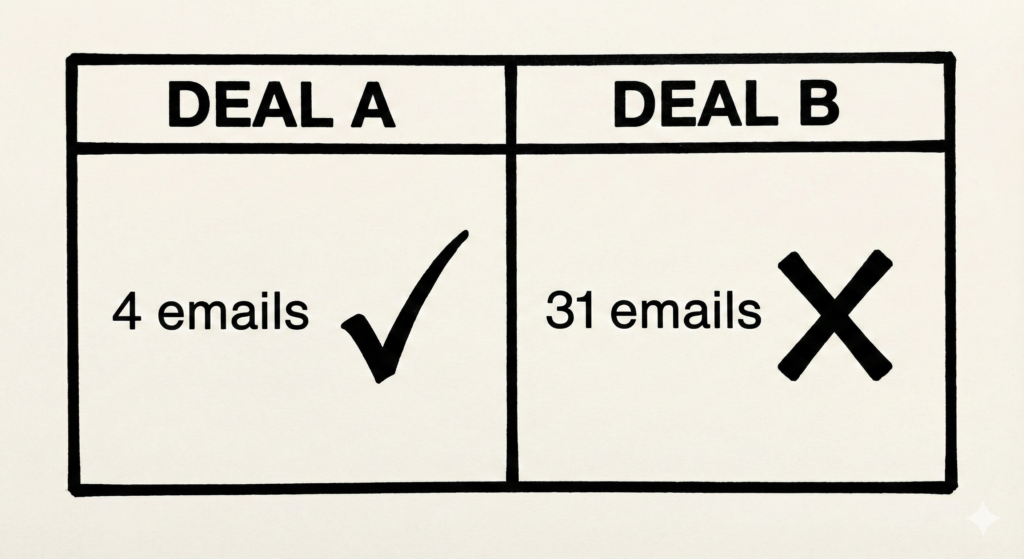
Same product. Same price. Same market.
One closed in three weeks with four follow-up emails.
One died after four months with thirty-one follow-up emails.
The difference wasn’t the product or the buyer or the timing.
The difference was the frame.
Sarah helped her buyer calculate his losses. He owned the math. He felt the pain of inaction. He drove the process because he was running away from a loss, not toward a gain.
Marcus pitched gains. Better operations. Improved efficiency. All the things we’re trained to pitch. The buyer nodded along, but he never felt the cost of not buying. So when it came time to prioritize, there was no urgency. No pain. Nothing driving him forward.
And the more Marcus pushed, the more the buyer pulled back. Thirty-one emails. Each one adding pressure. Each one triggering resistance.
What I’m Learning
I keep coming back to the research I’ve been reading. Loss aversion. Reactance. The inverse relationship between seller effort and buyer engagement.
These two deals are a case study in all of it.
Sarah used loss. Low effort. Buyer drove the process. Closed.
Marcus used gain. High effort. Seller drove the process. Lost.
I’m not ready to say this is a universal law. Two deals isn’t a statistically significant sample. But it’s consistent with everything else I’ve been seeing.
And it’s making me rethink how I coach my team.
What if the answer isn’t better follow-up? What if the answer is less follow-up, but a different first conversation?
I need to test this more. But I’m starting to think the battle is won or lost in how we frame the problem – not in how hard we chase the solution.
Still Asking the Same Questions?
Join the waitlist if you want to know when the questions finally become answers. Or at least better questions.
Instant access. No spam. Unsubscribe anytime.