Think about your last vacation. Not the whole trip – just what comes to mind when you remember it. Chances are, you’re not recalling a representative average of every moment. You’re remembering a highlight – maybe a perfect sunset, an incredible meal, or an unexpected adventure. And you’re remembering how it ended – the flight home, the last dinner, the goodbye.
Now think about a deal you lost. Same pattern. You don’t remember every meeting, every email, every call. You remember the moment it fell apart. And you remember the last interaction – probably an unreturned voicemail or an email that went dark.
This isn’t coincidence. It’s a cognitive bias so powerful that it determines how humans evaluate nearly every experience they have. And it has devastating implications for how sales cycles are remembered – by both the seller and the buyer.
Kahneman’s Discovery
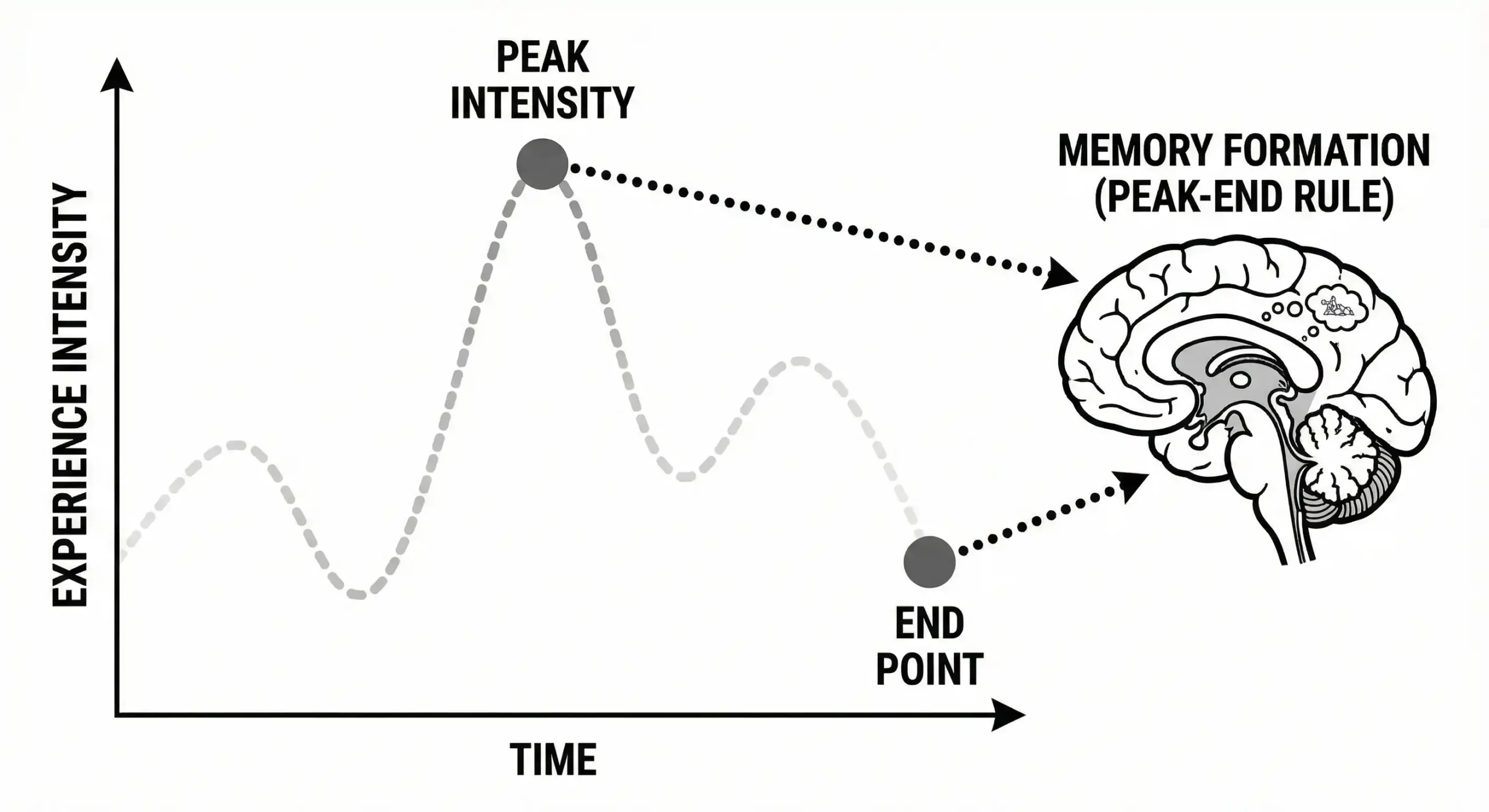
In the 1990s, Nobel laureate Daniel Kahneman and his research partner Barbara Fredrickson conducted a series of experiments that would reshape our understanding of human memory and decision-making. Their findings coalesced into what Kahneman called the Peak-End Rule: people judge experiences not by their totality, but by their most intense moment (the peak) and their final moment (the end).
The most famous experiment involved colonoscopies – a procedure nobody enjoys. Patients were randomly assigned to two groups. Group A had a standard procedure. Group B had the same procedure, but with an additional period at the end where the scope remained in place without moving – uncomfortable, but less painful than the active examination.
Group B’s procedure was objectively longer and involved more total discomfort. Yet they rated it as significantly less unpleasant than Group A. More remarkably, they were more willing to return for future procedures. The less painful ending overwrote the memory of the entire experience.
Kahneman’s research, detailed in his book Thinking, Fast and Slow, revealed that this isn’t a minor quirk – it’s how human memory fundamentally operates. As research from Princeton’s psychology department has demonstrated, the “experiencing self” and the “remembering self” are different systems. And it’s the remembering self that makes future decisions.
The Two Selves in Every Deal
Kahneman distinguished between two modes of experience. The “experiencing self” lives in the present – it feels every moment of a sales cycle, every meeting, every email exchange. The “remembering self” constructs the narrative afterward – it decides what the experience meant and whether to repeat it.
Here’s the problem: buying decisions are made by the remembering self, but sales processes are designed for the experiencing self.
We obsess over every touchpoint. We optimize discovery calls. We polish demos. We craft follow-up sequences. We treat every interaction as equally weighted because that’s how we experience delivering them.
But that’s not how buyers remember them. The buyer’s remembering self collapses a six-month sales cycle into two data points: the most emotionally intense moment and the final interaction. Everything else fades into cognitive background noise.
How Sales Cycles Actually End

Consider how most B2B sales processes conclude. Not the wins – the losses and the stalls.
The buyer goes dark. Emails go unanswered. Calls go to voicemail. The seller responds with escalating desperation – “just checking in,” “wanted to circle back,” “bumping this to the top of your inbox.” Each message carries a faint odor of panic. Eventually, the seller either gets a terse rejection or simply gives up.
That’s the ending. That’s what the buyer’s remembering self encodes as the final impression of your company, your solution, and you personally.
Now consider the peak. For many deals, the most emotionally intense moment isn’t a positive one. It’s the moment the buyer felt pressured. The moment they sensed they were being manipulated. The moment the seller’s desperation became visible. The moment they realized this “partnership” was actually a transaction where they were the mark.
Your buyer doesn’t remember the entire sales cycle. They remember the worst moment and the last moment. For most deals, those are the same moment – or close enough to merge in memory.
The Compounding Problem
The Peak-End Rule doesn’t just affect individual deals. It shapes market perception.
Every buyer who experiences a negative peak or a desperate ending carries that memory forward. They tell colleagues. They warn peers. They answer vendor review surveys. They remember your company as “those pushy salespeople” or “the ones who wouldn’t stop calling” – not because that characterized the entire experience, but because that’s what the Peak-End Rule selected for storage.
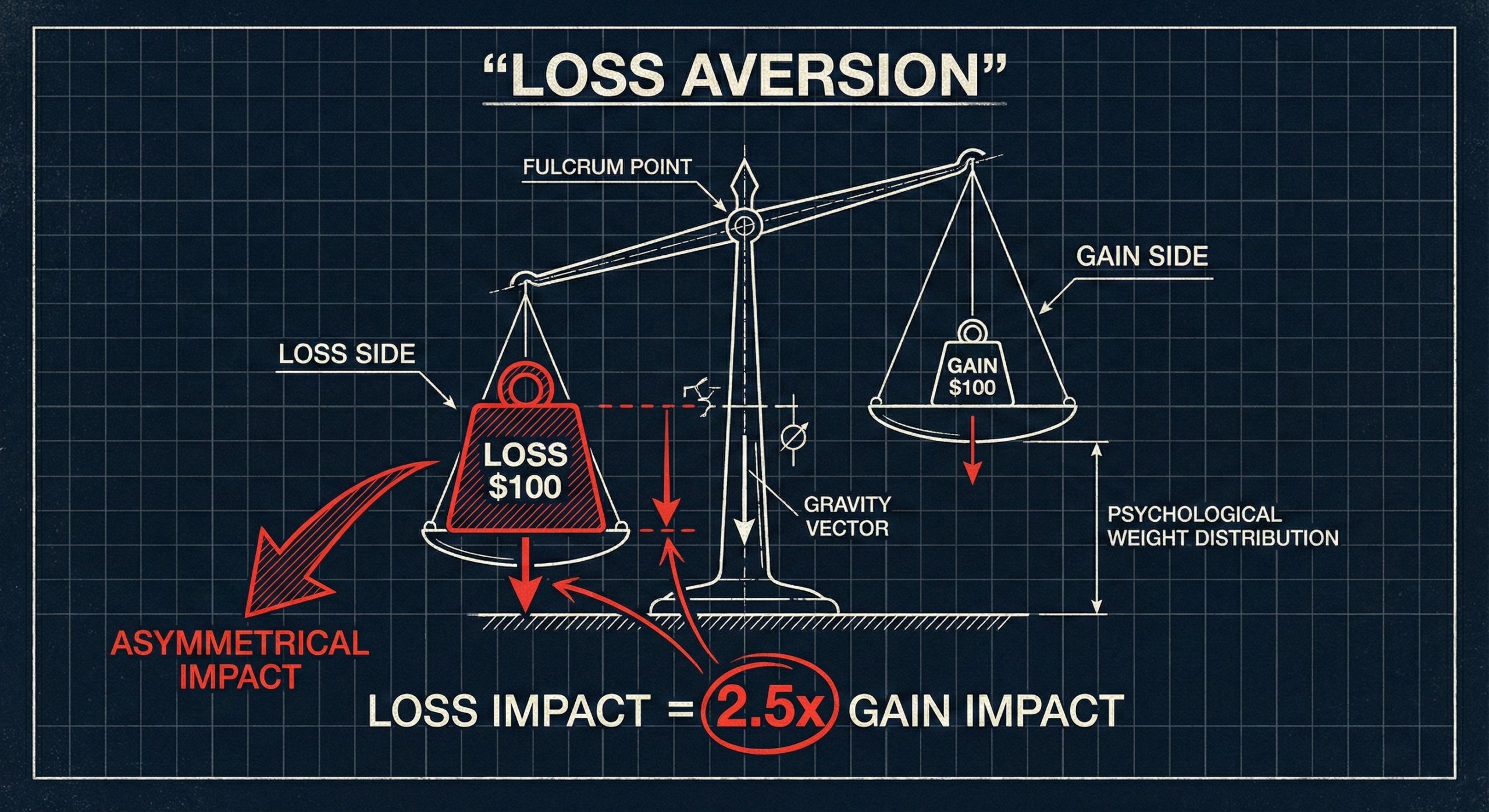
Meanwhile, the wins create their own Peak-End memories. But here’s the asymmetry: negative peaks are usually more emotionally intense than positive ones. Kahneman’s research on loss aversion shows that negative experiences carry roughly twice the psychological weight of positive ones. Your best deals create good memories. Your failed deals create vivid, shareable, warning-sign memories.
This is how brands erode. Not through catastrophic failures, but through thousands of small endings that each encode negative memories in the market’s collective remembering self.
The Duration Neglect Corollary
Kahneman’s research revealed a related phenomenon: duration neglect. The length of an experience has almost no impact on how it’s remembered. A painful experience lasting ten minutes is remembered the same as one lasting thirty minutes – what matters is the peak intensity and the ending, not the duration.
This demolishes a core assumption of traditional sales: that longer engagement equals stronger relationships. “We’ve been working with them for eight months” means nothing if those eight months end badly. The duration doesn’t bank goodwill that can be withdrawn later. The ending overwrites the duration.
It also explains why some short sales cycles outperform long ones – not despite their brevity but because of it. Fewer opportunities for negative peaks. A compressed timeline to the ending. Less time for the relationship to deteriorate into chase-and-avoid dynamics.
The Implication Nobody Wants to Hear
If the Peak-End Rule governs memory, and memory governs future decisions, then most sales processes are engineered to fail.
They create negative peaks through pressure tactics, assumptive closes, and manufactured urgency. They create terrible endings through desperate follow-ups, unanswered sequences, and ghosted relationships. They optimize for the experiencing self while ignoring the remembering self – the one that actually decides whether to buy, refer, or warn others away.
The question isn’t whether the Peak-End Rule affects your deals. The research is conclusive: it does. The question is whether you’re engineering peaks and endings intentionally – or leaving them to chance while you optimize activities that won’t be remembered anyway.
What This Means
Understanding the Peak-End Rule is the first step. It explains patterns that otherwise seem random – why some deals die despite months of positive engagement, why buyers who seemed enthusiastic suddenly go cold, why your brand reputation doesn’t match the effort you put into customer experience.
But knowing the psychology doesn’t automatically fix it. The entire architecture of modern sales – the sequences, the stages, the follow-up cadences – is built without regard for how memories are actually formed. Fixing it requires rethinking the process from the ground up.
That’s the work we’re doing. Join the waitlist to learn what a sales process designed for the remembering self actually looks like.
57% of Reps Miss Quota.
Same training. Same playbook. Same results. Maybe it's not the reps.
Instant access. No spam. Unsubscribe anytime.