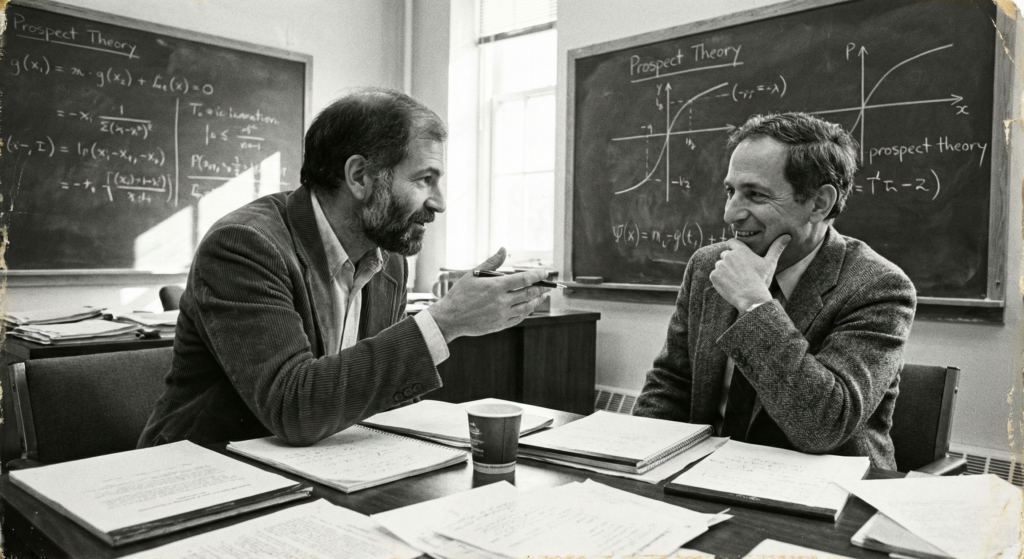
I’ve been reading Daniel Kahneman lately. Specifically his work with Amos Tversky on something called Prospect Theory, which won Kahneman the Nobel Prize in Economics in 2002.
Tversky had died by then – the Nobel isn’t awarded posthumously – but Kahneman has always said the work was equally theirs. They were an unusual pair: Kahneman the pessimist, Tversky the optimist. They spent years arguing in a room together, and what came out changed how we understand human decision-making.
I think it also explains why most sales pitches fail.
The Core Finding
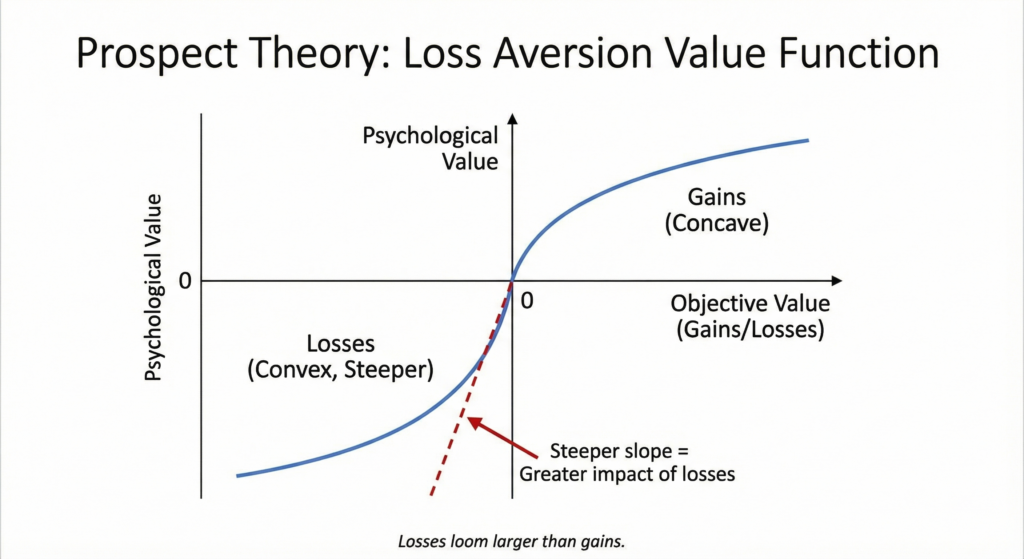
Prospect Theory has a lot of components, but the one that hit me hardest is loss aversion.
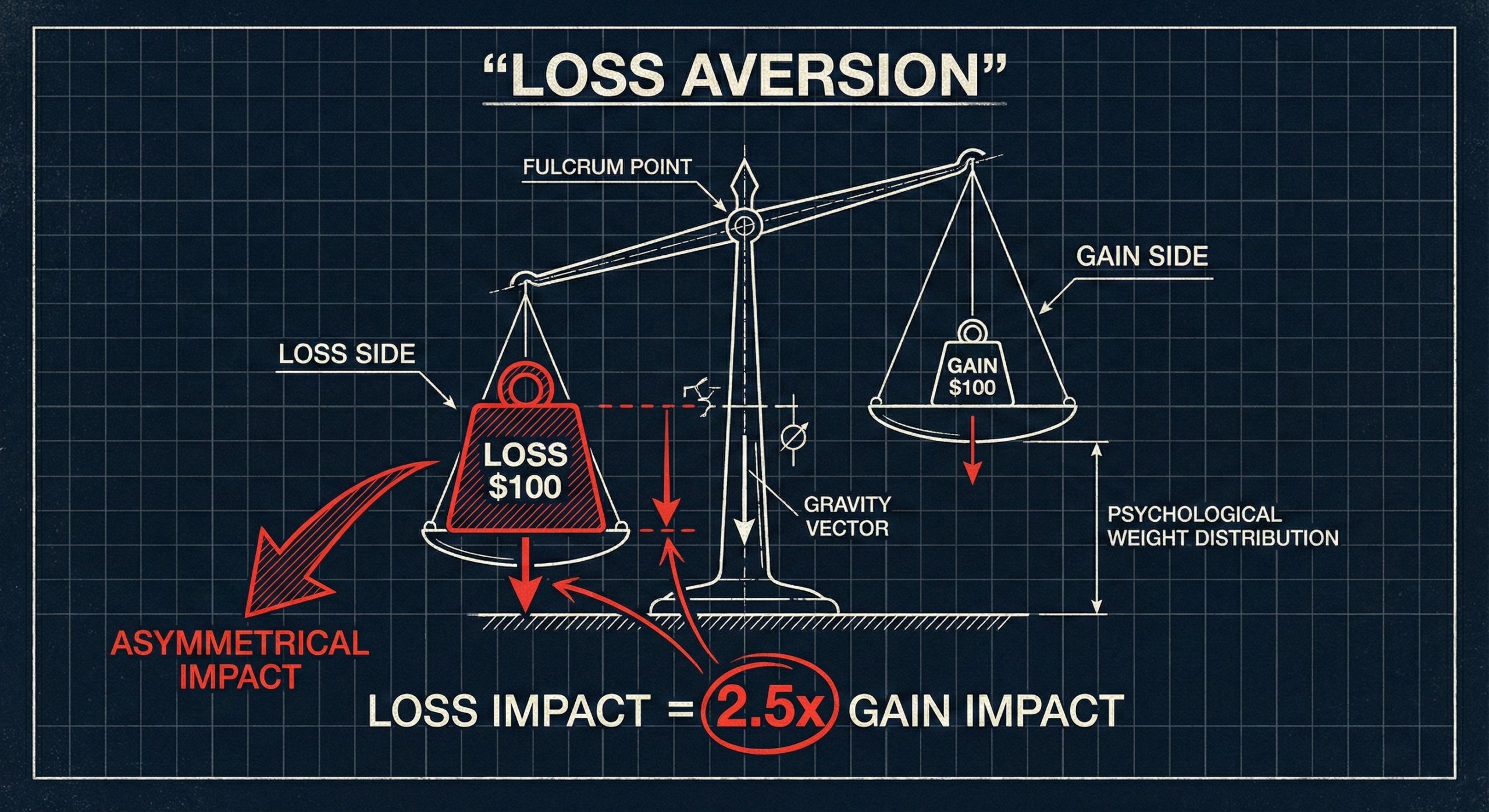
The research shows that humans feel losses about 2 to 2.5 times more intensely than equivalent gains. Losing $100 hurts roughly 2.5 times more than gaining $100 feels good.
This isn’t a minor quirk. It’s fundamental to how the brain processes decisions. We’re wired – evolutionarily, neurologically – to avoid loss more than we’re wired to pursue gain.
Think about what this means for every ROI-focused sales pitch you’ve ever given.
The ROI Problem
Every sales methodology I’ve been trained on focuses on value. Benefits. Return on investment. “Here’s what you’ll gain if you buy our solution.”
We build elaborate ROI calculators. We show them charts projecting revenue increases. We paint pictures of a better future state.
And then the deal stalls. They agree it looks great. They say they’re interested. Then nothing happens.
Kahneman and Tversky explain why: the brain doesn’t process potential gains with urgency. Gains are nice. Gains are hypothetical. Gains can wait.
But losses are immediate. Losses are threatening. Losses demand action.
When you pitch ROI, you’re playing to the weaker motivator.
The Experiment That Proved It
One of Kahneman and Tversky’s classic experiments offered people a choice:
Option A: A guaranteed gain of $450.
Option B: A 50% chance of gaining $1,000 and a 50% chance of gaining nothing.
Most people chose Option A – the sure thing. Even though the expected value of Option B is higher ($500), people preferred certainty when gains were involved.
Then they flipped it:
Option A: A guaranteed loss of $450.
Option B: A 50% chance of losing $1,000 and a 50% chance of losing nothing.
Now most people chose Option B – the gamble. They’d rather risk a bigger loss than accept a certain one.
Same math. Completely opposite behavior. The only difference was the frame: gain versus loss.
What This Means for Selling
I’ve been thinking about this constantly.
If losses motivate 2.5x more than gains, then every conversation I have about benefits is operating at 40% power. I’m using the weak lever.
What if instead of asking “What would you gain by solving this?” I asked “What is this problem costing you right now?”
What if instead of building ROI models, I helped buyers calculate the cost of inaction?
Same math. Different frame. And according to Kahneman and Tversky, completely different psychological impact.
I tried this last week. Instead of walking through our value proposition, I asked the buyer to walk me through what their current problem was costing them – in dollars, in time, in risk, in stress.
The energy in the room was different. They leaned forward. They got specific. They did the math themselves.
It’s one data point. But it felt like something.
The Status Quo Connection
There’s another piece of Kahneman’s work that connects here: the status quo bias.
People prefer their current state to any proposed change, even when the current state is demonstrably worse. The devil you know.
This explains why so many deals die to “no decision.” It’s not that the buyer chose a competitor. They chose to do nothing. Inertia won.
But loss aversion might be the key to breaking the status quo. If you can make the cost of staying put feel more dangerous than the cost of changing – if you can frame inaction as a loss rather than change as a gain – maybe the math shifts.
Still working through this. But the research is compelling.
The Tragedy of Tversky
Amos Tversky died of melanoma in 1996, at 59. He knew he was dying and reportedly spent his final months choosing which projects to complete – another decision-making problem, this one with no good options.
Kahneman has said he thinks about Tversky every day. Their collaboration produced some of the most important research in modern psychology. It changed economics. It should change how we sell.
Most salespeople have never heard of them. We’re still out here pitching ROI like the brain responds to gain and loss the same way.
It doesn’t. The science is clear. And I think that’s something worth building on.
You Were Trained to Fail.
Every methodology, every manager, every metric. The System was built for a buyer who no longer exists.
Instant access. No spam. Unsubscribe anytime.