I’ve spent the last two weeks trying to translate Kahneman and Tversky’s Prospect Theory into something useful for sales.
It’s hard. Academic papers aren’t written for practitioners. There’s a lot of math. A lot of jargon. A lot of “under conditions X, subjects demonstrated behavior Y.”
But I think I’m starting to understand the core ideas. And they’re changing how I think about every deal.
Here’s my first attempt to translate this into sales language.
The Big Idea: Reference Points
Before Kahneman and Tversky, economists assumed people evaluated outcomes in absolute terms. Gain $100, feel good. Lose $100, feel bad. Simple math.
Prospect Theory proved this wrong.
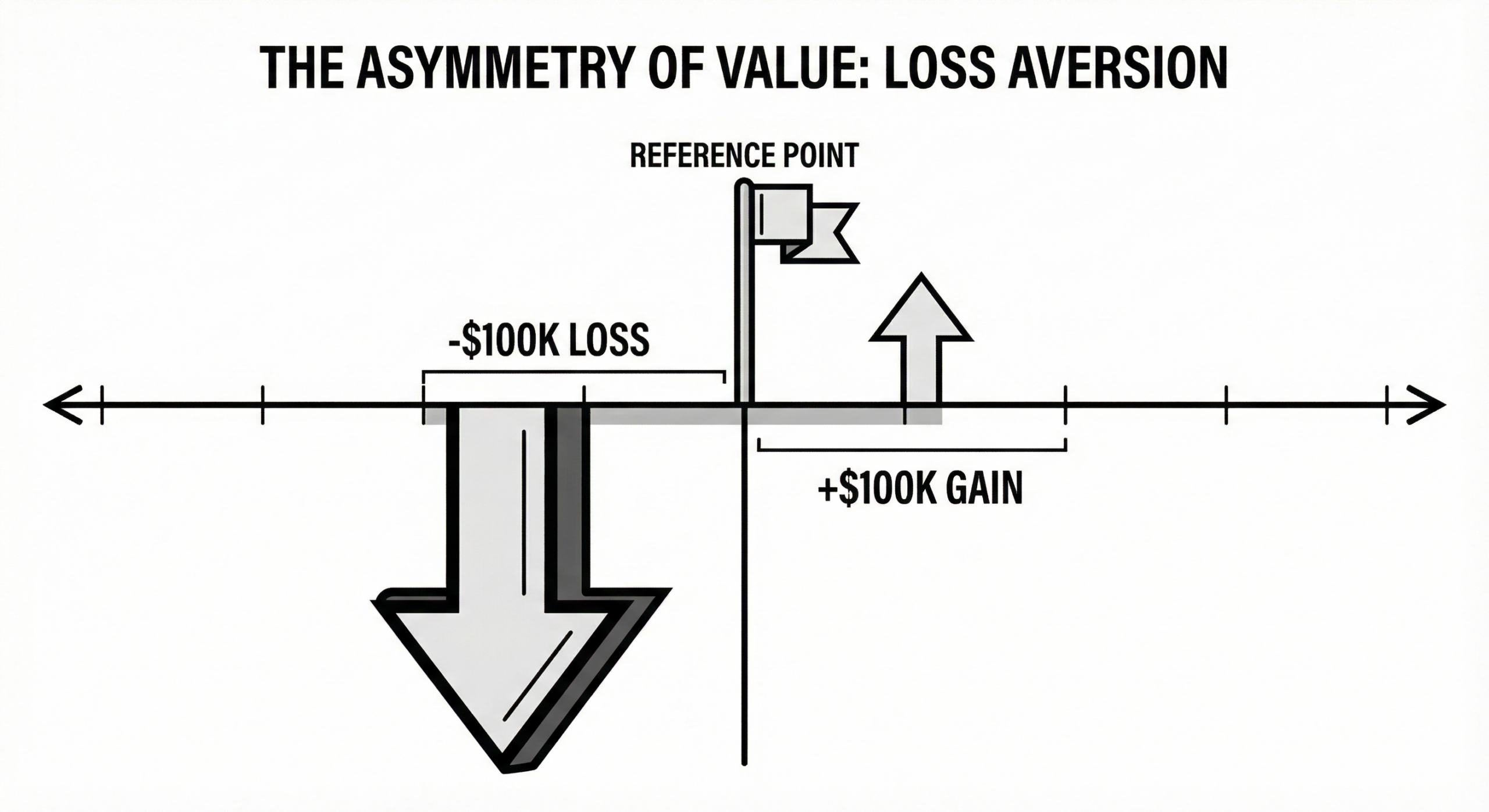
People don’t evaluate outcomes in absolute terms. They evaluate them relative to a reference point – usually their current state or what they expected.
This sounds abstract. Let me make it concrete.
Scenario A: You find $20 on the street. How do you feel? Pretty good, right?
Scenario B: You expected a $100 bonus and got $80. How do you feel? Disappointed. Maybe angry.
In Scenario B, you’re $80 richer. In Scenario A, you’re only $20 richer. But Scenario A feels better.
Why? Because the reference point changed everything. Against “expected nothing,” $20 is a gain. Against “expected $100,” $80 is a loss.
What This Means for Sales
Here’s the part that hit me like a truck:
Buyers don’t evaluate your offer in a vacuum. They evaluate it against a reference point. And we’ve been ignoring that reference point completely.
When we pitch, we talk about what they’ll gain. “You’ll save $100K. You’ll increase efficiency by 30%. You’ll reduce churn by half.”
But the buyer isn’t measuring those gains against zero. They’re measuring them against their reference point – usually the status quo.
And here’s the problem: the status quo doesn’t feel like a loss. It feels like neutral. It’s where they are. It’s comfortable.
So our gains are fighting against neutral. And gains are weak motivators compared to losses.
The Reference Point Shift
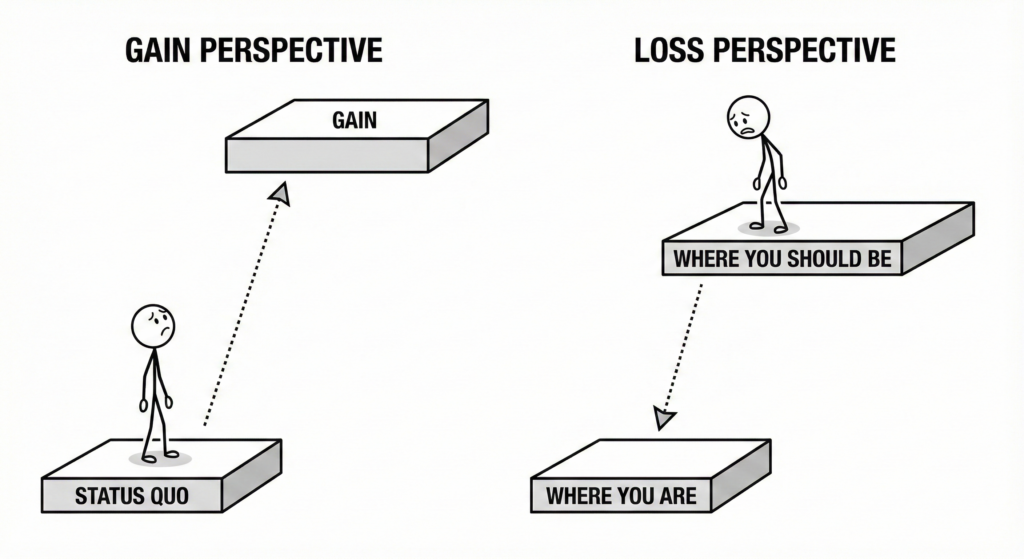
What if we could change the reference point?
Instead of letting the buyer compare our solution to “where I am now,” what if we helped them compare “where I am now” to “where I should be”?
Suddenly the status quo isn’t neutral. It’s below the reference point. It’s a loss.
Let me try an example.
Old pitch: “Our solution will save you $100K per year.”
Reference point: current state. $100K is a gain from neutral. Motivational weight: 100 units.
New frame: “Companies your size typically operate at X efficiency. You’re currently at Y. That gap is costing you $100K every year you don’t close it.”
Reference point: where they should be. $100K is a loss from the new reference. Motivational weight: 250 units.
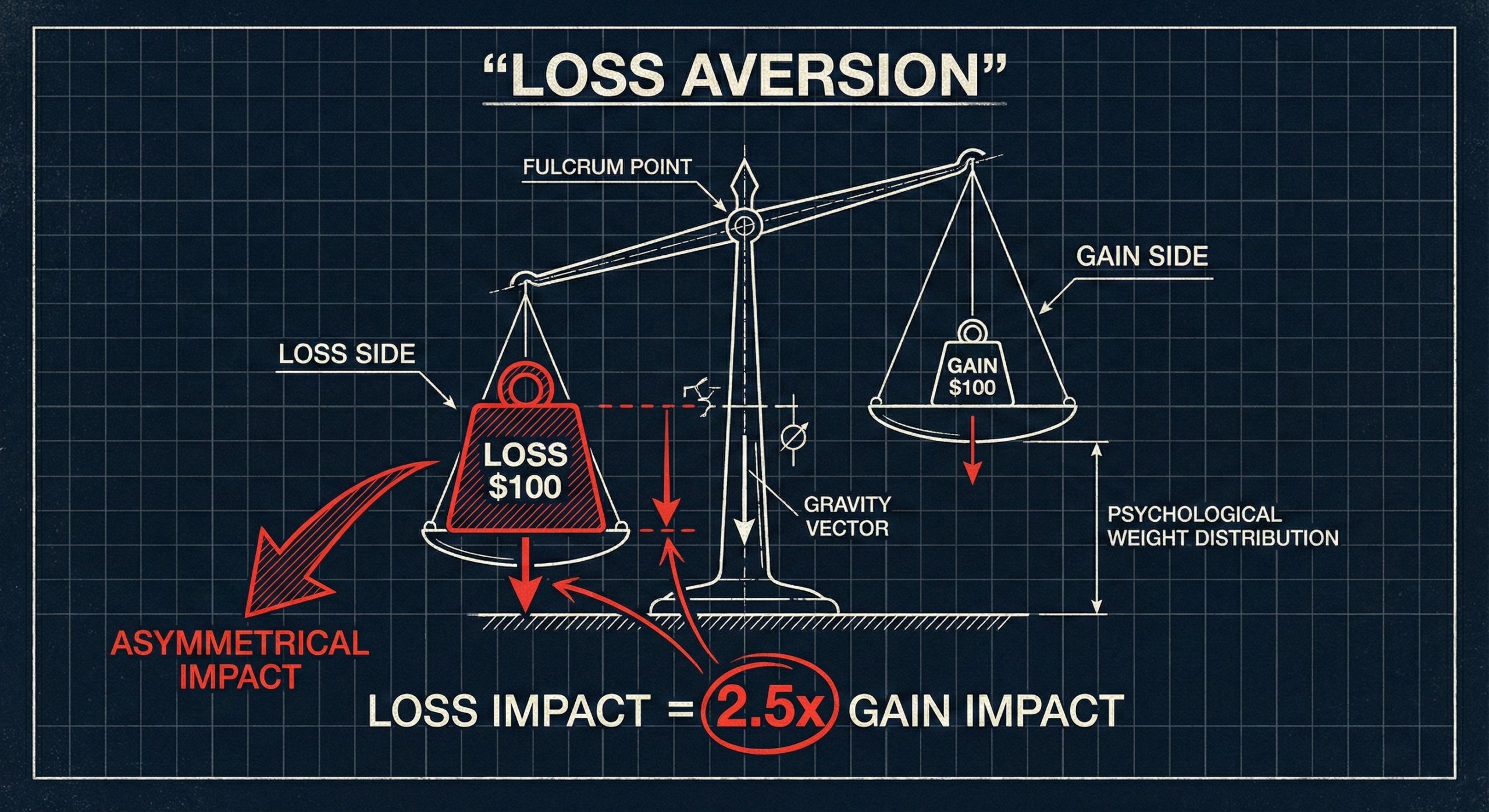
Same number. Same outcome. But by shifting the reference point, the psychological impact is 2.5x stronger.
Why This Feels Different
I know what you might be thinking. “This is just negative selling. Fear-mongering. Manipulation.”
I don’t think so. Here’s why.
If the buyer is actually losing $100K per year to inefficiency, telling them about it isn’t manipulation. It’s honesty. We’re helping them see reality clearly.
The manipulation would be hiding that loss and only talking about gains – letting them make a decision without understanding what inaction actually costs.
What I’m describing isn’t about creating fear. It’s about creating clarity. Helping buyers see what they’re really choosing between.
And crucially – they have to discover it themselves. If I just tell them “you’re losing $100K,” that’s a claim. A pitch. Something to resist.
But if I ask the right questions and they calculate their own loss? That’s their math. Their conclusion. Their motivation.
What I’m Testing
This is still theory. I need to test it.
This week I’m going to try reframing three discovery calls around reference points. Instead of asking about goals and desired outcomes, I’m going to ask about gaps and costs.
“Where should you be on this metric?” “Where are you actually?” “What’s that gap costing you?”
Let the buyer do the math. Let them feel the loss.
I’ll report back on what happens.
But even if the specific technique needs refinement, I’m convinced the underlying principle is sound. Reference points matter. Losses hit harder than gains.
We’ve been selling to the wrong part of the brain.
First Access. No Spam.
The waitlist exists for one reason: to tell you when the methodology drops. That's it.
Instant access. No spam. Unsubscribe anytime.