I want to talk about the most powerful psychological lever in sales that almost nobody uses correctly.
I’ve written about loss aversion before. But I don’t think I’ve been clear enough about how big a deal this is. So let me try again, with numbers.
Because once you see the math, you can’t unsee it.
The Math That Should Change Everything
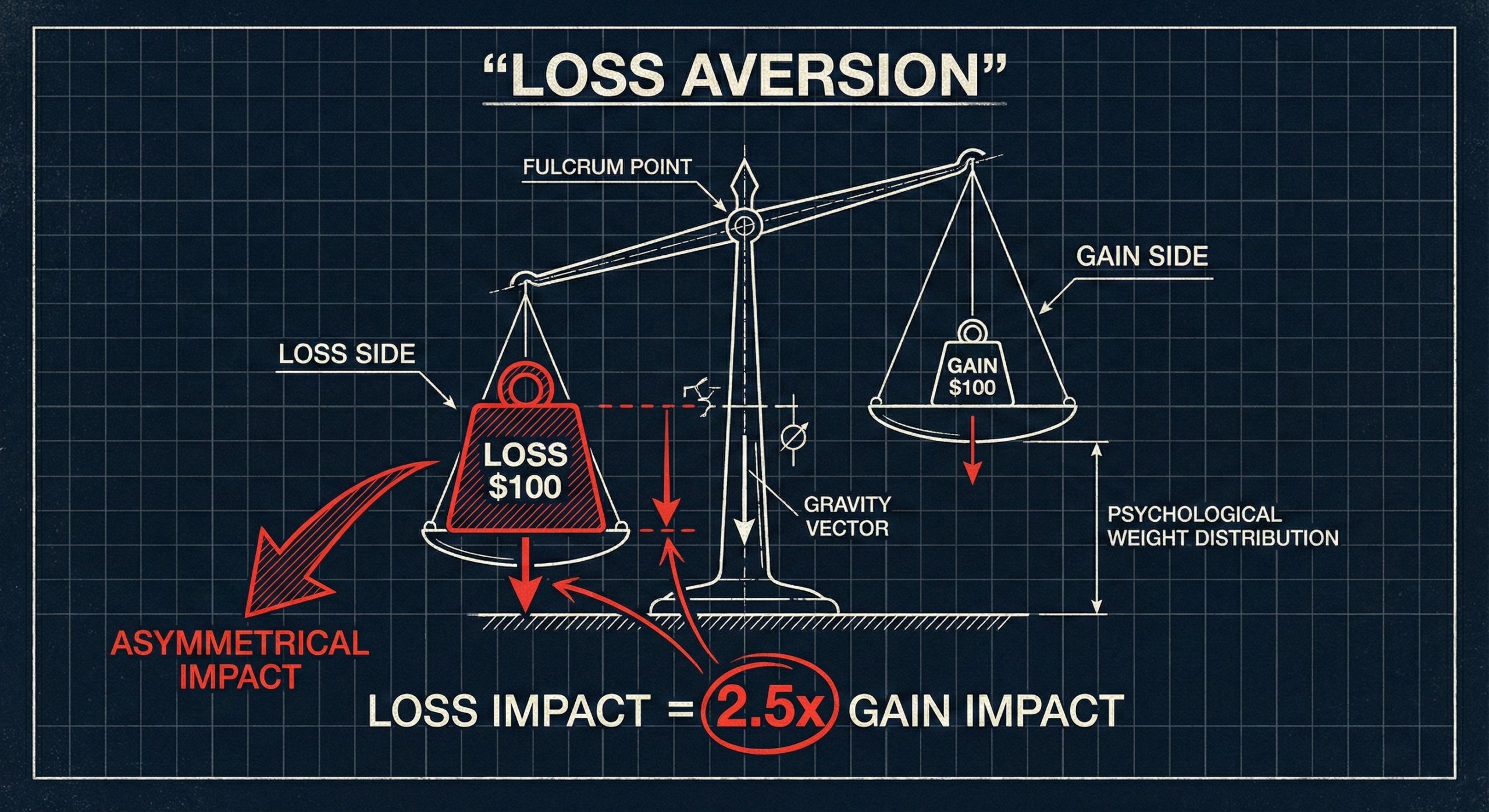
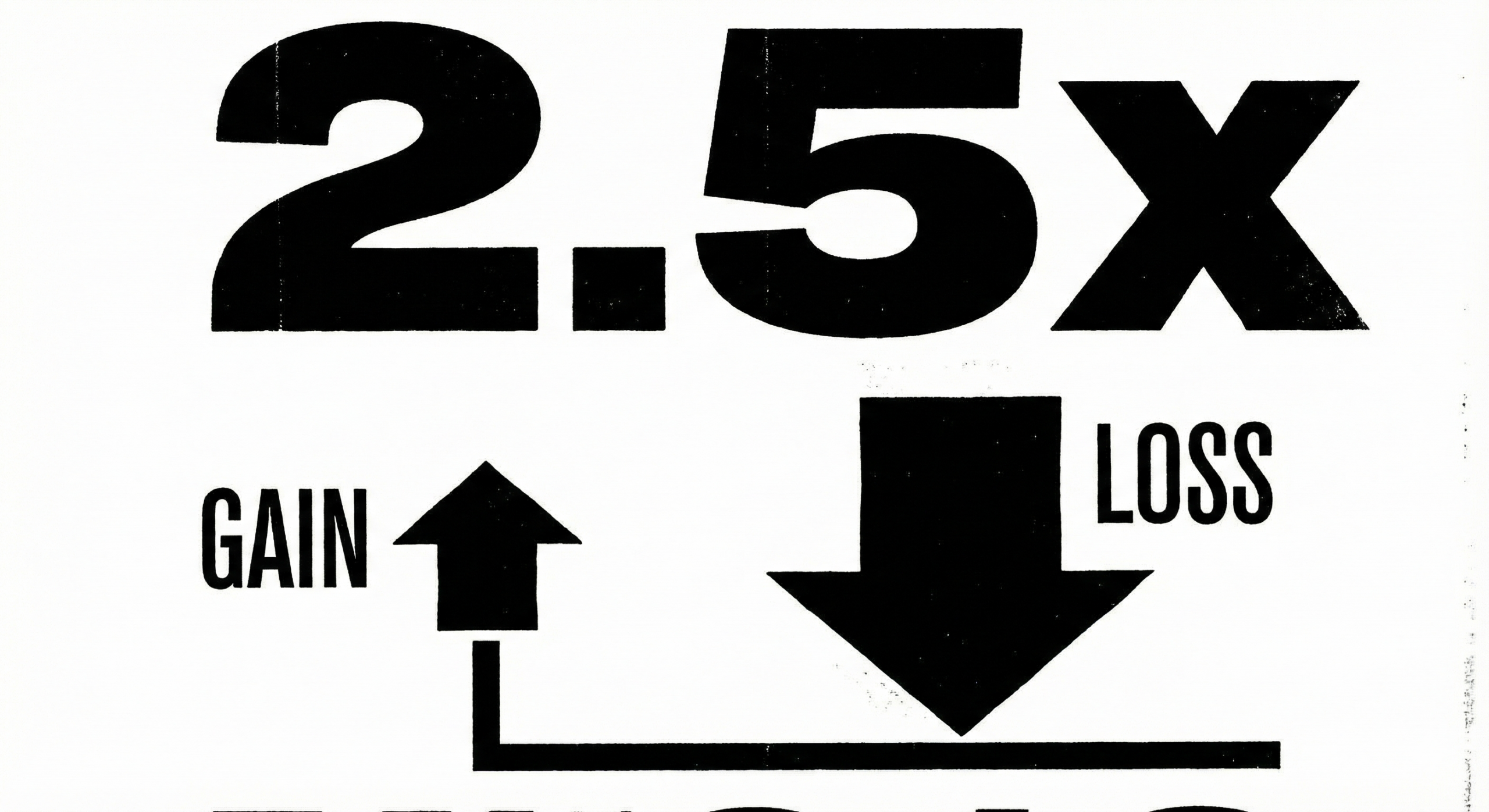
Kahneman and Tversky’s research established that losses are felt approximately 2.5 times more intensely than equivalent gains.
Let’s translate that into sales terms.
Imagine you’re selling a solution that delivers $100,000 in annual value. You can frame this two ways:
Frame A (Gain): “Our solution will save you $100,000 per year.”
Frame B (Loss): “You’re currently losing $100,000 per year without this solution.”
Same number. Same $100,000. But the psychological impact isn’t even close.
Frame A generates X units of motivation.
Frame B generates 2.5X units of motivation.
You’re leaving 150% of your persuasive power on the table every time you pitch gains instead of losses.
Why Every Sales Pitch Gets This Wrong
Pull up any sales deck. Any pitch. Any cold email sequence. What do you see?
Gains. Everywhere.
“Increase revenue by 30%.” “Reduce costs by $500K.” “Improve efficiency by 40%.” “Accelerate time-to-market by 6 months.”
These are all gains. Positive outcomes. Things you’ll get if you buy.
And they’re the weak frame.
We’ve built an entire industry around the less effective psychological lever. We train reps to articulate value propositions. We build ROI calculators. We develop case studies showing amazing outcomes.
All gains. All operating at 40% of potential effectiveness.
Why? Because gains feel positive. Professional. Optimistic. Losses feel negative. Scary. Manipulative.
So we default to the approach that feels better to us – not the approach that works better on buyers.
The Right Way to Use Loss Aversion
Before I go further, I need to address the obvious concern: isn’t this manipulation?
It can be. If you fabricate losses that don’t exist, that’s manipulation. If you exaggerate or fear-monger, that’s manipulation.
But if the losses are real – and in most B2B sales, they are – then helping the buyer see them clearly isn’t manipulation. It’s clarity.
The buyer is already experiencing these losses. They’re just not thinking about them. The status quo feels neutral because it’s familiar. Your job isn’t to create fear – it’s to make the invisible visible.
Here’s the key difference:
Wrong way: You tell the buyer what they’re losing. “You’re losing $100K a year!” This is a claim. A pitch. Something to resist.
Right way: You help the buyer calculate what they’re losing. “What’s this inefficiency costing you per month? What does that add up to annually?” This is their math. Their discovery. Their conclusion.
The first triggers resistance. The second triggers ownership.
Questions That Unlock Loss Aversion
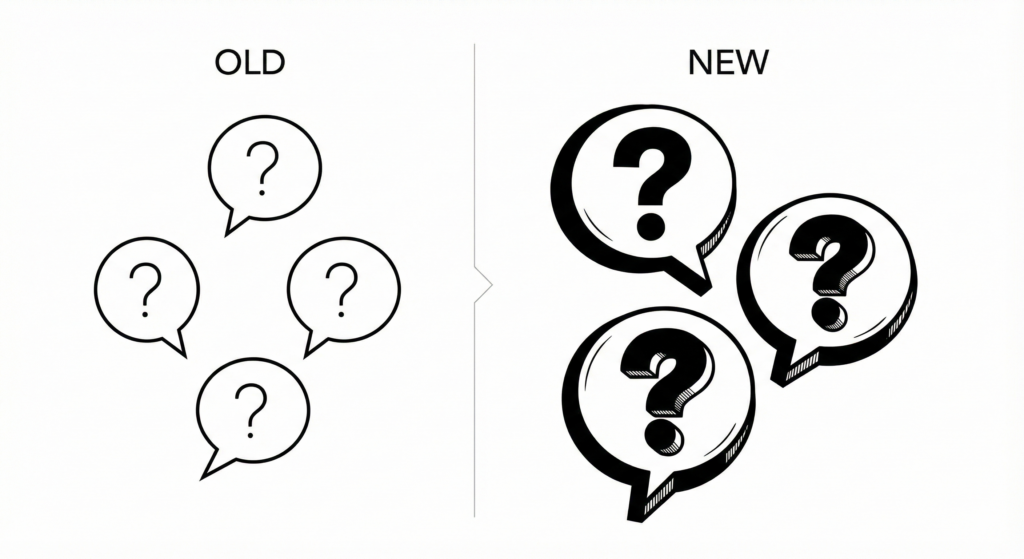
I’ve been experimenting with reframing my discovery questions. Instead of asking about goals and desired outcomes, I’m asking about gaps and costs.
Old question: “What are you hoping to achieve?”
New question: “What’s the gap between where you are and where you should be?”
Old question: “What would success look like?”
New question: “What’s the current situation costing you?”
Old question: “What’s driving this initiative?”
New question: “What happens if you don’t solve this in the next 6 months?”
Old question: “What ROI are you expecting?”
New question: “What’s the cost of inaction? Per month? Per quarter?”
Same information, different frame. But the psychological weight is completely different.
What I’m Seeing in Practice
I’ve been running this experiment for about three weeks now. Small sample size, so take this with appropriate skepticism.
But here’s what I’m noticing:
Conversations go deeper faster. When buyers start calculating their own losses, they engage differently. It’s not polite interest – it’s genuine concern.
Urgency emerges organically. I’m not creating urgency with artificial deadlines. The buyer creates urgency when they realize what inaction costs.
Follow-up dynamics change. When the buyer owns the math, they remember it after the call. The motivation doesn’t evaporate when I hang up.
I’m not ready to declare victory. But I’m seeing enough to keep testing.
The Competitive Advantage Hiding in Plain Sight
Here’s what keeps me up at night – in a good way, for once.
Almost nobody in sales is using this correctly. We’re all pitching gains. We’re all building ROI models. We’re all competing on the same psychological territory.
But the buyer’s brain doesn’t work that way. The buyer’s brain is 2.5 times more responsive to losses than gains.
Every day you pitch gains while your competitor helps the buyer feel their losses, you’re fighting with 40% of the ammunition.
This isn’t a minor optimization. It’s not a tweak. It’s a fundamental shift in how we approach the psychology of buying.
And it’s been sitting there, in Nobel Prize-winning research, for forty-five years.
Waiting for someone to apply it.
79% of Deals Don't Close.
That's not a performance problem. That's a methodology problem. The book explains why - and what to do instead.
Instant access. No spam. Unsubscribe anytime.