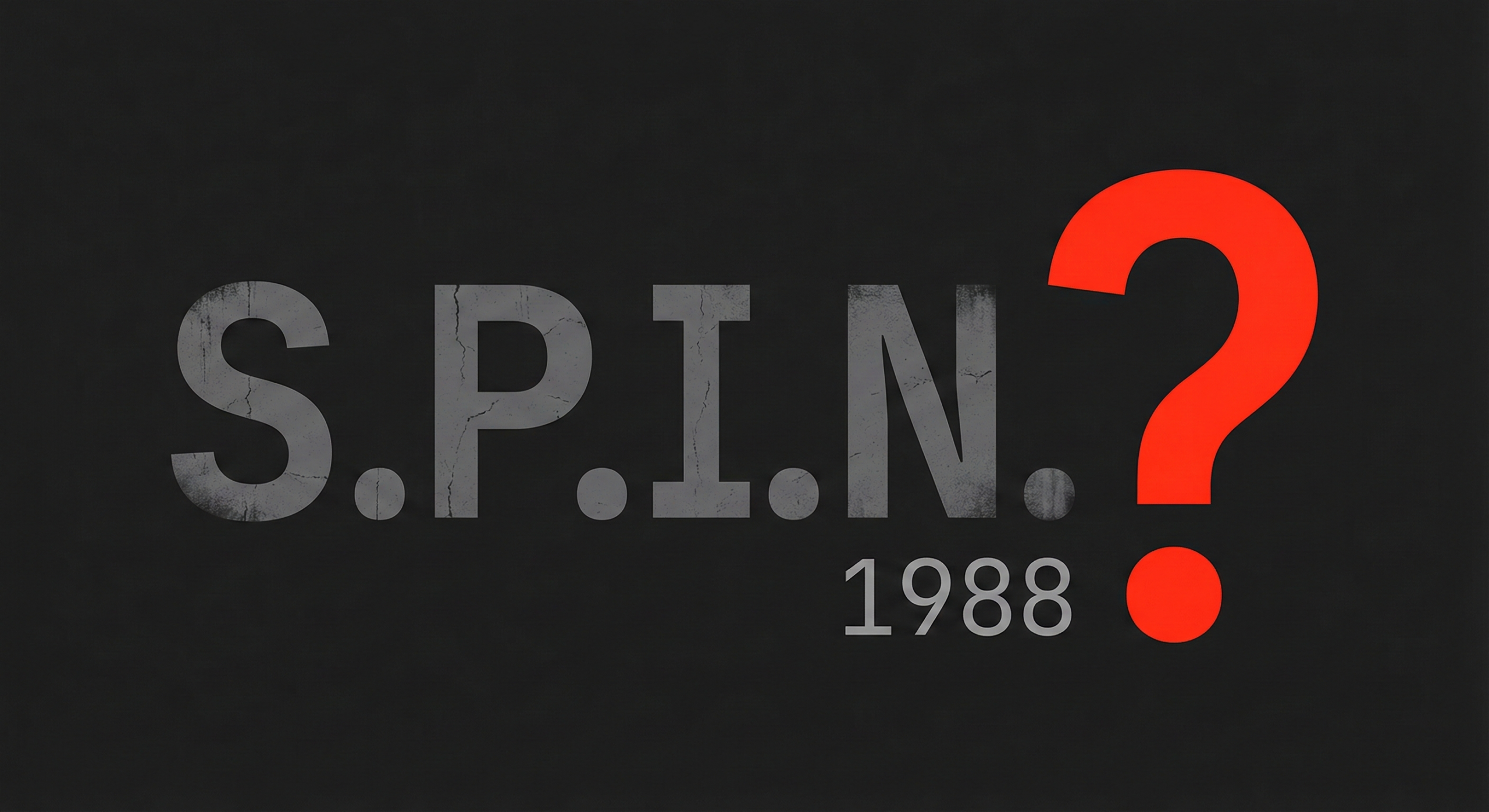
Neil Rackham’s SPIN Selling was published in 1988 – the year George H.W. Bush was elected and Rain Man won Best Picture.
Email didn’t exist in business. The internet was a military research project. Buyers relied entirely on salespeople for product information.
In that world, SPIN was revolutionary. It was based on research of 35,000 sales calls and proved something that seems obvious now but was radical then: asking questions works better than pitching features.
Thirty-seven years later, the question isn’t whether SPIN was good. It was. The question is whether it still works in a world Rackham couldn’t have imagined.
What SPIN Got Right (And Still Gets Right)
Let’s give credit where it’s due. SPIN introduced insights that remain true today:
Questions beat pitches. Rackham proved empirically that top performers ask more questions than average performers. Gong’s modern research confirms this: top performers ask 11-14 questions per discovery call versus 6-8 for average performers.
Implication matters. SPIN’s insight that consequences drive action – not features – remains foundational. Buyers don’t buy solutions; they buy relief from pain.
Closing techniques fail in complex sales. Rackham showed that traditional “closing techniques” actually hurt win rates in large deals. This is still true.
These principles aren’t dead. They’re table stakes.
What Broke: The Situation Question Problem
SPIN categorized questions into four types: Situation, Problem, Implication, and Need-Payoff.
Rackham explicitly warned that Situation Questions were low-value and should be minimized. But here’s what happened: sales trainers taught “SPIN” and reps heard “ask Situation questions first.” They missed the warning.
The result? Forty-five minute “discovery calls” that are really 40 minutes of situation questions followed by 5 minutes of rushed problem discussion.
“How many employees do you have?” “What kind of system are you using now?” “What’s your budget cycle?”
This is the equivalent of a doctor walking into the room and asking, “Where do you live? How old are you? What’s your job?” while the patient sits there with a collapsed lung.
Why Situation Questions Kill Deals in 2025
Low status signal. You’re asking the buyer to do your homework. You’re saying, “I’m too lazy to Google this, so you do the administrative work for me.”
Creates fatigue. The buyer has answered these questions from every vendor before you. It immediately triggers the “Vendor Script” in their brain. They switch into polite-but-disengaged mode.
Wastes time. The buyer’s time is valuable. If you ask them something you could have found on LinkedIn, you’ve forfeited your right to ask hard questions later.
Signals inexperience. Top performers don’t ask situation questions. When you do, you identify yourself as average or below.
The Bigger Problem: The Buyer Changed
SPIN was designed for a world where buyers needed salespeople to help them understand their problems.
That world is gone.
Today’s B2B buyer completes 70-80% of their purchase journey before they ever talk to sales. They’ve read your website, your G2 reviews, your competitors’ case studies. They’ve talked to their network. They’ve formed opinions.
They’ve already diagnosed their pain. They don’t need your Problem questions to help them see it – they’re living it.
When a buyer agrees to a call with you, they’ve already answered most of SPIN’s questions for themselves. Walking them through the sequence feels mechanical. Patronizing. Like being handled instead of helped.
Modern buyers recognize when they’re being walked through a methodology. They’ve been “SPIN’d” thousands of times. They know the pattern.
What SPIN Doesn’t Address
Even if you execute SPIN perfectly, the methodology has structural gaps that matter in 2025:
No quantification requirement. SPIN’s Implication questions surface consequences, but they don’t require the buyer to verify and quantify them in dollars. “What happens if this problem continues?” isn’t the same as “What is this problem costing you per month – in your own calculation?”
No documented agreements. SPIN doesn’t require explicit buyer commitment at each stage. You can complete a perfect SPIN discovery and still have a buyer who hasn’t agreed to anything.
No disqualification framework. SPIN assumes all discovered pain should be pursued. It doesn’t help you identify when to walk away.
No pipeline architecture. SPIN is a discovery methodology, not a deal management system. It tells you how to run a conversation, not how to progress a complex deal through multiple stakeholders and stages.
No status or tonality framework. SPIN tells you what to ask, not how to sound when you ask it. And how you sound often matters more than what you say.
What Works Instead
The insight behind SPIN – that questions beat pitches and consequences drive action – remains true. But the execution needs to evolve.
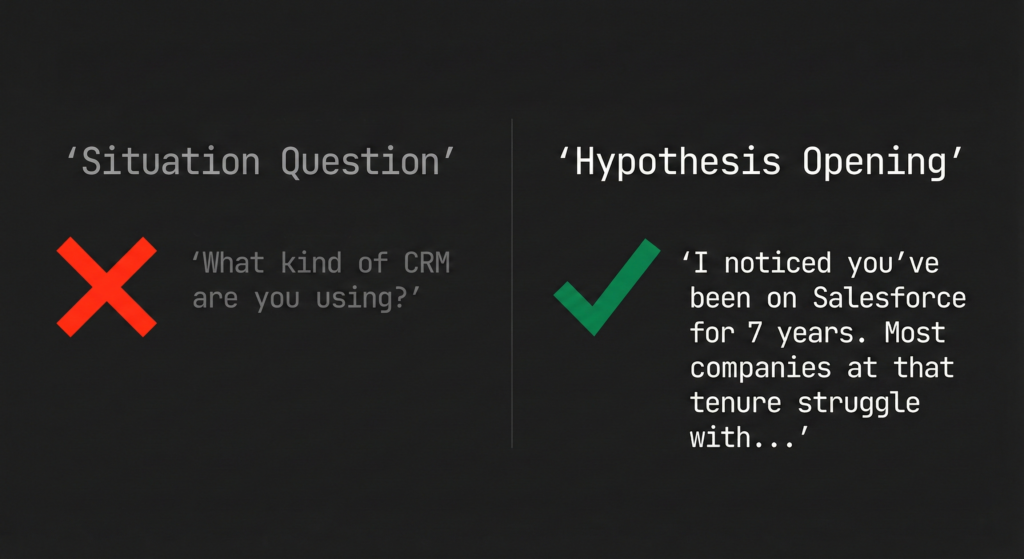
Eliminate situation questions entirely. Don’t minimize them – eliminate them. You state the situation as a premise, then ask about pain.
Instead of “What kind of CRM are you using?” try: “I noticed you’ve been on Salesforce for seven years. Most companies at that tenure are struggling with data latency in their custom integrations. Is that what you’re running into, or is it something else?”
You just proved you did your homework and skipped straight to the pain.
Quantify consequences in dollars. Don’t just surface implications – have the buyer calculate and verify the cost of inaction in their own words, with their own numbers. A buyer who owns the math of their own failure closes themselves.
Require explicit agreements. Every stage of a deal should end with a clear buyer commitment – not just your assessment that it went well.
Be willing to walk away. The most powerful position in any negotiation is the willingness to leave. Qualification isn’t just about finding pain – it’s about determining whether the pain is worth solving.
The Verdict: Not Dead, But Not Enough
SPIN Selling isn’t dead. Its core insights about questions and implications remain valid.
But SPIN alone is no longer sufficient. It was built for a world where sellers had information advantages over buyers. That world ended somewhere around 2010 and isn’t coming back.
If you’re still running pure SPIN in 2025, you’re bringing 1988’s playbook to a 2025 fight. The questions are table stakes now – what matters is what you do with the answers, how you quantify the consequences, and whether the buyer commits to action or just enjoys the conversation.
Rackham gave us the foundation. But 37 years later, we need to build something new on top of it.
The Old Way Is Dead.
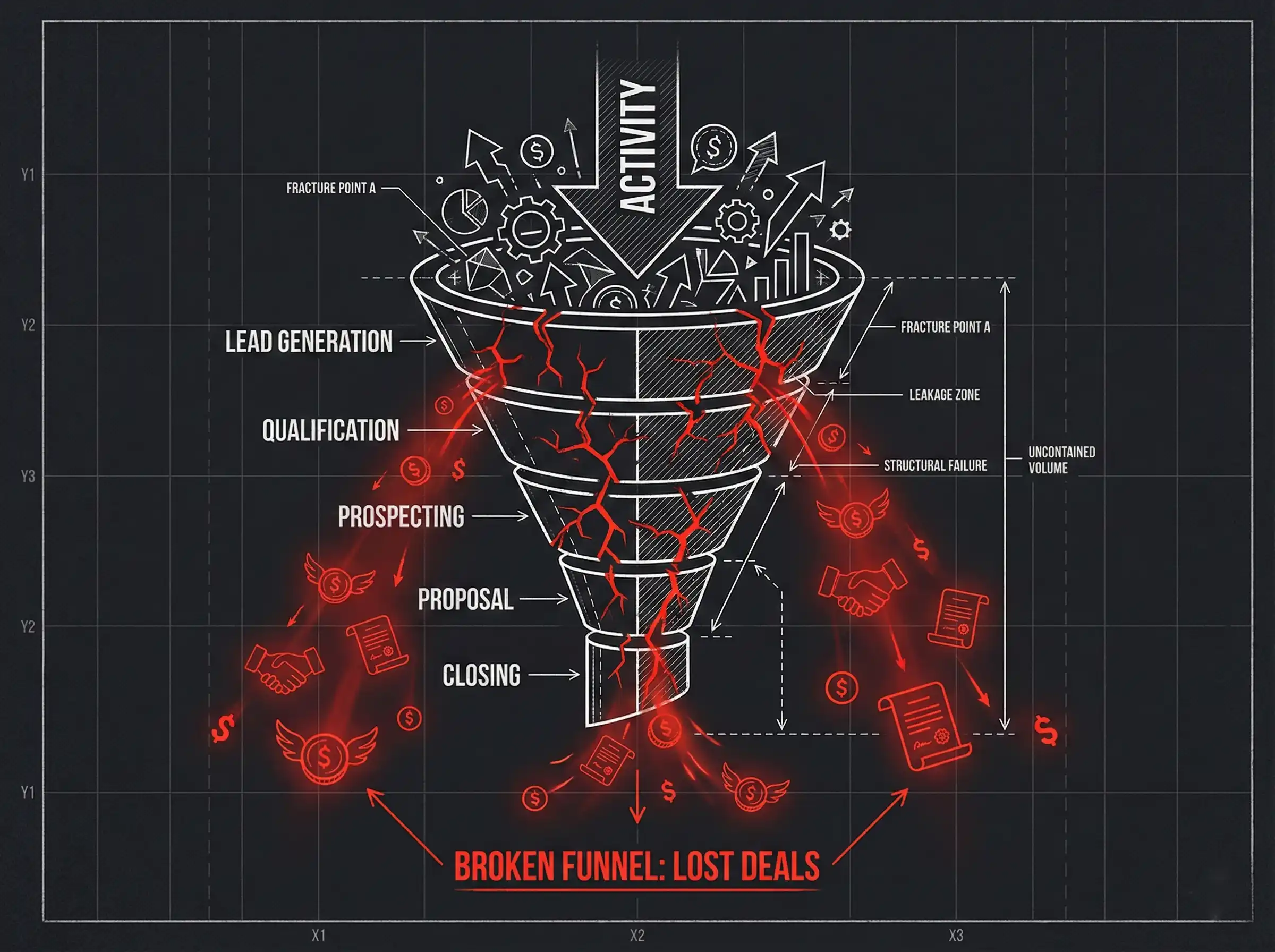
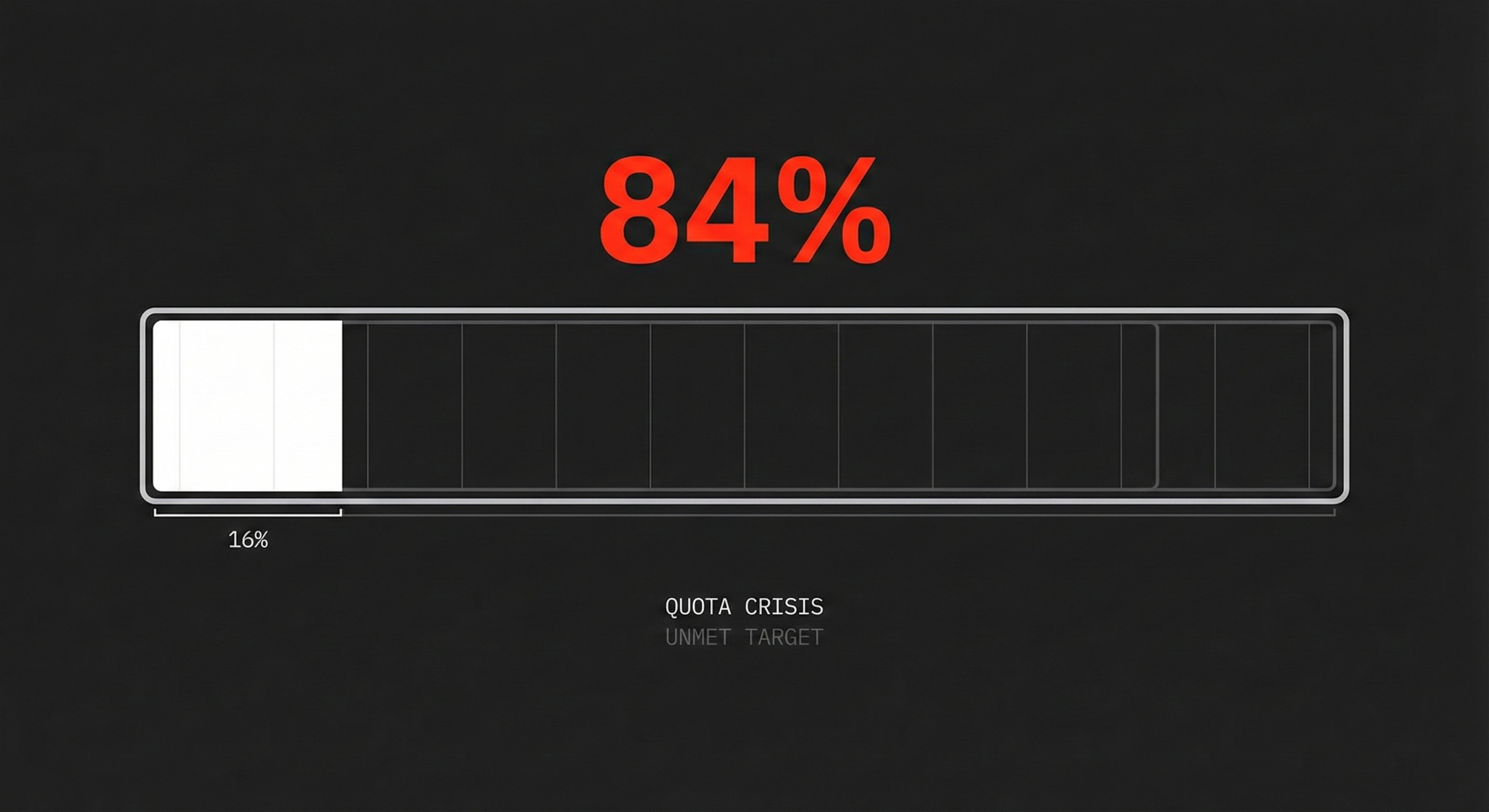
57% miss quota. 40-60% lost to "no decision." The System is broken. This is the fix.
Instant access. No spam. Unsubscribe anytime.