I’m starting this blog because I have something to say. Something that’s been building for three decades.
Before I get into any frameworks or methodologies or critiques of how the industry operates, I want to tell you who I am. Not because my story is special – plenty of people have worked hard and figured things out – but because context matters. You should know where this perspective comes from.
I’m 50 years old. I’ve been in sales and revenue leadership since I was 20. I’ve built companies, saved companies, and walked away from companies. I’ve sat on both sides of the sales conversation – as the one pitching and as the one deciding. I’ve worked with some of the most iconic brands in the world and some of the most dysfunctional leadership teams imaginable.
Here’s the short version: I’ve succeeded in spite of the system, not because of it. And I think I finally understand why.
1995: The Boiler Room
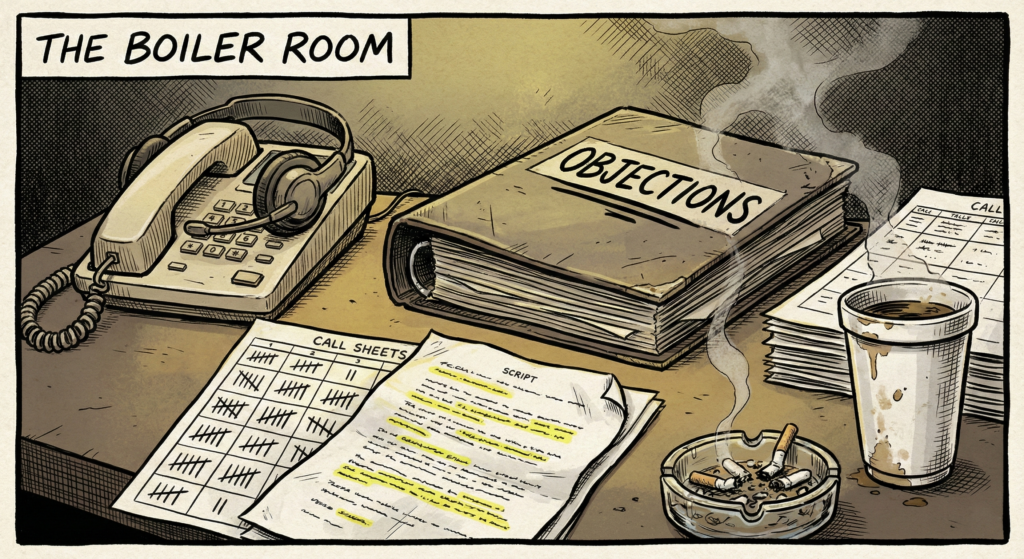
My sales career started in a room full of phones, desperation, and a $3,000 objection binder that didn’t help.
I was 20 years old, working at a stock brokerage firm, making 350 to 450 cold calls a day. Every day. Dialing strangers, reading scripts, getting hung up on, getting cursed at, occasionally getting someone to listen for thirty seconds before they hung up too.
By the time I left, I’d made over 53,000 cold calls.
Fifty-three thousand.
The firm had invested in this massive objection-handling binder – thousands of dollars worth of scripts and rebuttals for every possible thing a prospect might say. “I’m not interested.” “I already have a broker.” “Take me off your list.” “Go to hell.” There was a response for everything.
It didn’t work.
Not because the rebuttals were poorly written. Because the entire premise was wrong. The binder assumed that if you just had the right words – the right counter to every objection – you could talk anyone into anything. That sales was about overpowering resistance with better arguments.
I didn’t have the language for it then, but I could feel something was off. The harder I pushed, the harder they pushed back. The more clever my rebuttals, the faster they hung up. The script said to “overcome” objections – but overcoming felt a lot like fighting. And nobody buys from someone they’re fighting.
What did I learn? That volume alone doesn’t work. That scripts and rebuttals are weapons of a losing war. That there had to be a better way – I just didn’t know what it was yet.
The boiler room taught me what not to do. Everything that came after was figuring out the opposite.
1995-2003: The Bedroom
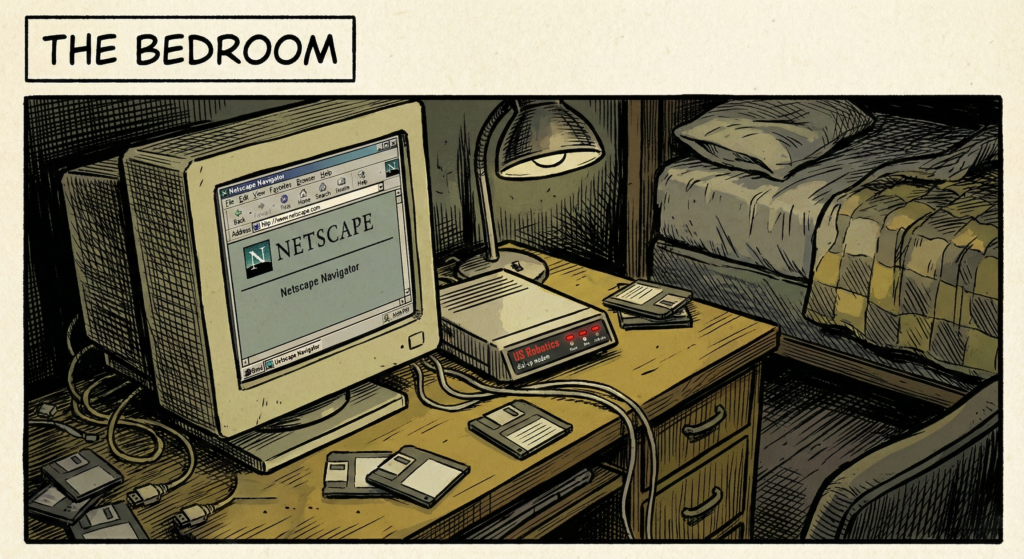
I got out of the boiler room and saw an opportunity. Search engine marketing. This was before Google existed. Before most people understood what the internet would become. I started a search engine marketing and web development agency, working out of my bedroom.
No bachelor’s degree – I’d just gotten my associate’s – and no real plan. Just instinct and hunger.
The business grew. We landed Fortune 500 clients. We worked in politics. But I quickly realized the problem with service businesses: revenue is directly tied to time. You can only bill so many hours. I needed something more scalable.
So I used the skills we’d built – the marketing, the technical knowledge – to launch an ISP. We white-labeled another provider’s services and marketed the hell out of them. Within a few years, I’d built it into a global internet service provider. All from the bedroom of my house.
Then DSL and cable internet arrived. The big providers refused to wholesale to competitors at reasonable prices. The landscape was shifting. I received multiple acquisition offers from a Fortune 1000 company.
I was 27 years old. No degree. And I’d built something valuable enough that large companies wanted to buy it.
What did I learn? That instinct and hunger can beat credentials. That you don’t need permission to build something. That the “rules” of business are mostly made up by people protecting their positions.
2003-2007: The Other Side of the Table
After the ISP chapter closed, I did something that would change how I understood sales forever: I became the buyer.
I accepted a job at Johnson & Johnson – yes, the pharmaceutical giant. Getting hired there without a bachelor’s degree was an accomplishment in itself. I worked in their internal agency, focused on digital marketing and communication.
For the first time in my career, I watched the world’s most respected agencies pitch their services to us. The big names. The expensive suits. The polished presentations.
I saw the best of professional selling. And I saw the worst. I watched brilliant creative minds stumble through pitches because they’d forgotten who they were talking to. I watched mediocre ideas win because the seller understood the room.
I went from being a self-taught, instinctive salesperson to deciding the fate of some of the world’s most accomplished agencies. I got to see what works from the side that matters – the buyer’s side.
A year later, I left to head up global sales, marketing, and e-commerce for a direct-to-consumer fitness retailer. The business model was wild: selling treadmills, weight machines, elliptical trainers – big, bulky, expensive equipment – to people who couldn’t see it in person. From a company they’d never heard of.
Think about that. Quality, feel, and ergonomics matter with fitness equipment. And we were asking people to spend thousands of dollars sight unseen, based entirely on trust.
In two years, I took them from $5 million to $75 million. We became a top 500 Internet retailer. The owner got the private equity exit he’d been chasing…I guess this was technically my first exit.
What did I learn? That selling is fundamentally about trust, not features. That sitting on the buyer’s side teaches you things you can never learn as a seller. That scale isn’t magic – it’s execution plus timing.
2007-2010: The Fighter
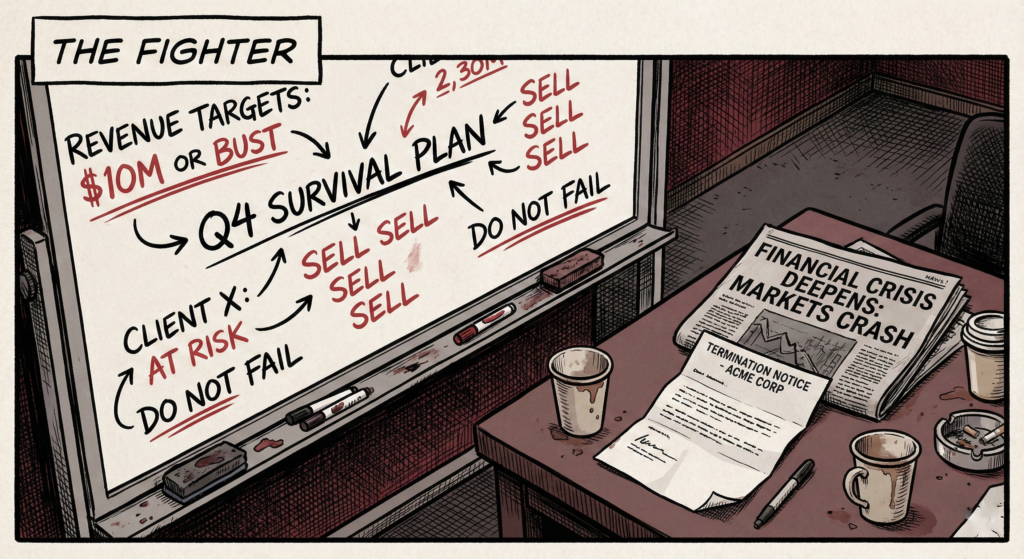
I left the fitness retailer to join an independent agency network. I was going to co-lead one of their divisions.
On my second day – my second day – we were served notice from our largest client. Gone. Just like that, we had almost nothing in revenue.
The agency had several hundred employees across the network. My unit had about sixty. People who had been there for years. Who proudly called themselves “agency people.” And they wasted no time letting me know I was an outsider.
But here’s the thing: I was an outsider with a first child on the way. I needed to make sure I could feed my own family. And I felt responsible for making sure those sixty people could feed theirs.
This was 2007. By 2008, we were in the middle of the Great Recession. The worst economic crisis since the Depression. Banks failing. Companies folding. Budgets evaporating.
And this outsider – with help from others – rebuilt that agency from almost nothing to $100 million in four years. Not just my unit. The network. We saved it.
What did I learn? That crisis reveals character. That “outsider” is often an advantage, not a liability. That when your back is against the wall and families are depending on you, you find capabilities you didn’t know you had.
2010-2014: Three Elevators
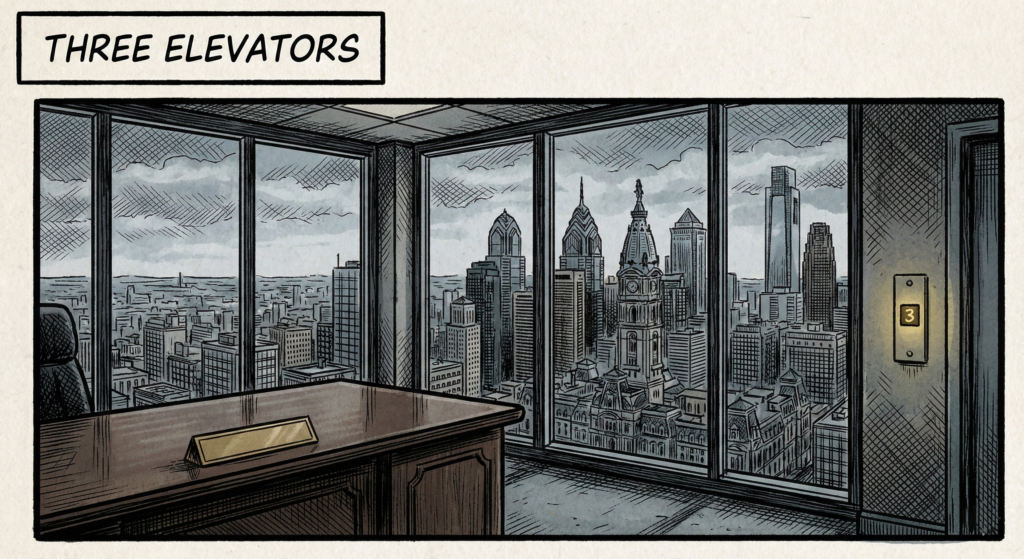
The success at the independent agency caught attention. I was courted by one of the world’s largest and oldest advertising holding companies – the kind with legendary creative minds, global reach, and offices in every major city.
I joined to lead their North American Digital Center of Excellence. I worked on accounts for some of the most iconic brands in the world. I grew top-line revenue significantly.
My office was in Philadelphia. Top floor of one of the tallest buildings in the city. It took three elevators to get there. I was literally on top of the world – or at least the city.
But something was wrong.
This industry – the agency world, the creative and marketing elite – was filled with ego. Unjustified ego. People who thought they were better than they actually were. The complacency was suffocating.
I felt it creeping into me too. I was surrounded by great people in my Philadelphia office – they looked to me to help them. But the broader culture, especially in New York, was toxic. Ego without performance. Arrogance without results.
I also saw something else: the ground shifting. Budgets were moving away from the ethereal, award-chasing creative work and toward direct technical initiatives. The “Mad Men” era was ending. The “Math Men” were arriving.
We went through a merger with two other global agencies. They wanted me to move to New York. I refused. I left on my own terms.
What did I learn? That the higher you climb in traditional hierarchies, the less you might respect what you see. That ego is the enemy of performance. That sometimes the best move is walking away from the top floor.
2014: David vs. Goliath
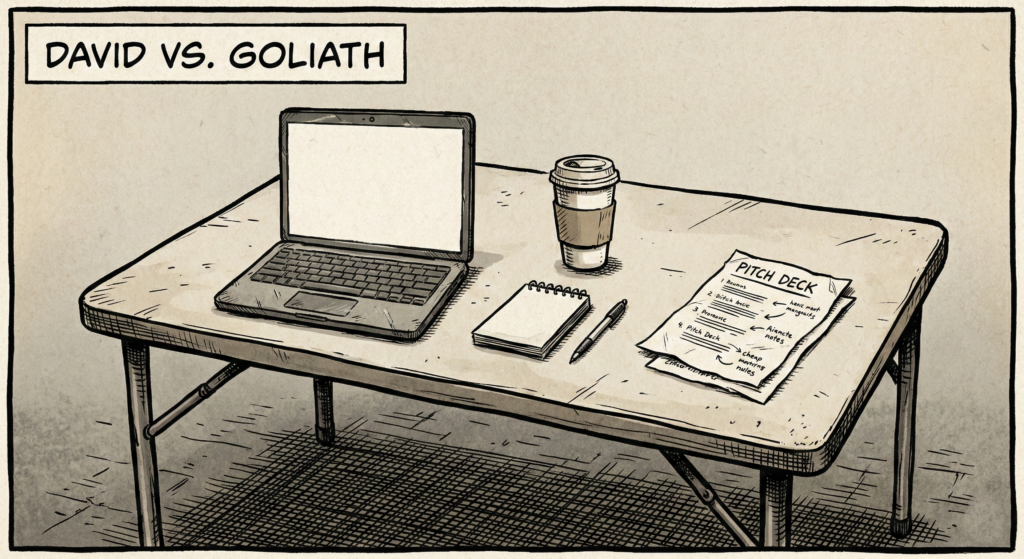
After leaving the holding company, I pulled together a few industry contacts and we started our own little digital agency. Nothing fancy. Just a small shop with something to prove.
Within weeks, we were invited to pitch for one of the world’s foremost industrial manufacturers – the largest turbine manufacturer in the world. A massive opportunity.
And we found ourselves pitching against my former employer. The global agency I’d just left. The giant with the three-elevator offices and the international resources.
We won.
Not because of ego. Because of ability. Because we were focused on outcomes while they were focused on impressing. Because competence beats scale when scale has become complacent.
David and Goliath. The scrappy outsider beats the bloated giant. I wore it as a badge of honor.
What did I learn? That size is not strength. That institutions get slow and arrogant. That a small team with clarity can outperform a large team with confusion.
2014-2016: The $200 Million Walk-Away
Shortly after the turbine win, I accepted a position as Chief Revenue Officer and Co-Founder of a small technical agency. They’d had one hit a few years earlier but had lost product-market fit. They needed someone to build a sales team and go-to-market strategy.
I built it. I defined the positioning. I brought in the foundational clients. We identified a significant gap in the market and created something to fill it.
And then I left.
My business partner – he was a founding partner, I was not – and I didn’t share the same values. The misalignment was fundamental. For the sake of my own sanity, I walked away from my ownership stake.
That company later sold for $200 million. Based on the foundation I built. The positioning I created. The clients I brought in.
I left $200 million on the table because of values.
What did I learn? That money isn’t worth your sanity. That you can build something valuable and still need to walk away from it. That the ability to leave is the ultimate form of freedom.
And here’s why this matters for what I’m going to teach: you cannot tell a salesperson to “be willing to lose the deal” unless you’ve been willing to lose the company. I have the moral authority to talk about abundance mindset because I’ve actually lived it – not in theory, but in walking away from life-changing money.
2016-2021: “We Don’t Believe in Sales”
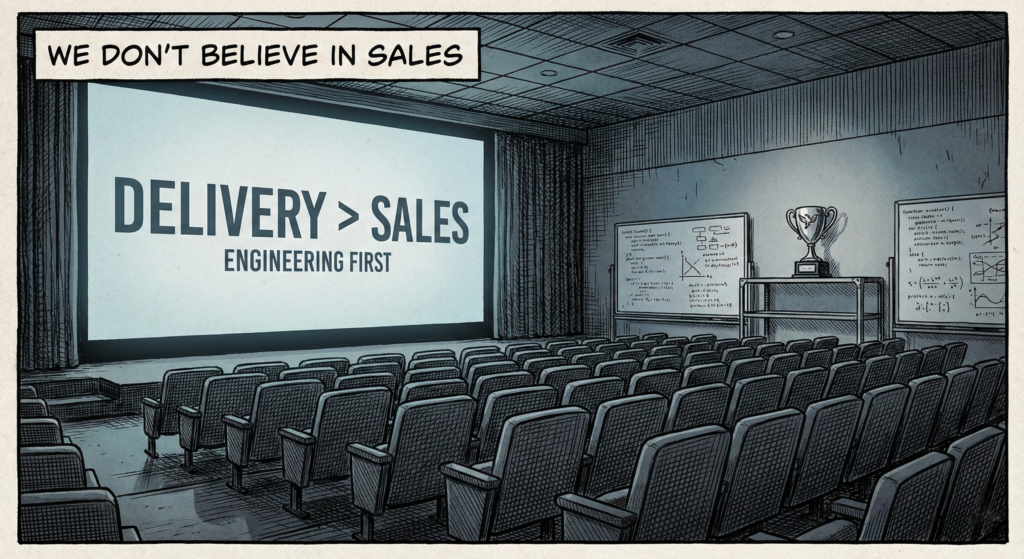
I joined a publicly traded software development company. When I started, they had about 15,000 employees. By the time I left six years later, they had 50,000.
On my first day, I attended their annual account summit. Company leadership stood up and explained their philosophy: they don’t believe in sales. All they believe in is good technical delivery.
They saw no value in salespeople.
And here I was – first day on the job – having just accepted a sales position. Senior Director of Global Business Development.
Most people would have thrown their hands up. How can you succeed in a role that the company explicitly says they don’t need?
I thrived.
I brought in some of the most iconic brands in the world. One CPG company I landed had a tumultuous first year – they wanted to fire us, and I was told to fire them. Instead, I grew that account to roughly $40 million over the next few years.
Then things changed at home. Personal circumstances that I won’t detail here. I made the decision to resign and focus on my family.
I left what would have been my highest revenue-producing year on the table. All my commissions, gone. I walked away – again – from significant money because something else mattered more.
What did I learn? That you can succeed in cultures that don’t believe in what you do – if you focus on value rather than “selling.” That peer positioning works where sales tactics fail. That family comes before commission checks.
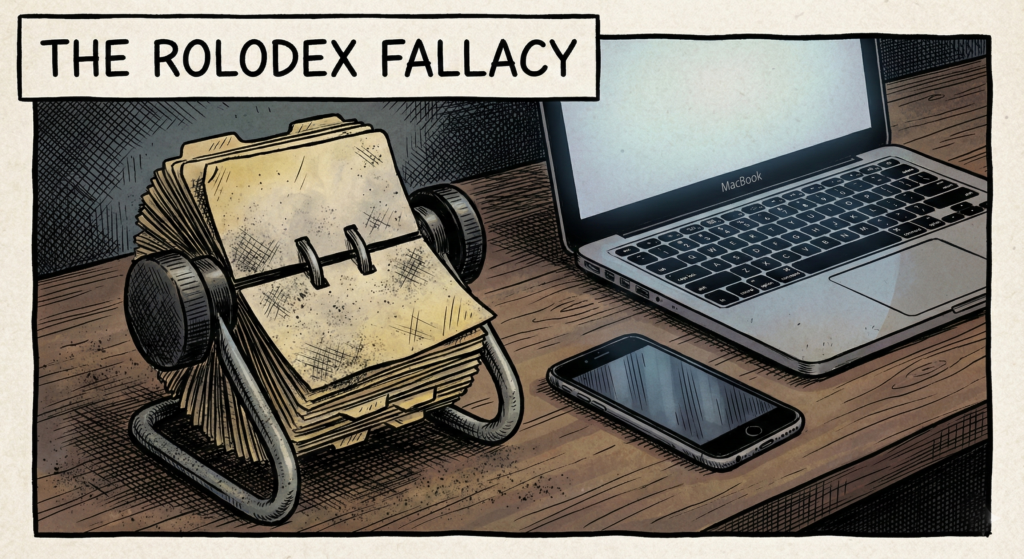
2022-2023: The Rolodex Fallacy
After things stabilized at home – this was post-COVID, and the world had changed – I tried to climb back.
I accepted a job as President of one tech company. Chief Revenue Officer at another. I don’t have either of these on my resume.
Why? Because the leaders of these organizations had egos greater than anyone I’d encountered in my entire career. And they didn’t want what I could actually provide.
They didn’t want my experience. They didn’t want my ability to architect revenue engines – something I’d done successfully for three decades. They didn’t want my capability to build systems that scale.
They wanted my contacts.
My relationships. My Rolodex.
Penny wise and pound foolish. They wanted to make withdrawals from my relationship bank instead of letting me build them a mint.
If they had just let me do what I know how to do – architect, build, create sustainable growth – everything would have been different. But they didn’t want architecture. They wanted a shortcut.
What did I learn? That some leaders aren’t actually leaders. That being hired for your contacts is a trap. That organizations get what they optimize for – and if they optimize for shortcuts, they get short-term thinking.
2023-Now: The Return and The Reckoning
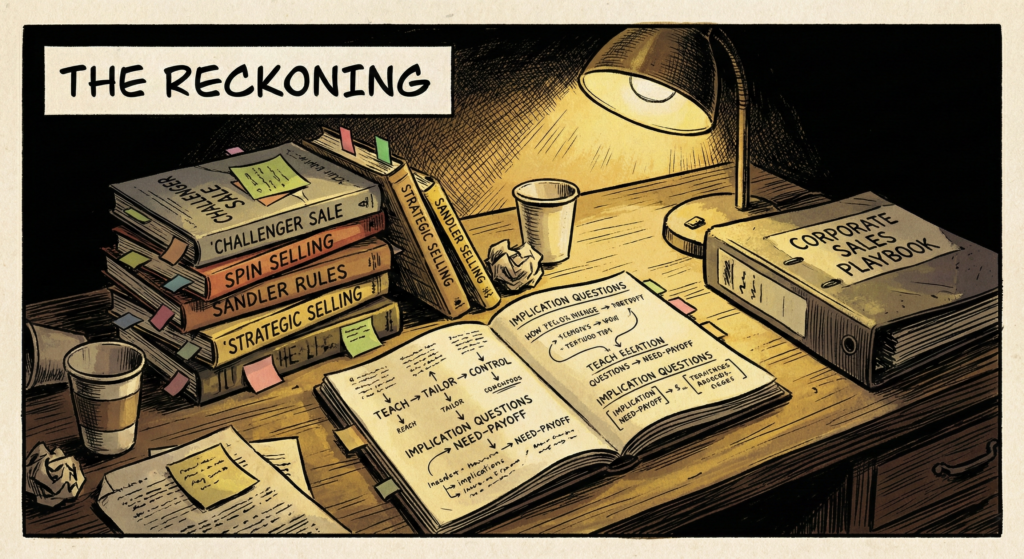
I eventually landed at another company. Similar size and scope to places I’d been before. And I encountered something that finally broke me – not in a defeated way, but in the way that precedes transformation.
The methodologies. The account planning approaches. The sales processes.
All being force-fed to me and everyone else by people who had only ever worked at that one company. People who had been there for 15, 20, 30 years. Who had never sold anything outside these walls. Who had never built anything from scratch.
They were brought in to grow the organization. And their own growth was being limited by egos and lack of experience and a myopic view of what selling actually requires in a world that has fundamentally changed.
It’s amazing how much people are willing to accept – the exact same playbook, over and over again – and how willing they are to force it down the throats of others. People brought in explicitly to create growth, being hamstrung by those who’ve never done it themselves.
This is when everything clicked.
I’d been through Sandler training. SPIN Selling. Challenger. MEDDIC. You name it, I’ve done it. And I finally saw clearly what I’d sensed for years: they’re all fundamentally the same. Different terminology. Different graphics. Different acronyms. But the same 1980s engine with a 2024 paint job.
Some have golden nuggets. Most are lipstick on a pig – just using this year’s shade instead of last decade’s.
I started documenting everything I’d observed over the years. Both sides of the sales conversation. Every industry. Every success and failure. What actually works versus what we’re told should work.
And I realized something: every industry has transformed except sales. We’re using methodologies built for a world where sellers held the power, applied to a world where buyers control 70-80% of the journey before they’ll even talk to us.
What This Means
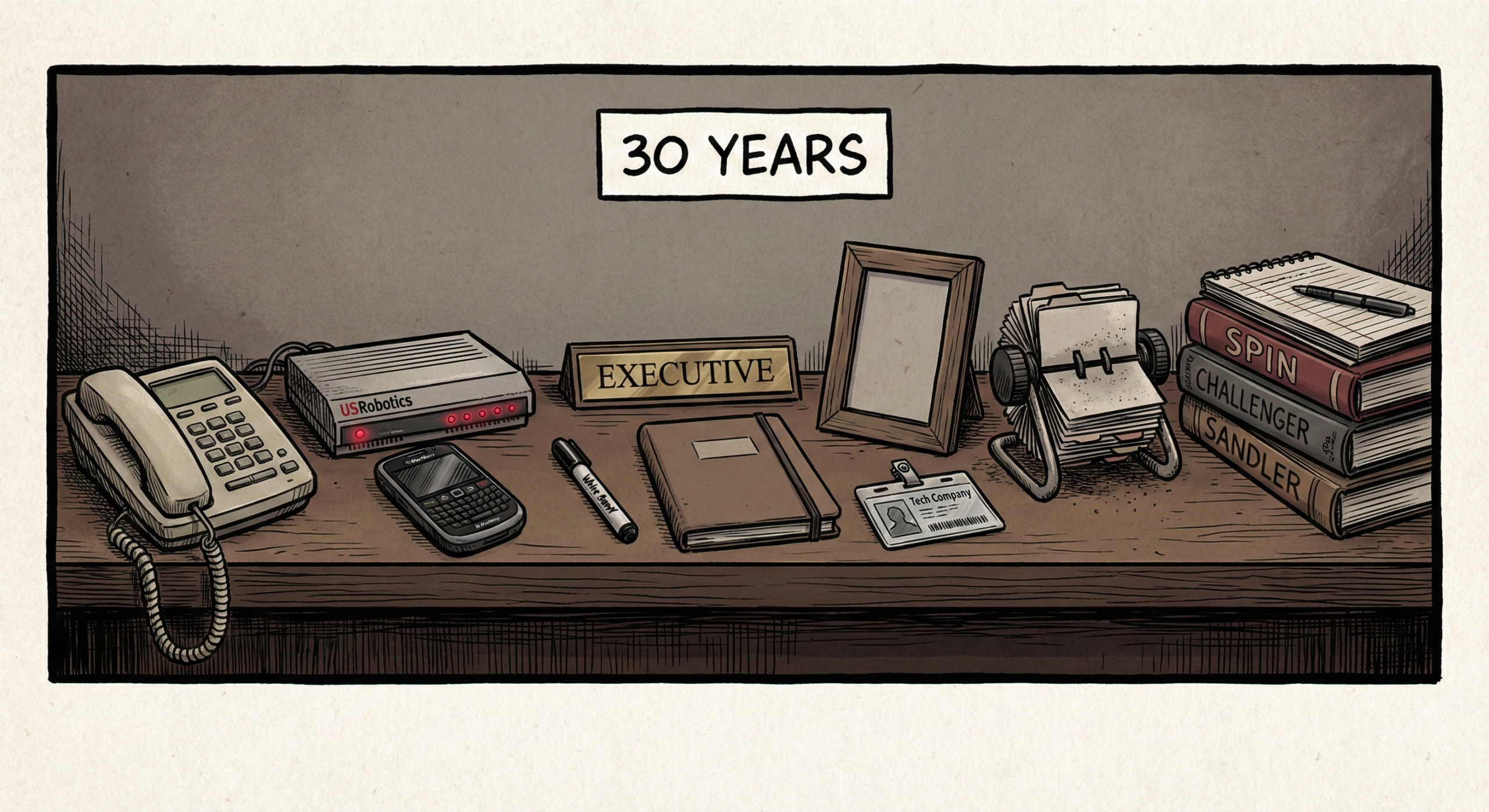
So that’s the journey. Thirty years compressed into a few thousand words.
I’ve been the kid making 53,000 cold calls with a useless objection binder. I’ve been the scrappy entrepreneur building a global ISP from a bedroom. I’ve been the buyer watching the world’s best agencies pitch. I’ve been the outsider who saved sixty families during a recession. I’ve been the executive with three elevators who couldn’t stand the ego. I’ve been David beating Goliath. I’ve walked away from $200 million. I’ve thrived in cultures that didn’t believe in what I do. I’ve been reduced to a Rolodex by leaders who didn’t deserve the title.
And through all of it, I kept noticing the same thing: the way we’re taught to sell doesn’t match how humans actually buy.
That’s why I’m building something different. A methodology. The first B2B sales methodology designed from the ground up for the buyer-controlled era.
It’s called Inversion Selling. Inversion because everything about it inverts what traditional sales training teaches.
This blog is where I’ll share the thinking as it develops. The research. The frameworks. Eventually, a book. Training. A community of practitioners who’ve abandoned the legacy playbook.
But it starts here. With understanding why everything we’ve been taught is broken.
First Access. No Spam.
The waitlist exists for one reason: to tell you when the methodology drops. That's it.
Instant access. No spam. Unsubscribe anytime.