Open your CRM right now. Look at Stage 3 and Stage 4 – the deals your team says are “in negotiation” or “verbal commit.” Pick five at random. Now answer honestly: How many of those will actually close this quarter?
If you’re like most sales leaders, the honest answer is somewhere between “maybe two” and “I have no idea.” The confident percentages in your pipeline – 60%, 75%, 90% – are fiction. Everyone knows it. Nobody says it out loud.
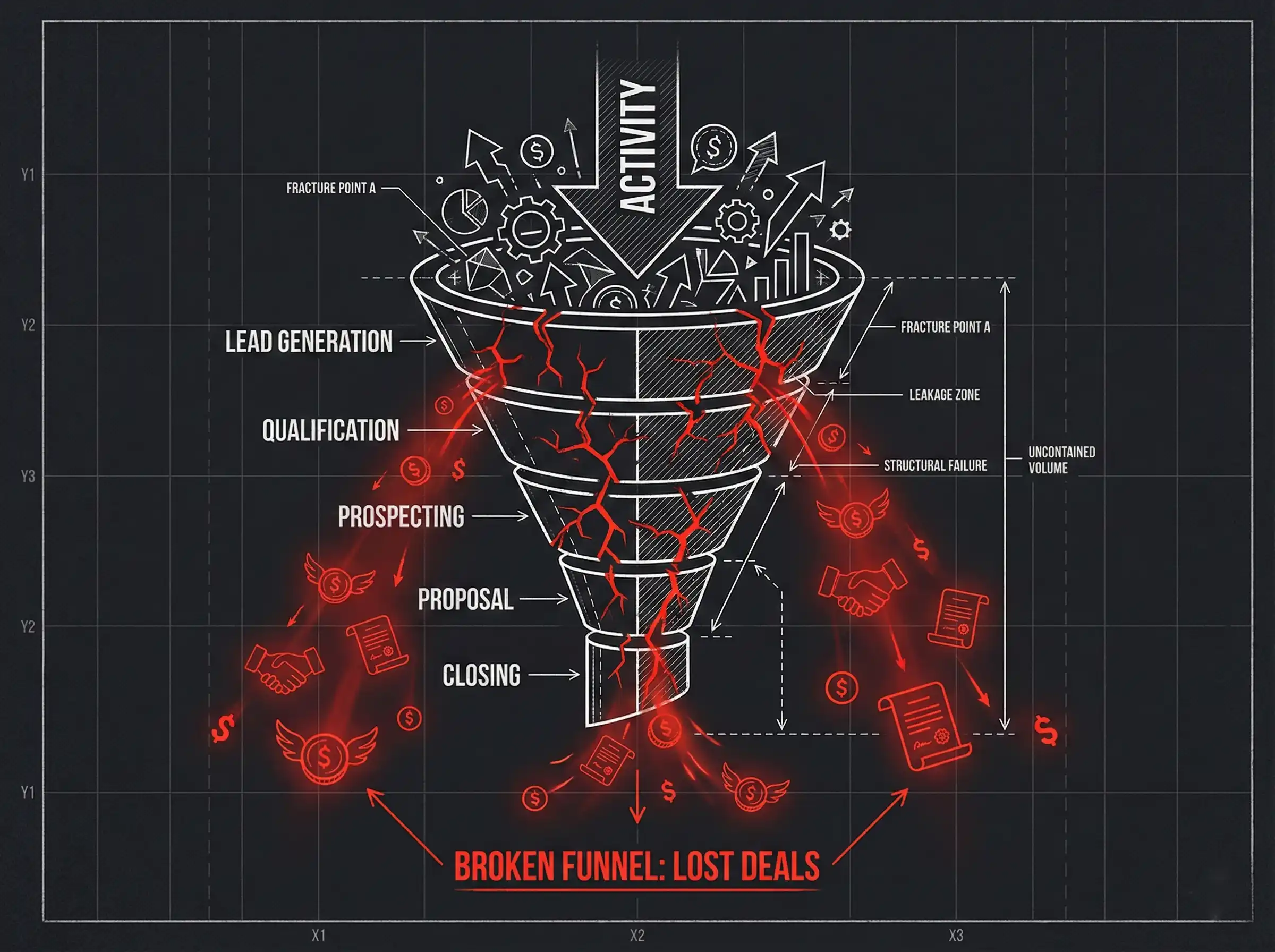
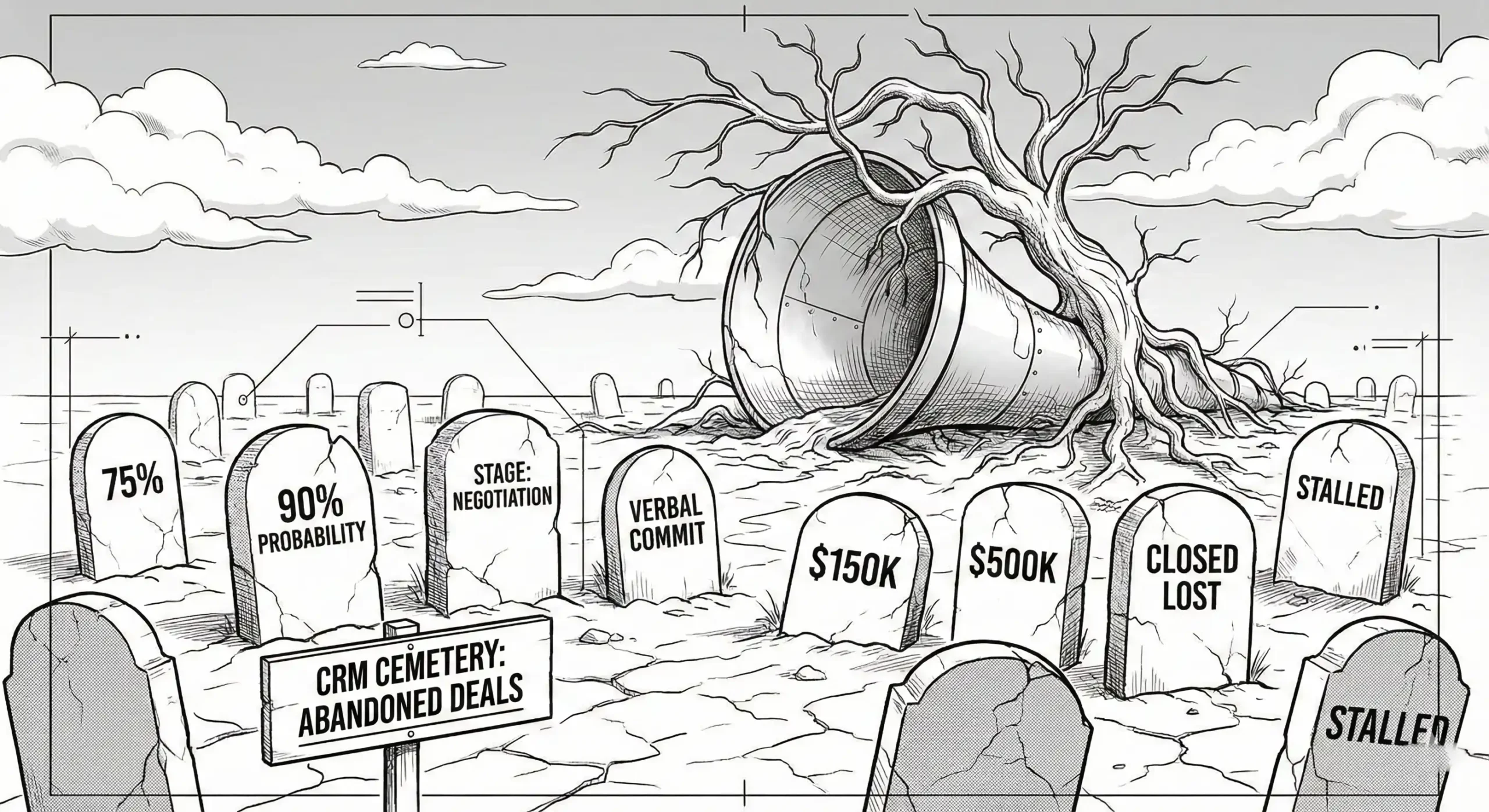
Your CRM isn’t a forecasting tool. It’s a graveyard of lies – deals that died months ago but were never properly buried, optimistic projections that became fossilized artifacts, and stage progressions that reflect activity performed rather than commitment earned.
The Forecast Accuracy Crisis
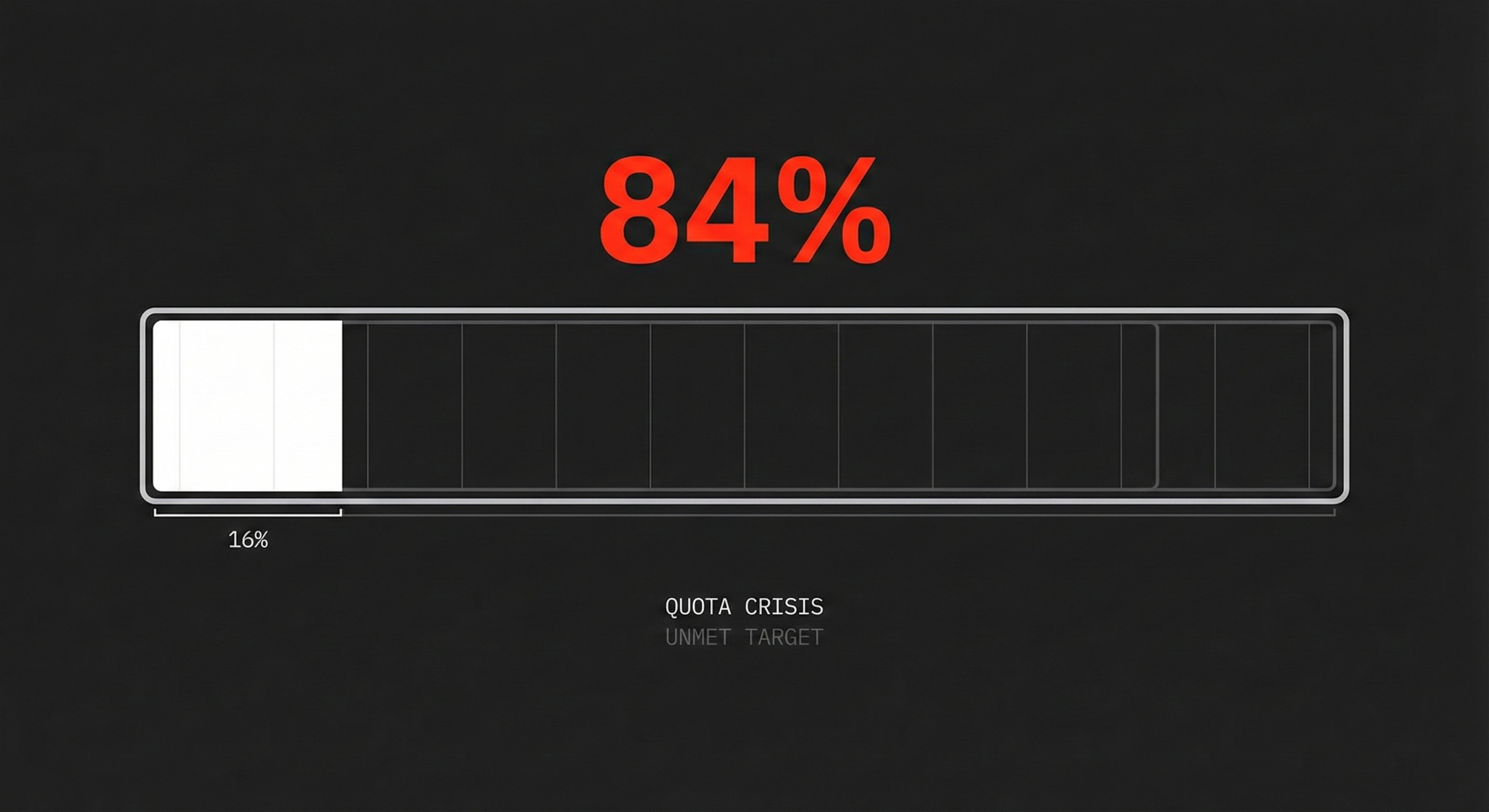
The data on forecast accuracy is brutal. According to Gartner’s research on sales forecasting, less than 25% of sales organizations report high confidence in their forecast accuracy. The average B2B sales forecast is off by 25-50%. Some studies put the number even higher.
Think about what that means. Companies are making hiring decisions, capacity plans, inventory purchases, and board commitments based on numbers that are wrong by a quarter to a half. Every quarter. Year after year.
And here’s the uncomfortable part: this is happening despite unprecedented investment in sales technology. We have better CRMs than ever. Better analytics. Better dashboards. Better pipeline visualization. We can see more data, faster, with more granularity than any previous generation of sales leaders.
The data isn’t the problem. The data is lying to us.
The Anatomy of Pipeline Fiction

Pipeline fiction takes several forms, all of them corrosive.
The Zombie Deal. This opportunity “closed-lost” six months ago – the buyer just forgot to tell anyone. The champion left the company. The budget got reallocated. The initiative was quietly shelved. But the deal sits in Stage 3, aging like a corpse, because nobody wants to admit it’s dead. Moving it to closed-lost would hurt the pipeline coverage ratio. So it stays, contributing its fictional revenue to the forecast.
The Happy Ears Deal. The prospect said “this looks really interesting” after the demo. The rep heard “we’re definitely buying.” Stage advanced. Probability increased. Close date set. The buyer, meanwhile, was being polite before moving on to evaluate three other vendors they’re actually serious about. But the CRM doesn’t capture tone. It captures the rep’s interpretation of tone.
The Hostage Deal. This one has been “closing next month” for seven months. Every forecast call, there’s a reason it’s slipping – legal review, procurement delay, executive travel, budget reallocation. The deal is real in the sense that conversations are happening. It’s fiction in the sense that it will never close on any timeline the rep predicts.
The Frankenstein Deal. Assembled from parts of different opportunities, stitched together to hit a quota threshold. The $50K deal became $150K by adding products the buyer never asked for. The single-department pilot became an “enterprise rollout” because someone mentioned the word “scale” in a meeting. The deal amount is fiction. The scope is fiction. The timeline is fiction.
Why Reps Lie (And Why Managers Let Them)
Before you blame your reps, understand the system they’re operating in.
Reps are measured on pipeline coverage. Low coverage triggers uncomfortable conversations. So they keep deals alive that should be dead. They add opportunities that aren’t real opportunities. They inflate amounts to hit coverage ratios. The system punishes honesty and rewards optimism.
Reps are measured on stage progression. Moving deals forward looks like progress. Keeping deals static looks like stagnation. So they advance stages based on activities performed – “I did discovery, so it’s Stage 2” – rather than commitments earned. The CRM stages measure seller effort, not buyer intent.
Managers are complicit because they face the same pressures. A manager who aggressively scrubs pipeline looks like they’re underperforming. A manager who maintains inflated pipeline looks like they’re building something. The incentives cascade upward until the board is making decisions based on numbers everyone in the chain knew were wrong.
This isn’t a people problem. It’s a system problem. The CRM captures what we tell it to capture, and we’ve told it to capture the wrong things.
The Activity Trap Encoded
Look at how most CRMs define pipeline stages. Stage 1: Initial contact made. Stage 2: Discovery completed. Stage 3: Solution presented. Stage 4: Proposal delivered. Stage 5: Negotiation.
Notice anything? Every stage is defined by what the seller did, not what the buyer committed to. The rep made contact. The rep did discovery. The rep presented. The rep sent a proposal. The rep is negotiating.
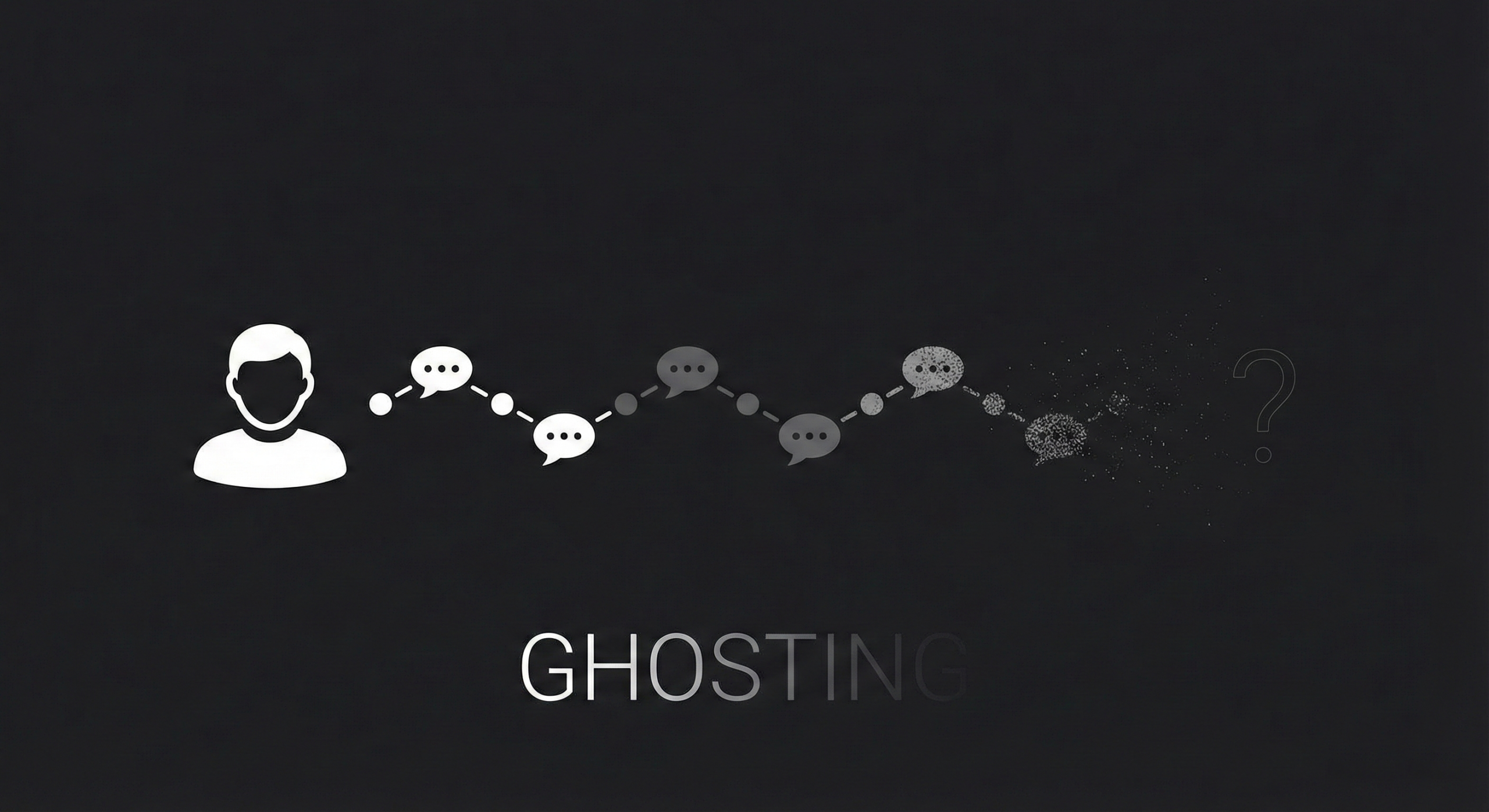
Where’s the buyer in this progression? Nowhere. The buyer could be completely disengaged – ignoring emails, dodging calls, evaluating competitors – and the deal still “progresses” through stages because the seller keeps performing activities.
This is the activity trap encoded into infrastructure. The CRM doesn’t measure whether the buyer is moving toward a decision. It measures whether the seller is going through motions. And then we’re surprised when stages don’t correlate with close rates.
The Visibility Illusion
The cruelest part is that we’ve invested millions in “visibility.” Dashboards. Reports. Analytics. AI-powered forecasting. We can see our pipeline in a hundred different views, slice it by a thousand dimensions, and run predictive models that sound impressively mathematical.
But visibility into fiction is still fiction. Analyzing lies with sophisticated tools produces sophisticated lies. The AI learns the patterns in your historical data – including all the patterns of optimism, inflation, and denial – and projects them forward with confidence intervals that feel scientific.
We don’t have a visibility problem. We have a truth problem. And no dashboard solves a truth problem.
The Question Nobody’s Asking
Every quarter, sales leaders look at the gap between forecast and results and ask: “How do we get better data?” They add fields. They require notes. They implement scoring. They buy new tools.
But the question that matters is different: “What if the entire system is measuring the wrong things?”
What if pipeline stages based on seller activity will never predict buyer behavior? What if probability percentages based on historical averages ignore everything that makes individual deals close or die? What if the CRM architecture itself – the fundamental assumptions built into how we track opportunities – is the source of the fiction?
That’s the question we’re sitting with. Not how to get better data into the existing system, but whether the existing system can ever produce truth.
Stop Selling. Start Diagnosing.
Persuasion is dead. The new skill is something else entirely.
Instant access. No spam. Unsubscribe anytime.