You just lost a deal you should have won. The prospect admitted the problem was real. They agreed the cost of inaction was significant. They even said your solution made sense. Then they went dark. Three weeks later, you learn they decided to “stay the course” – doing nothing. And here’s the part that should terrify you: they now believe that was the right decision. Not because it was. Because they made it.
This isn’t stubbornness. It’s not ignorance. It’s not even denial. It’s a psychological phenomenon that has been governing human decision-making since 1957, and it explains why so many “sure thing” deals collapse into rationalized inaction.
The Science of Self-Justification
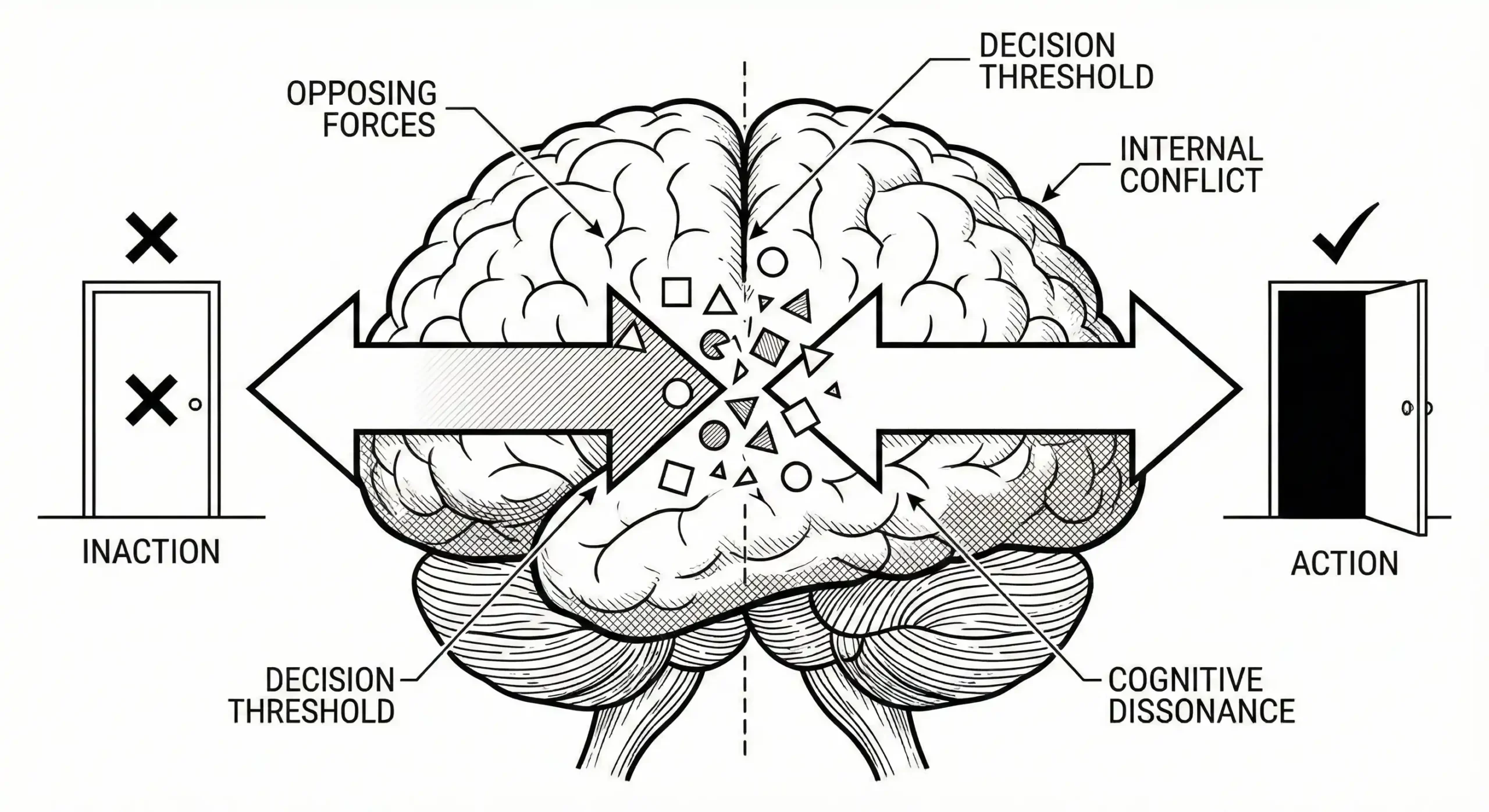
In 1957, social psychologist Leon Festinger published A Theory of Cognitive Dissonance, introducing a concept that would reshape our understanding of human psychology. His central finding: when people hold two conflicting beliefs, or when their actions contradict their beliefs, they experience psychological discomfort so acute that their brain will automatically work to resolve it.
The resolution rarely comes from changing behavior. It almost always comes from changing belief.
Festinger’s research began with an unusual subject: a doomsday cult. Members had sold their possessions, quit their jobs, and gathered to await the end of the world on a specific date. When the apocalypse failed to arrive, Festinger expected the group to disband in embarrassment. Instead, they became more committed. They convinced themselves that their faith had actually saved the world. The dissonance between their actions (destroying their lives for a prophecy) and reality (the prophecy was wrong) was too painful. So they invented a new reality where they were heroes.
This isn’t cult behavior. This is human behavior. And it’s happening in your pipeline right now.
Post-Decision Rationalization: The Silent Deal Killer
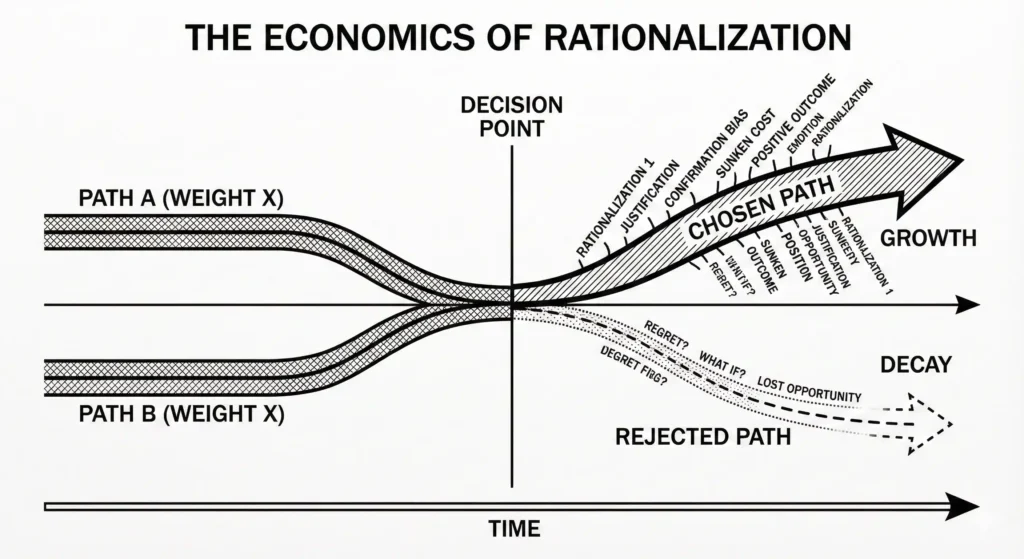
The application to buying decisions is well-documented. Researchers call it “post-decision rationalization” or “choice-supportive bias.” Once someone makes a decision – any decision – their brain immediately begins constructing the argument for why that decision was correct.
A 2010 study published in Psychological Science demonstrated this with remarkable clarity. Participants who were asked to choose between two equally attractive options later rated their chosen option significantly higher – and the rejected option significantly lower – than they had before making the choice. The act of choosing literally changed their perception of value.
“The moment a buyer says ‘no,’ their brain starts building the case for why ‘no’ was the right answer.”
This creates a devastating dynamic in B2B sales. The moment a buyer says “no” – even a soft no, even a “let’s revisit next quarter” – their brain starts building the case for why “no” was the right answer. Every day that passes, the rationalization deepens. The pain they admitted to? Now it’s “manageable.” The cost of inaction they calculated? Now it’s “probably overstated.” Your solution? Now it’s “not the right fit.”
They’re not lying to you. They’re lying to themselves. And they believe every word.
The Effort Justification Trap
Festinger’s research uncovered another dimension that matters for complex B2B sales: effort justification. The more effort someone puts into a decision, the more committed they become to defending it – regardless of the outcome.
In one famous experiment, participants who underwent a difficult initiation to join a group rated that group as more valuable than those who joined easily. The pain of initiation created dissonance (“I suffered for this”) that could only be resolved by inflating the value of the reward (“therefore it must be worth it”).
Consider what this means for your buyer. They’ve spent six months in evaluation. They’ve sat through twelve demos. They’ve dragged procurement, legal, IT, and finance into endless meetings. They’ve written internal memos justifying the exploration. They’ve spent political capital getting stakeholder time.
And then they choose to do nothing.
The dissonance is enormous. All that effort, all that time, all that political capital – for no change? The brain cannot accept this. So it constructs a narrative: the evaluation itself was valuable. We learned what we needed to learn. We confirmed our current approach is adequate. The timing wasn’t right, but now we know what to look for.
None of this is true. But all of it feels true. And in the economy of the mind, feeling is currency.
Why Traditional Sales Makes It Worse
Here’s where cognitive dissonance collides with standard sales methodology – and the results are catastrophic.
Most sales training teaches you to push through resistance. Handle objections. Overcome concerns. Apply pressure when deals stall. Follow up relentlessly. The logic seems sound: persistence wins.
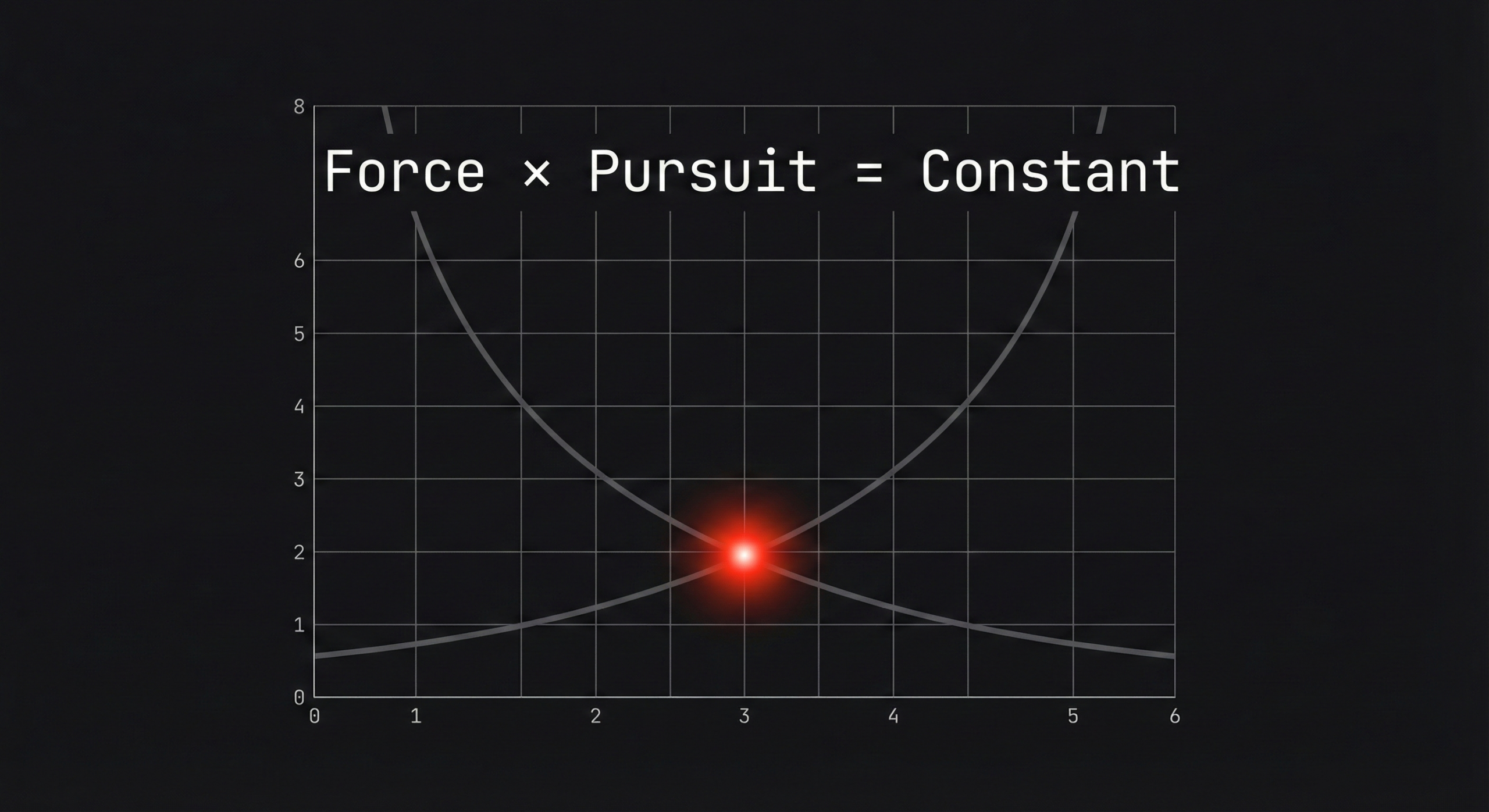
But cognitive dissonance operates on different physics.
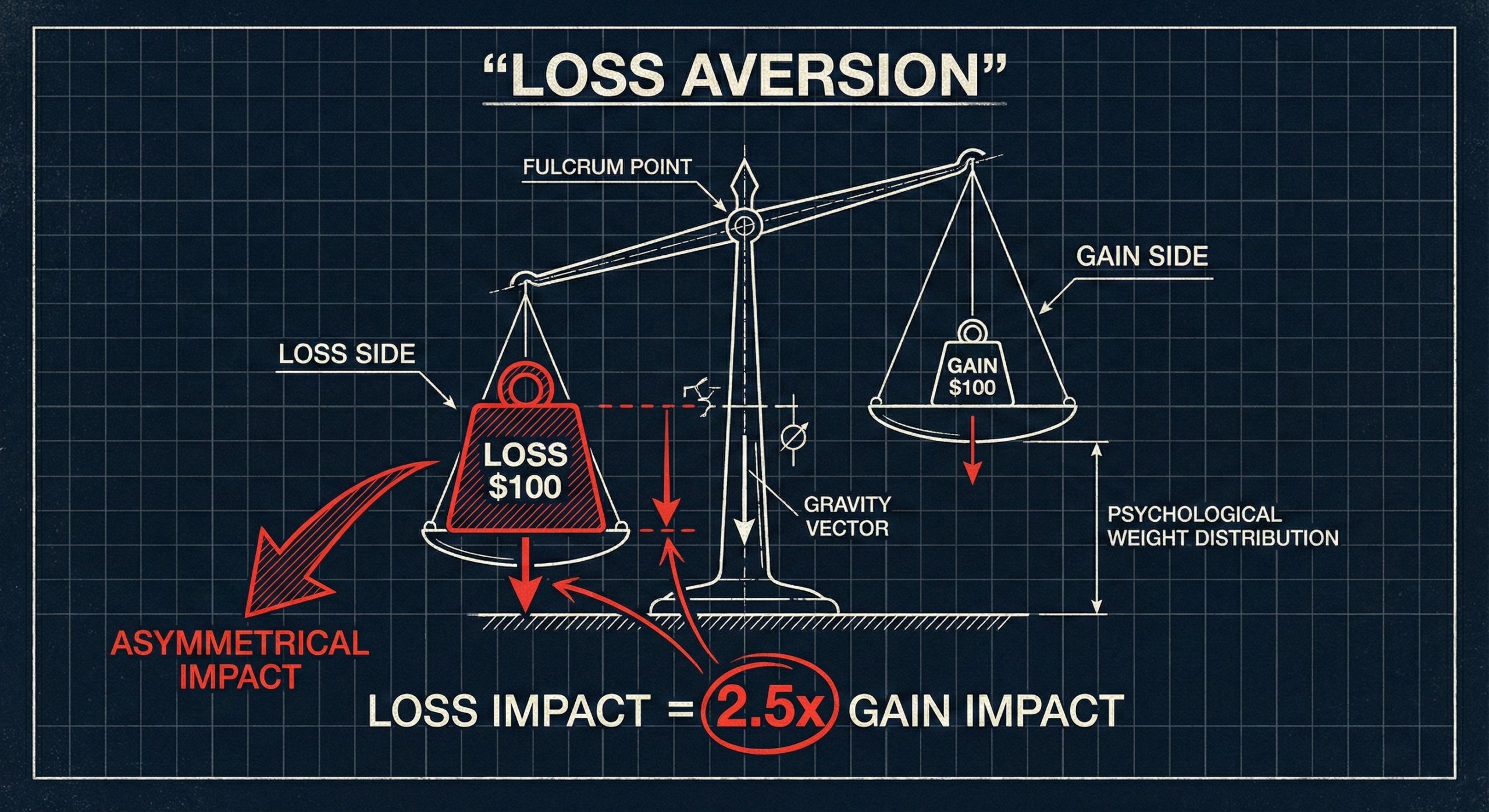
When you push a buyer toward a decision they haven’t fully owned, you create external pressure. If they say “yes” under that pressure, they experience dissonance: “Did I choose this, or was I pushed into it?” If they say “no” to relieve the pressure, they immediately begin rationalizing why “no” was the smart choice.
Either way, you lose. A pressured “yes” leads to buyer’s remorse, delayed implementations, and canceled contracts. A pressured “no” becomes an entrenched “no” as the brain builds its fortress of justification.
The research is clear on this point. Decisions that feel self-directed generate less dissonance and more commitment than decisions that feel externally influenced. When buyers believe the choice was theirs – truly theirs – they defend it. When they sense they were sold, they second-guess it.
The Implication for Every Deal in Your Pipeline
Festinger’s research exposes an uncomfortable truth: the buyer’s brain is not a neutral processor of information. It’s an advocacy machine that builds the case for whatever decision has already been made – or is being made for them.
This has profound implications for how deals are won and lost.
Every stalled deal in your pipeline is a decision that’s already been made. The buyer has decided – consciously or not – to not decide. And every day that passes, their brain is building the argument for why that non-decision is actually wisdom. Caution. Prudence. “We need more information.” “The timing isn’t right.” “Let’s see how Q3 plays out.”
Meanwhile, you’re sending follow-up emails and “just checking in” calls, adding pressure that only accelerates the rationalization. You’re not moving the deal forward. You’re cementing its failure.
The question isn’t whether cognitive dissonance is affecting your deals. It is. The question is whether you understand the physics well enough to work with it instead of against it.
Most sellers don’t. Most methodologies don’t teach them to. And the results are visible in every forecast that misses, every pipeline that bloats, every “sure thing” that evaporates into rationalized inaction.
The Way Forward
Cognitive dissonance isn’t a bug in human psychology. It’s a feature – one that’s been protecting humans from the paralysis of regret for millennia. The problem isn’t that buyers rationalize their decisions. The problem is that most sales approaches trigger the wrong rationalizations.
Understanding this psychology is the first step. But understanding alone changes nothing. The question is: what do you do differently when you know the buyer’s brain is working against you?
That’s exactly what we’re exploring in the methodology we’re building – one designed for how modern buyers actually make decisions, not how we wish they would.
Something Here Felt Familiar?
The book goes deeper. The waitlist gets you there first.
Instant access. No spam. Unsubscribe anytime.