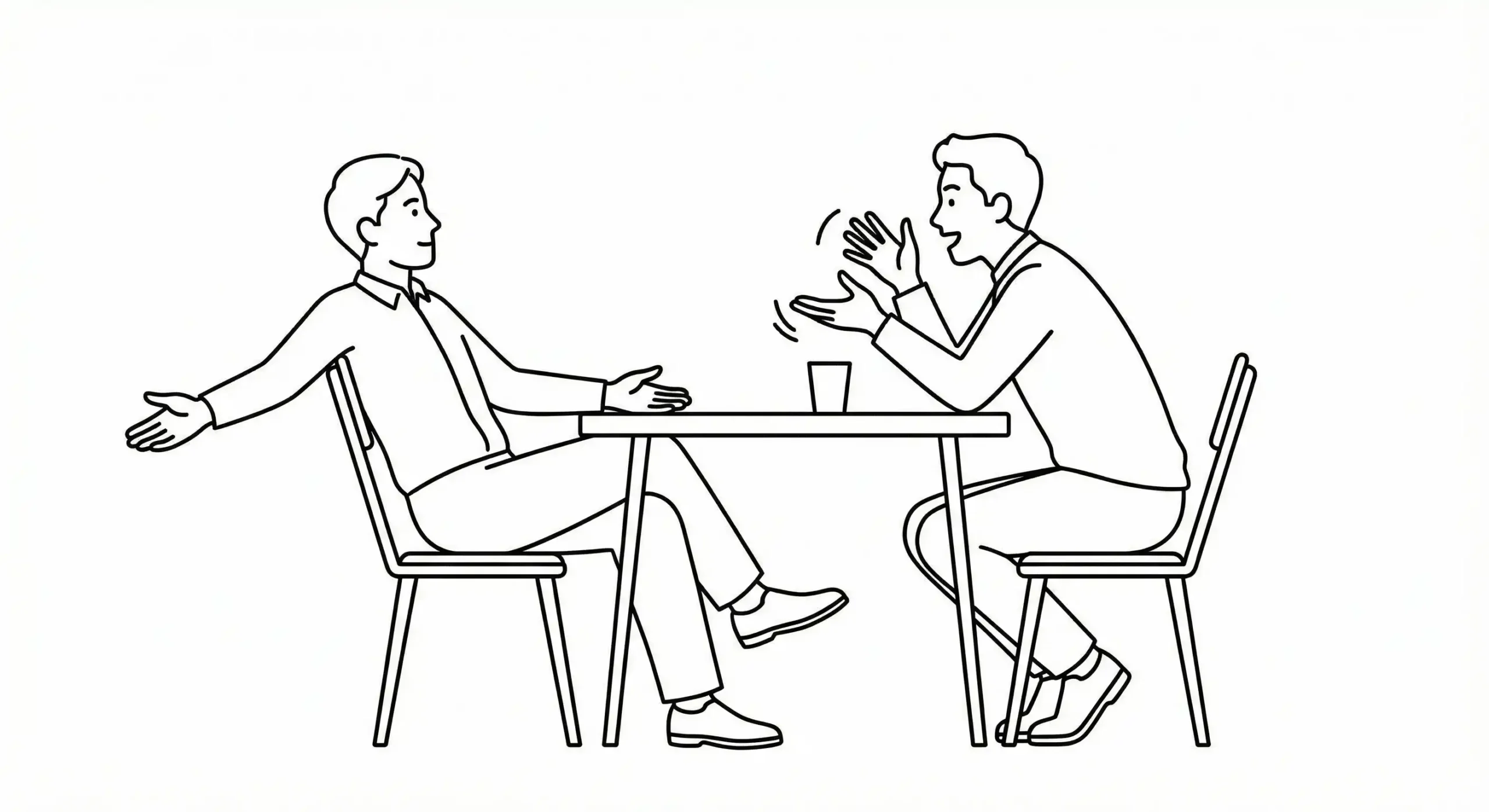
Something happened on a closing call today that I need to write down before I forget exactly how it felt.
The call was 34 minutes. I spoke for maybe eight of them. The buyer talked the rest. And at the end, he said yes.
Not “let me think about it.” Not “I need to run this by my team.” Yes. Let’s do this. Send the paperwork.
I didn’t close him. He closed himself. He built the case, ran the numbers, and talked himself into it while I sat there and listened.
This is what I’ve been reading about in the research. Today I watched it happen in real time.
What a Buyer-Led Close Actually Looks Like
Let me walk you through what happened.
We’d done three calls before this one. Discovery. Demo. Stakeholder presentation. Standard B2B process. Throughout those calls, I’d been testing something: Instead of building the business case for him, I’d been asking questions that made him build it himself.
“What’s this problem costing you right now?” He calculated it. His number, not mine.
“What happens if nothing changes in the next twelve months?” He painted that picture. His words, not mine.
“What would need to be true for this to be worth doing?” He defined the criteria. His framework, not mine.
By the time we got to the closing call, he owned everything. The problem definition. The cost of inaction. The success criteria. All I’d done was ask questions and listen.
The Talk-to-Listen Ratio That Wins Deals
Gong analyzed over a million B2B sales calls and found something that most salespeople get backwards. Top performers talk about 43% of the time. Average reps talk 65-75% of the time.
That’s not a small difference. Top performers let the buyer do most of the talking.
But here’s the part that really hit me: Gong’s research on closing calls specifically (https://www.gong.io/blog/closing-techniques) found that winning and losing closing calls look almost identical. Same talk ratios. Same question counts. Same interactivity.
The difference between winning and losing isn’t made in the close. It’s made in discovery.
By the time you get to the closing call, the deal is essentially decided. If you did the early work right, the close is just paperwork. If you didn’t, no closing technique will save you.
Today’s call proved that. There was no closing technique. There was just a buyer who already knew what he wanted to do because he’d built the case himself over the previous three conversations.
Why Buyers Close Themselves When They Own the Math
Here’s what I think is happening, based on the psychology I’ve been studying.
When I calculate the ROI and present it to a buyer, it’s my number. My math. My conclusion. The buyer can accept it or reject it, but it’s not theirs.
When the buyer calculates the cost of their own problem – when they’re the one who says “this is costing us $400,000 a year” – that number is theirs. They own it. The endowment effect kicks in. They’ve invested in that conclusion.
Same math. Completely different psychological weight.
Today’s buyer didn’t need convincing because he’d already convinced himself. Every piece of the business case came from his mouth, not mine. When he said yes, he was agreeing with his own logic.
I didn’t have to overcome objections because there weren’t any. You don’t object to your own conclusions.
What I Did Differently in the Early Calls
Looking back at the discovery and demo calls, I can see what set this up.
First, I resisted the urge to pitch. Every time I wanted to explain how our solution would help, I asked a question instead. “What would solving this look like for you?” Let him describe it.
Second, I made him quantify everything. Not “this is a big problem” but “what’s this actually costing you?” When he didn’t know, I helped him figure it out – but he did the math, not me.
Third, I stayed silent longer than felt comfortable. When he’d finish answering a question, I’d wait. Often he’d keep talking. The most important things he said came in those silences.
Fourth, I surfaced the cost of inaction, not the return on investment. “What happens if you’re still dealing with this a year from now?” That question did more work than any ROI calculation could have.
The Silence on the Closing Call

The closing call itself was almost anticlimactic.
He started by summarizing where we were. His summary. His framing. I just nodded and asked if he had any remaining questions.
He had a few. Small ones. Logistics. Timeline. Implementation details. I answered them briefly.
Then there was a pause. In the old days, I would have filled it. I would have started summarizing benefits or asking for the business or doing some closing technique I’d learned in training.
Instead, I waited.
He filled the silence himself. “Honestly, I’ve already made up my mind. Let’s do this.”
That’s when it hit me. He’d made up his mind before the call started. The closing call wasn’t where the decision happened. It was just where the decision got announced.
What This Changes About Sales Closing Techniques
I’ve been trained in a dozen closing techniques. Assumptive close. Summary close. Urgency close. Alternative choice close.
Today I used none of them.
The research is starting to make sense in a way it didn’t before. Closing techniques are a patch for bad discovery. If you have to convince someone at the end, you failed to help them convince themselves at the beginning.
The close isn’t a moment of persuasion. It’s a moment of confirmation. The buyer is confirming a decision they’ve already made – or that you’re asking them to make under pressure.
One of those paths leads to closed deals and happy customers. The other leads to stalls, objections, and buyer’s remorse.
I know which one I want to be on.
One Deal Doesn’t Prove Anything
I want to be careful here. One deal is an anecdote, not evidence.
Maybe this buyer was already ready to buy. Maybe I got lucky. Maybe this was going to close no matter what I did.
But it felt different. The whole process felt different. Less like pushing and more like guiding. Less like convincing and more like clarifying. Less like performing and more like partnering.
I’m going to keep testing this. Different deals, different buyer types, different complexity levels. See if the pattern holds.
For now, I’m just writing down what happened so I don’t forget. A deal closed itself today. I barely spoke. And I think I’m starting to understand why.
Your Pipeline Isn't Dying. It Was Never Alive.
Activity isn't agreement. Motion isn't progress. Time to learn the difference.
Instant access. No spam. Unsubscribe anytime.