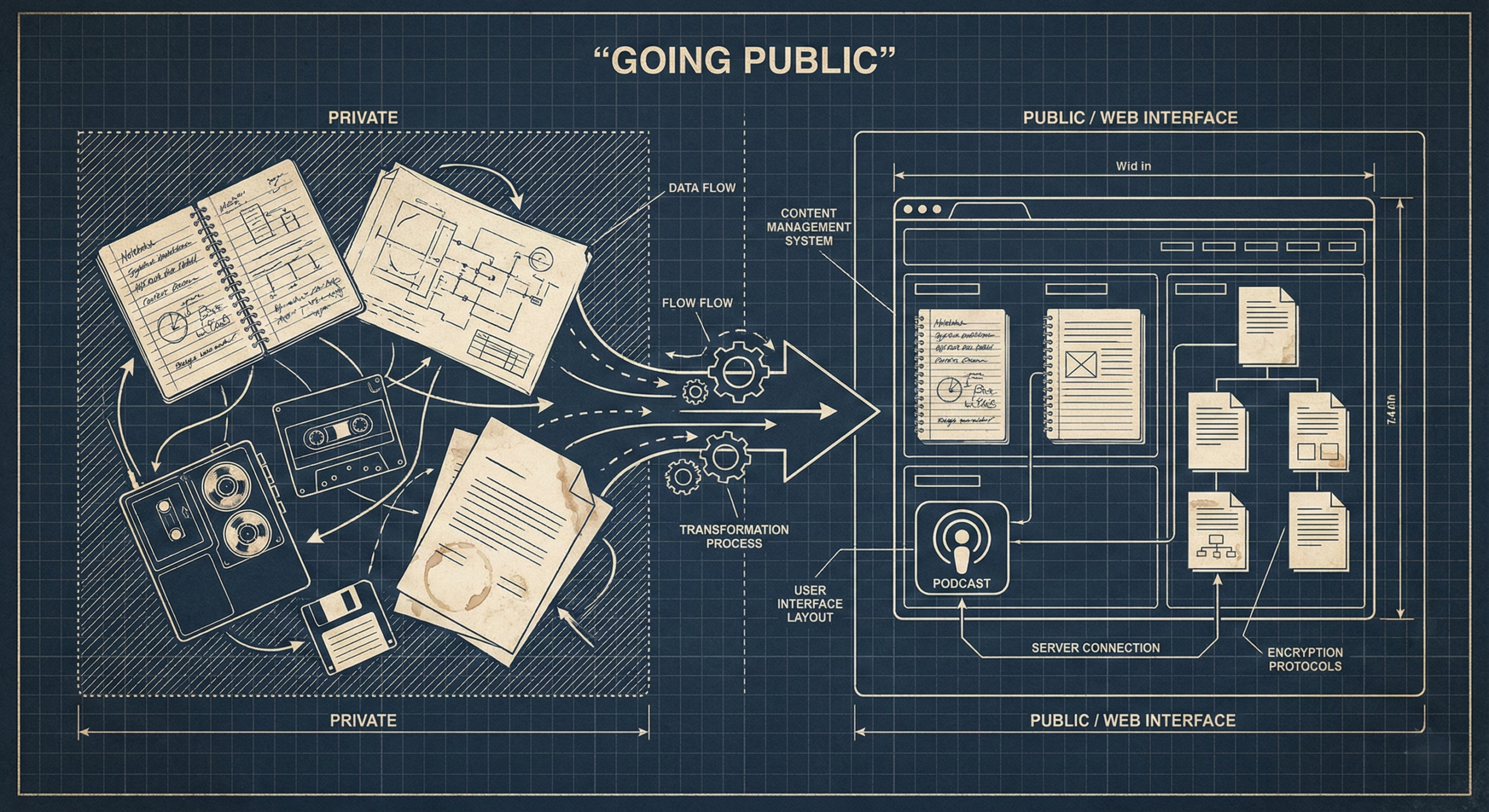
This morning I deleted 30 pages of my manuscript.
Three weeks of early mornings and late nights. Gone. Moved to a folder I’ll probably never open again.
I’m sharing this because I promised myself I’d be honest about this process. The wins and the failures. Today was a failure – or maybe a breakthrough disguised as one.
Either way, I learned something important about why most sales books sound exactly alike. And I almost made the same mistake.
Why Sales Books All Sound the Same
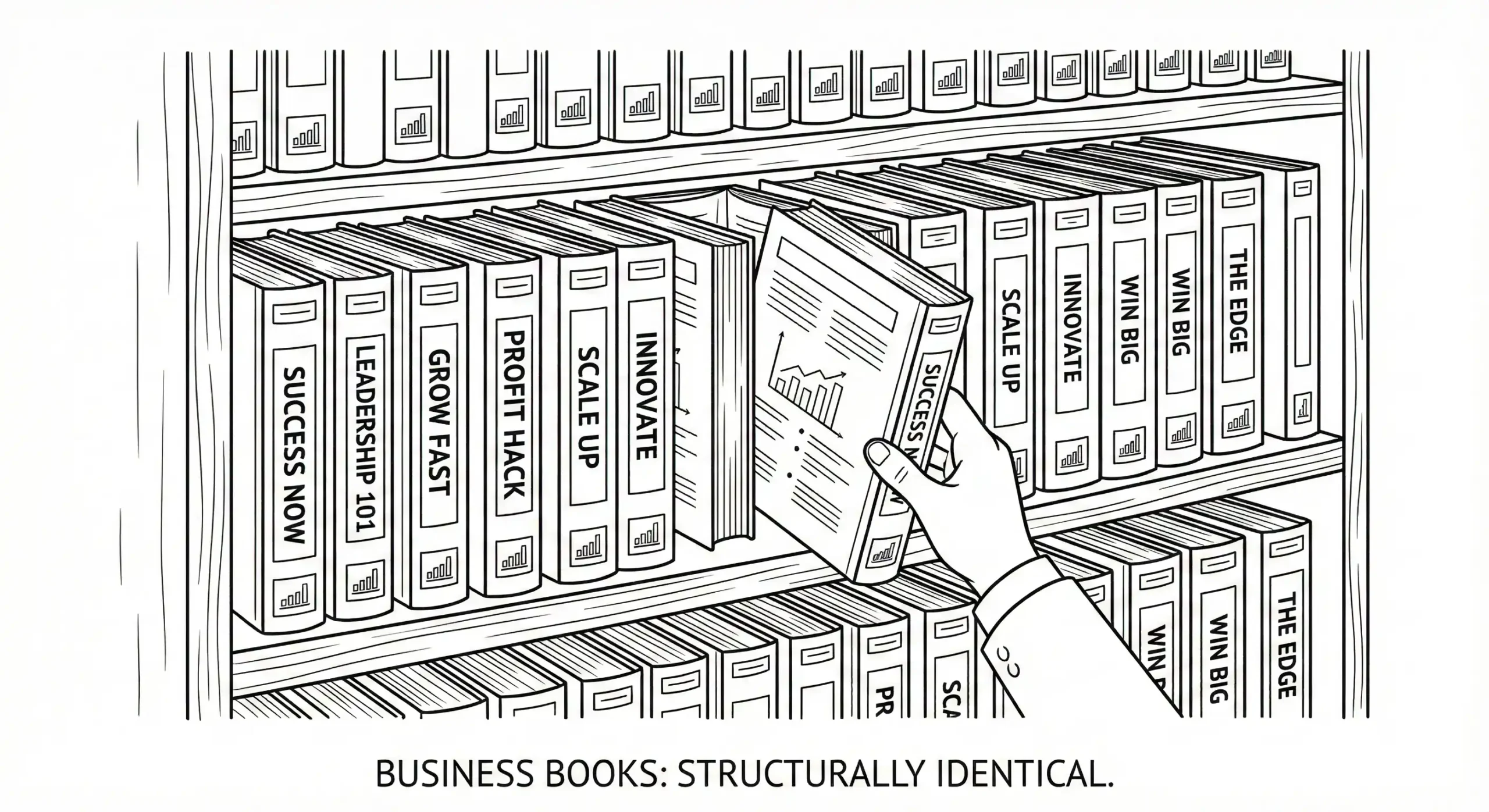
Pick up any sales book published in the last twenty years. You’ll find the same structure:
Chapter on mindset. Chapter on prospecting. Chapter on discovery. Chapter on presenting. Chapter on objection handling. Chapter on closing. Maybe a chapter on follow-up if the author is thorough.
Inside each chapter: a framework. A set of steps. A checklist. Questions to ask. Scripts to follow.
The labels change. SPIN becomes Challenger becomes Sandler becomes whatever comes next. But the architecture is identical. Here’s the process. Here are the steps. Now go execute.
I’ve read dozens of these books. Started even more. Finished maybe five. They blur together because they’re essentially the same book with different vocabulary.
This morning I realized I was writing another one.
The Tactics Trap in Business Writing
My 30 deleted pages were about discovery calls. How to run one. What questions to ask. How to qualify opportunities.
The writing was tight. The frameworks were practical. Any rep could pick it up and immediately run better discovery calls.
That’s the problem.
I’ve spent months arguing that traditional sales is psychologically backwards. That everything we’ve been taught works against how humans actually make decisions. That’s the insight this book is supposed to deliver.
But when I sat down to write the “how,” I defaulted to tactics. Frameworks. Steps. The exact same structure as every book I’m criticizing.
Revolutionary insight dressed up in traditional execution. “Everything about sales is wrong – and here’s a checklist.” That’s not a book. That’s a contradiction.
Kill Your Darlings: What It Actually Means for Business Authors
Writers call this “killing your darlings” – the painful process of cutting work you’re proud of because it doesn’t serve the larger purpose. MasterClass has a good breakdown of what this means and why experienced writers consider it essential.
But here’s what most writing advice misses: It’s not just about cutting beautiful sentences that don’t fit. Sometimes you have to kill content that’s genuinely useful – because useful isn’t the same as transformative.
My 30 pages were useful. A rep could read them and improve. But they wouldn’t think differently. They’d just have better tactics to execute the same flawed approach.
Useful keeps people where they are. Transformative moves them somewhere new.
I was writing useful. I need to write transformative. Those aren’t the same thing.
Tactics vs Principles: The Real Difference
Here’s the uncomfortable realization that made me hit delete:
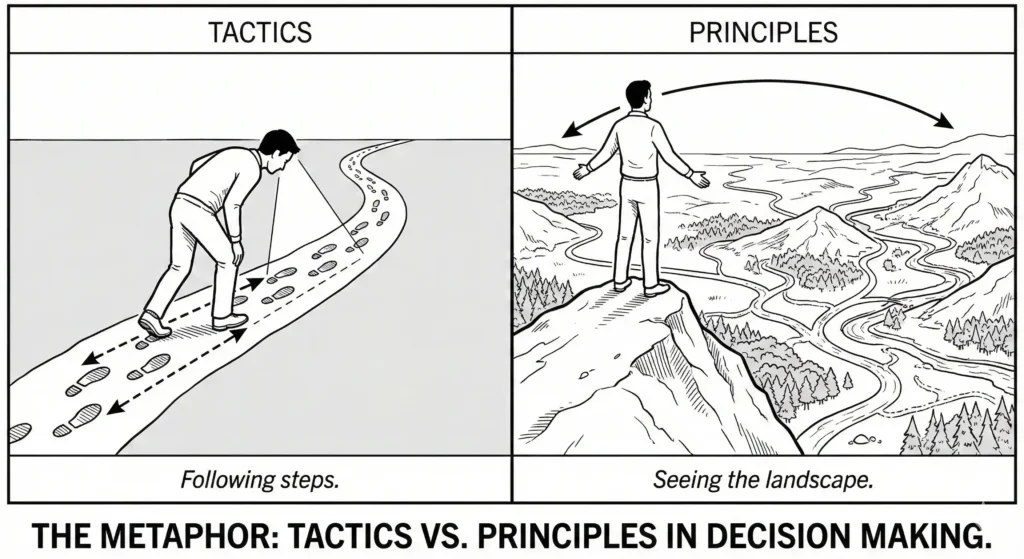
Traditional sales training gives you tactics without understanding. It tells you what to do without explaining why it works. It hands you a script without teaching you to think.
My 30 pages? Same thing. Better tactics, maybe. More psychologically informed. But still: here’s what to do, now go do it.
That’s not transformation. That’s replacement. Swap one set of steps for another set of steps. The rep is still following instructions instead of understanding principles.
If I publish that, I’m part of the problem I’m trying to solve.
Tactics are what to do. Principles are why it works. If you understand the principles, you can generate your own tactics. If you only have tactics, you’re lost the moment the situation changes.
How to Write a Business Book That’s Actually Different
I don’t have this figured out. If I did, I wouldn’t have wasted three weeks. But here’s what I’m starting to understand:
The book can’t be a manual. It has to be an argument. It has to change how people think, not just what they do. Because if you change how they think, the “what to do” becomes obvious. They can figure it out themselves.
The psychology research isn’t supporting material. It is the material. The behavioral economics isn’t background for the frameworks – it’s the foundation that makes the frameworks make sense.
And maybe – this is the scary part – I need to trust the reader more. Stop trying to hand them a complete system. Give them principles and let them build their own system.
That’s harder to write. It’s also harder to sell. “Here’s a complete system” is a much easier pitch than “here’s a new way of thinking.”
But it might be the only version worth writing.
The Sunk Cost Fallacy in Creative Work
I almost didn’t delete those pages.
Three weeks of work. Early mornings before the day job. Late nights after the family goes to bed. My brain kept screaming to salvage something. “Maybe you can rework it.” “Maybe it’s not that bad.” “Maybe it’ll fit somewhere.”
That’s the sunk cost fallacy. The same cognitive bias I’ve been reading about for months – and I almost fell for it with my own work.
The time is gone whether I keep the pages or not. The only question that matters: What’s the best use of my time going forward? And the answer isn’t “polish something fundamentally flawed.” The answer is start over with clarity.
So that’s what I’m doing. Back to page one. Different approach. Less certainty about the how, more conviction about the why.
That’s the honest update. I’ll let you know how it goes.
Still Asking the Same Questions?
Join the waitlist if you want to know when the questions finally become answers. Or at least better questions.
Instant access. No spam. Unsubscribe anytime.