Every Monday morning, sales leaders across the world open their CRM and stare at a number.
$4.2 million in pipeline. $6.8 million. $12.3 million. Whatever the number is, it feels real. It’s in the system. It has stages and percentages and close dates. It generates reports and forecasts and board presentations.
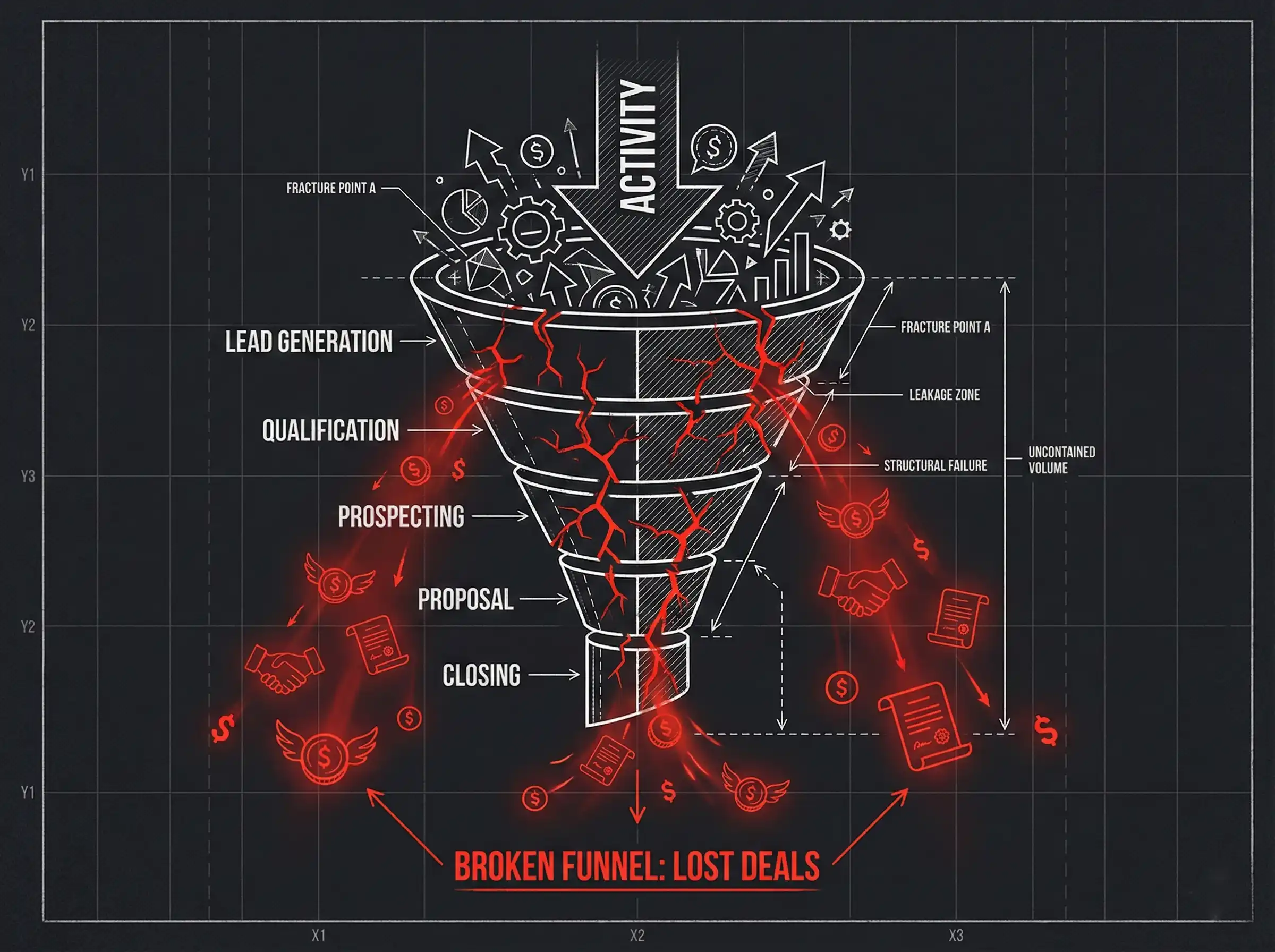
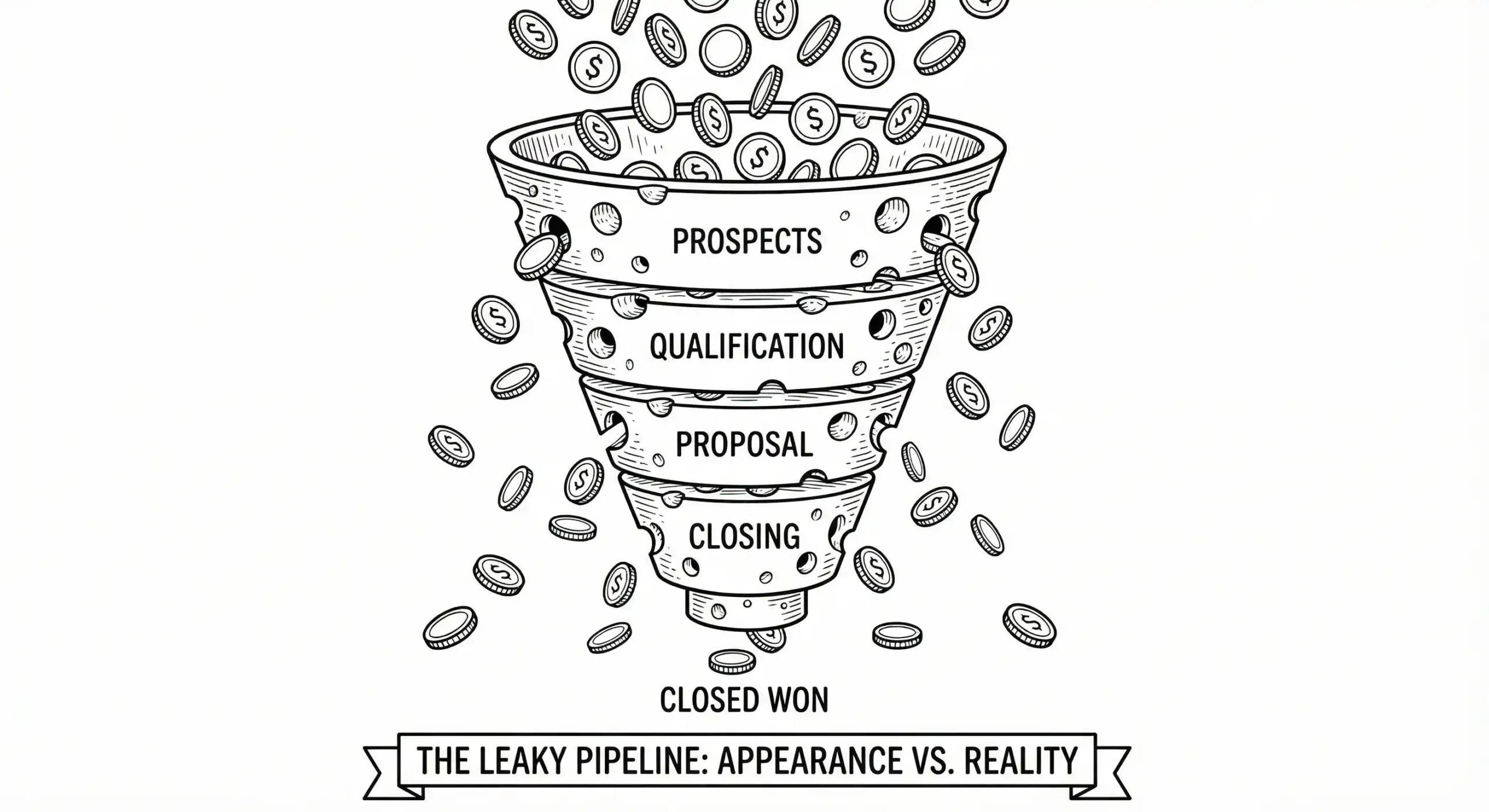
There’s just one problem: Most of it is fiction.
Not intentional fiction. Nobody’s lying. But the gap between what’s in the pipeline and what’s actually going to close is so wide that the number might as well be made up.
And here’s the part nobody wants to say out loud: We all know it.
The Numbers Don’t Lie (Even Though the Pipeline Does)
Let’s start with the research, because this isn’t opinion.
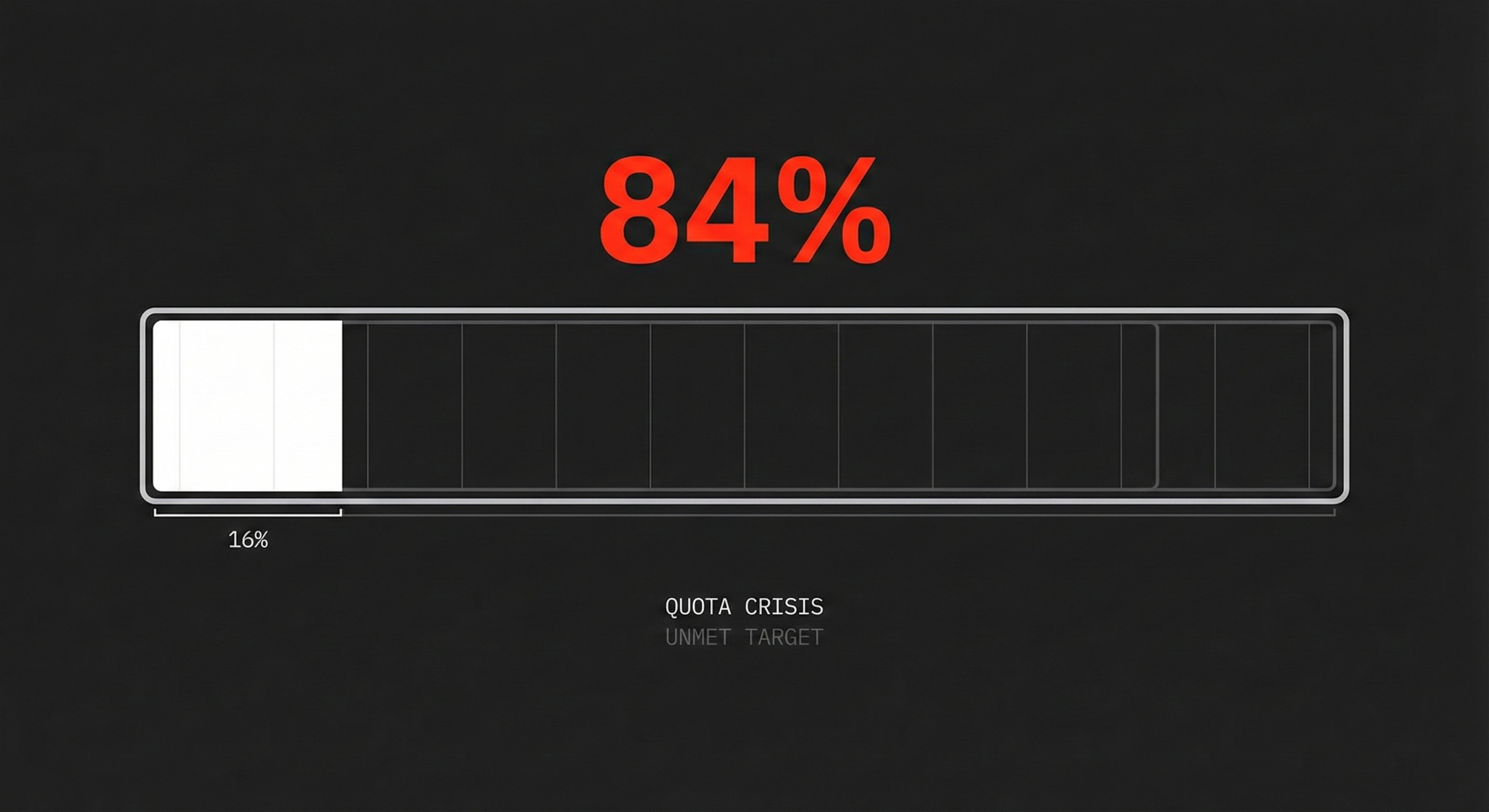
A benchmark study by InsightSquared and RevOps Squared found that 68% of companies miss their forecast by more than 10%. Only 15% of revenue leaders report being “very satisfied” with their forecast process. And 91% – ninety-one percent – report their predicted forecast is at least 6% off from actual results.
SiriusDecisions puts it even worse: 79% of sales organizations miss their forecast by more than 10%.
CSO Insights found that nearly 60% of forecasted deals slip to the next quarter.
Read that again. More than half of the deals you’re counting on this quarter won’t close this quarter.
This isn’t a sales execution problem. This is a measurement problem. We’re measuring something that doesn’t predict what we think it predicts.
The Fundamental Flaw
Here’s the question nobody asks: What exactly does a pipeline stage measure?
Think about your stages. Discovery. Qualification. Demo. Proposal. Negotiation. Closed Won.
Now think about what moves a deal from one stage to the next.
Discovery happens when the seller completes a discovery call. Qualification happens when the seller decides the deal is qualified. Demo happens when the seller gives a demo. Proposal happens when the seller sends a proposal.
Notice the pattern?
Every stage is defined by what the seller did. Not by what the buyer committed to.
Your pipeline doesn’t measure buyer intent. It measures seller activity. And we’ve been confusing the two for decades.
The Activity Illusion
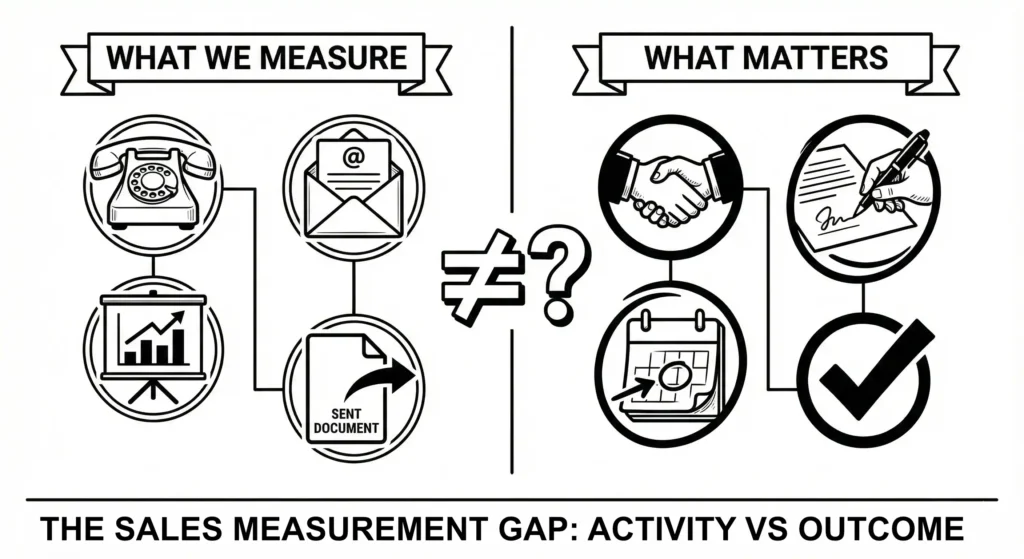
A deal moves to “Demo Completed” because you gave a demo. But did the buyer agree to evaluate seriously? Did they commit to a decision timeline? Did they confirm budget exists?
You don’t know. The stage doesn’t tell you. All it tells you is that you did a demo.
A deal moves to “Proposal Sent” because you sent a proposal. But did the buyer ask for it? Did they confirm they’re ready to review pricing? Did they agree this is the final step before decision?
Again, you don’t know. You sent a document. That’s what the stage measures.
This is why your 3x pipeline coverage doesn’t translate to predictable revenue. You’re counting activities, not commitments. You’re measuring what sellers do, not what buyers agree to.
A pipeline full of activity with no buyer commitment is just a to-do list pretending to be a forecast.
The Incentive Problem
It gets worse. The system actively incentivizes fiction.
Reps are judged on pipeline generation. So they create pipeline. They move deals forward based on activity because activity is what they control. A buyer won’t return calls? Keep them in the pipeline – they haven’t said no. A deal has gone dark? Leave it at 50% – maybe they’ll come back.
Managers need to show pipeline coverage to leadership. So they pressure reps to maintain pipeline. “We need 4x coverage to hit the number.” The number becomes the goal, not the accuracy.
Leadership needs to show the board a healthy business. So they report the pipeline number. “We have $50 million in pipeline for a $12 million quarter.” The board nods. Nobody mentions that half of it hasn’t moved in 60 days.
Everyone knows the number is inflated. Everyone pretends it isn’t. The fiction persists because the truth is inconvenient.
The Probability Lie
Here’s where it gets almost absurd.
We assign probabilities to stages. Discovery is 10%. Qualified is 25%. Demo is 50%. Proposal is 75%. As if a deal at the demo stage has a 50% chance of closing.
These probabilities are based on historical averages. “Historically, 50% of deals at the demo stage close.” So every deal at demo gets 50%.
But that’s not how probability works.
A deal where the buyer requested the demo, confirmed budget, and scheduled next steps has a very different probability than a deal where you pressured them into a demo they didn’t want. Both are at “Demo Completed.” Both get 50%.
The stage tells you nothing about buyer commitment. The probability pretends it does. And you make forecasts based on this pretense.
No wonder 68% of companies miss their forecast by more than 10%.
What Would Real Pipeline Look Like?
Imagine a different model.
Instead of stages based on seller activity, stages based on buyer commitment. The deal doesn’t move forward because you did something. It moves forward because the buyer agreed to something.
Stage one: Buyer has confirmed the problem exists and quantified its cost.
Stage two: Buyer has agreed to evaluate solutions and committed a timeline.
Stage three: Buyer has confirmed budget authority and decision process.
Stage four: Buyer has requested proposal and agreed to decision date.
Stage five: Buyer has verbally committed pending paperwork.
Notice the difference? Every stage requires buyer action, not seller action. You can’t move a deal forward by doing more. You can only move it forward by getting commitment.
A pipeline built on commitment would be smaller. Much smaller. But it would be real. You could actually forecast from it.
Why We Don’t Change
If the current system is so broken, why does everyone keep using it?
Because the fiction is comfortable.
A $50 million pipeline feels better than a $15 million pipeline – even if they both represent the same amount of closeable business. The big number creates an illusion of health, of activity, of progress.
Switching to commitment-based pipeline would require admitting that most of what’s in there isn’t real. It would shrink the visible number dramatically. It would expose how few deals actually have buyer commitment.
That’s a hard conversation to have with a board. With investors. With yourself.
So we keep the fiction. We keep missing forecasts. We keep wondering why 60% of deals slip. And we keep pretending the pipeline is real.
The Cost of the Fiction
This isn’t just an operational inconvenience. The pipeline fiction has real costs.
You hire based on a pipeline that isn’t real. You staff up for revenue that won’t arrive.
You make commitments to the board based on a forecast that will miss. Your credibility erodes.
You allocate marketing budget based on pipeline coverage that’s fiction. You waste money generating more fiction.
Reps spend time “managing” deals that were never real. They could be finding deals that are.
The fiction multiplies. The cost compounds. And every quarter, we’re surprised when the number misses.
We shouldn’t be surprised. We should be embarrassed that we’re still using a measurement system that has a 68% failure rate and pretending it works.
Start Telling the Truth
The first step is embarrassingly simple: Stop lying to yourself.
Go look at your pipeline right now. For every deal, ask one question: What has the buyer actually committed to?
Not what you’ve done. Not what you think they’ll do. What have they explicitly agreed to?
If the answer is “nothing concrete,” that deal isn’t at whatever stage you’ve assigned it. It’s at hope. And hope isn’t a stage. It’s a prayer.
The pipeline fiction persists because we let it. Because small lies are easier than hard truths. Because inflated numbers feel better than accurate ones.
But you can’t build a predictable business on fiction. You can only build it on truth.
And the truth about most pipelines is ugly. It’s time we stopped pretending otherwise.
Escape the System.
The methodologies failed. The metrics lied. Time to become something new.
Instant access. No spam. Unsubscribe anytime.