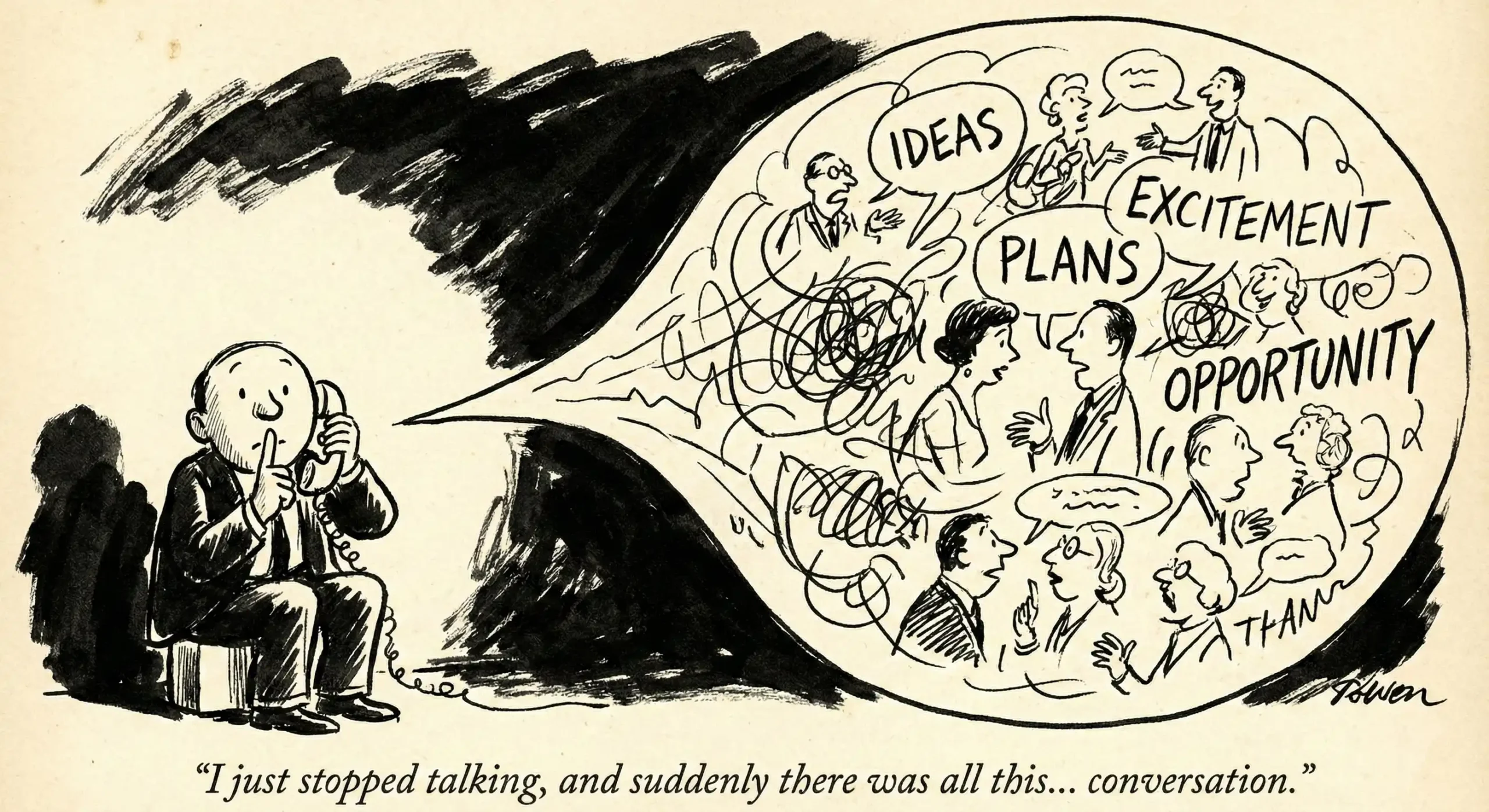
I ran an experiment last week. Ten discovery calls. Deliberately changed my approach on half of them.
The hypothesis: What if asking fewer questions actually gets you more information?
It sounds backwards. Every sales training I’ve ever done emphasizes asking questions. Discovery frameworks are built around question sequences. We’re taught that the more questions we ask, the more we learn.
But I’ve been reading research that suggests we might have this completely wrong.
What the Data Actually Says About Discovery Calls
I stumbled across research from Gong that analyzed over 500,000 sales calls. Two findings stuck with me:
First, the optimal talk-to-listen ratio is 43:57. Top performers talk 43% of the time and listen 57%. Most sales reps? They talk 65-75% of the time. They think they’re listening, but they’re actually waiting for their turn to ask the next question.
Second – and this is the one that really got me – the optimal number of questions in a discovery call is 11-14. Not more. Reps who ask 20+ questions actually close at lower rates than those who ask fewer.
(Source: Gong’s research on discovery calls)
Think about that. More questions correlates with worse outcomes. The opposite of what we’re trained to do.
Why? The research suggests that too many questions feels like an interrogation, not a conversation. Buyers shut down. They give shorter answers. They stop revealing the real stuff.
The Experiment: Two Different Approaches
I had ten discovery calls scheduled last week. I split them into two groups.
Group A (5 calls) – My normal approach: Worked through my discovery framework. Hit all my standard questions. Tried to uncover pain, timeline, decision process, budget signals. Probably 20-25 questions per call.
Group B (5 calls) – The experiment: Limited myself to 10-12 questions maximum. But after each answer, instead of moving to the next question, I used silence. Or I said “Tell me more about that.” Or I just reflected back what I heard and waited.
Same types of prospects. Same deal sizes. Same me.
Different approach to the conversation.
What Happened: The Results Surprised Me
Group A – my normal approach – felt productive. I got answers to all my questions. I checked all the boxes. Average call length: 32 minutes.
Group B – the experiment – felt different. Slower. More uncomfortable at first. But something shifted around the 15-minute mark in most calls. The buyers started talking more. Not just answering questions, but volunteering information I didn’t ask for. Average call length: 41 minutes.
Here’s what I noticed:
In Group A, I got answers. In Group B, I got stories.
In Group A, buyers responded to my questions. In Group B, buyers started asking me questions – about how we work, what we’ve seen with similar companies, whether I thought they had a real problem.
In Group A, I knew what they said. In Group B, I understood what they meant.
The buyers in Group B talked about politics. They mentioned concerns they “probably shouldn’t share.” They revealed the real timeline, not the official one.
The Technique That Made the Difference
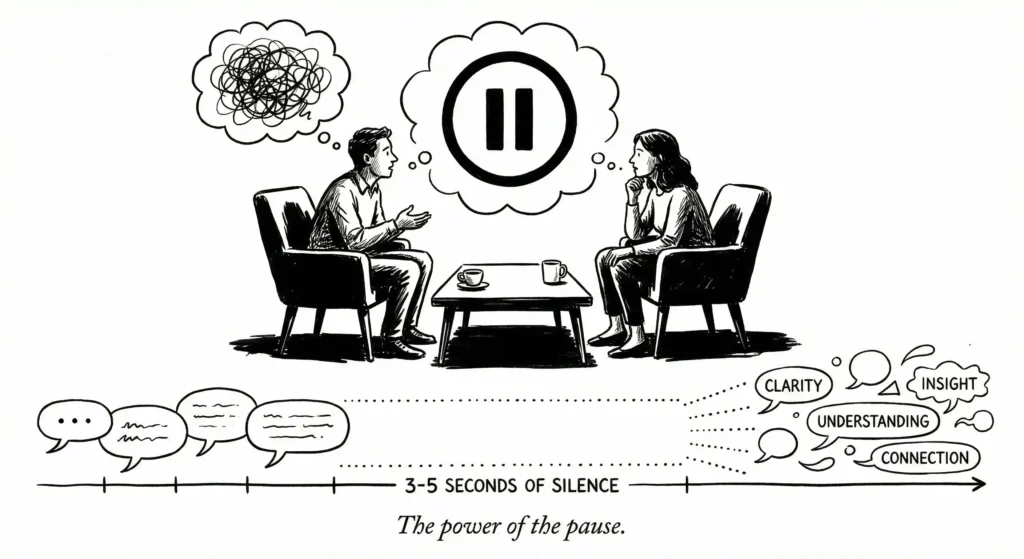
The biggest unlock wasn’t asking fewer questions. It was what I did instead of asking the next question.
Silence. Just… waiting. For 3-5 seconds after they finished talking.
It’s excruciating at first. Every instinct screams to fill the space. To ask the follow-up. To keep the conversation “moving.”
But here’s what happens when you wait: People keep talking. They fill the silence themselves. And what they fill it with is gold.
The first thing they said was the answer to my question. The second thing – the thing they said to fill the silence – was what they actually thought.
One buyer, after a pause, said: “Actually, the real reason we’re looking at this now is…” and proceeded to tell me something that completely reframed the opportunity. I never would have gotten there with another question.
Why I Think This Works
I’ve been connecting this back to everything else I’m learning about buyer psychology.
Questions are a form of control. Each question directs the conversation where I want it to go. The buyer is responding to my agenda, not exploring their own thinking.
Silence gives control back. When I wait, the buyer decides what’s important. They take the conversation where they need it to go. And where they take it is almost always more valuable than where I would have steered it.
Too many questions also trigger something like reactance. “Why does this person need to know all this?” “This feels like a checklist.” “I’m being processed, not heard.”
Fewer questions, more space – it signals that I’m actually interested in them. Not just in getting information from them.
What I’m Changing Going Forward
Ten calls isn’t statistically significant. I know that. But the qualitative difference was stark enough that I’m changing my approach.
I’m throwing out my 25-question discovery framework. I’m replacing it with 10-12 carefully chosen questions – the ones that matter most.
I’m building in deliberate pauses. After every answer, wait. Count to three in my head before responding.
I’m using “Tell me more about that” instead of the next question on my list.
And I’m tracking the difference. Not just in call length, but in deal progression. Do these calls convert better? Do the deals move faster? Does the information I get translate into better outcomes?
I’ll report back.
But I’m increasingly convinced that our obsession with discovery questions has been counterproductive. We’ve been so focused on extracting information that we forgot to create space for buyers to share it.
Ready to Question Everything?
Not everyone is. But if you are, the book is almost ready.
Instant access. No spam. Unsubscribe anytime.