I had a meeting last week that I need to write about while it’s still fresh.
It was a pivotal moment. The kind where you can feel something shift – not just in the deal, but in how you understand what you’re doing.
A CFO looked at me, interrupted my presentation, and said: “I need you to stop selling me.”
What I did next surprised both of us.
The Setup: A High-Stakes Executive Meeting
Context: This was a late-stage deal. Six-figure annual contract. We’d been working it for three months. The champion loved us. The technical team was on board. Everything was tracking toward a close.
But we needed CFO sign-off. And the CFO hadn’t been involved until now.
I prepared like I always do. Tailored deck. ROI model. Case studies from similar companies. Answers to anticipated objections. I was ready to make the business case.
Five minutes into my presentation, he raised his hand.
“Let me stop you there.”
The Moment: ‘Stop Selling Me’
He leaned back in his chair. Not angry. Not hostile. Just… tired.
“I’ve sat through three of these this week,” he said. “Vendors with slides showing me why I should spend money. ROI projections that always somehow show massive returns. Case studies from companies that are never quite like ours.”
He paused.
“I need you to stop selling me. I’ve already read your materials. I know what your product does. What I don’t know is whether this is actually a priority right now – and your slides aren’t going to help me figure that out.”
The room went quiet. I could feel my champion tense up. This was the moment where the deal could die.
Every instinct I’d developed over thirty years screamed at me: Recover. Pivot. Reframe. Address the objection. Don’t let the meeting slip away.
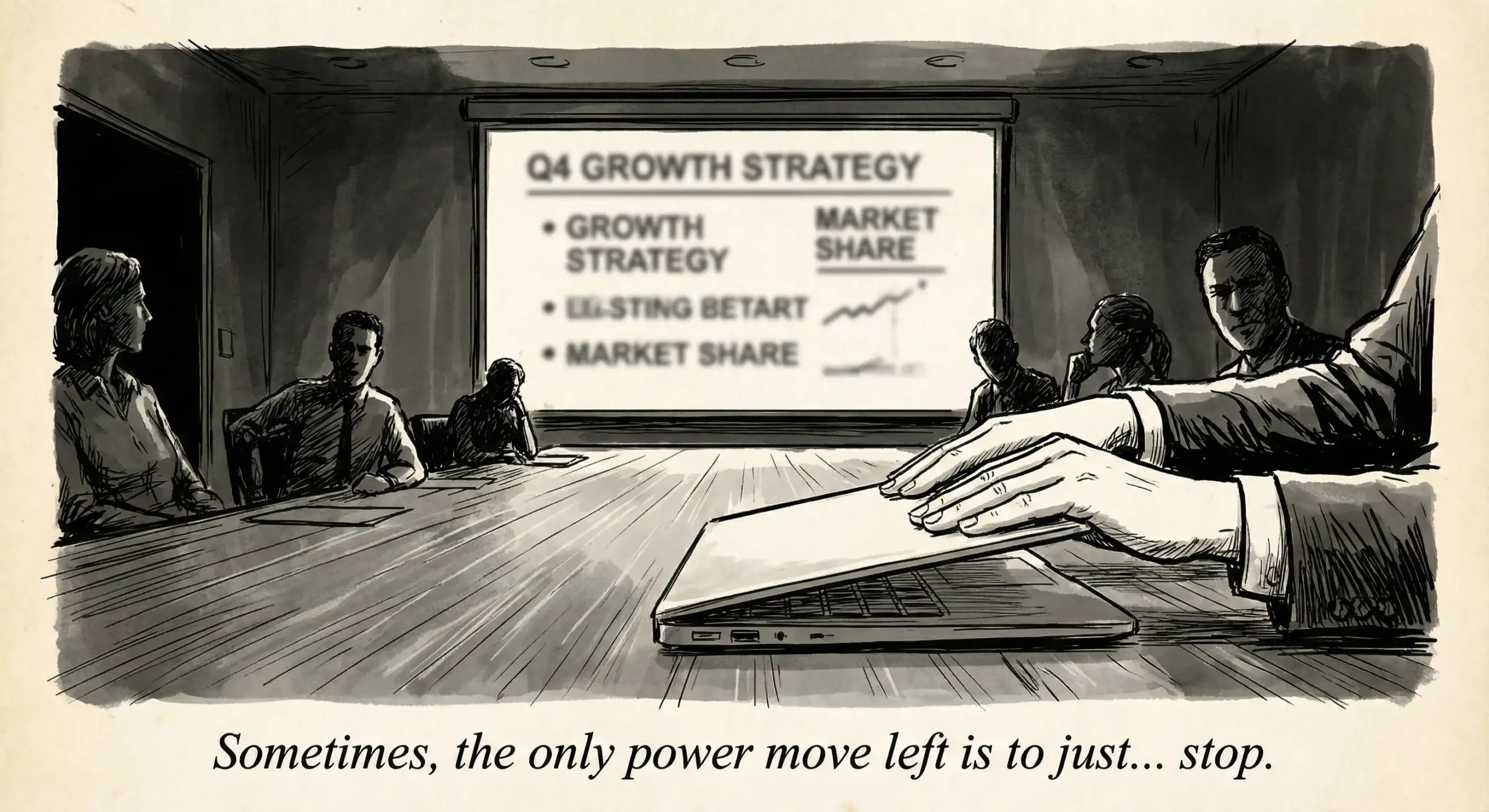
Instead, I closed my laptop.
The Decision: I Actually Stopped
“Okay,” I said. “Let’s not do the presentation.”
He looked surprised. I think he expected me to push back or try a different angle.
“You’re right,” I continued. “I can’t tell you whether this should be a priority. Only you know what’s competing for these dollars. Only you know what problems are keeping you up at night.”
I asked him a question instead: “Can I ask what you’re weighing this against? Not so I can argue for budget – just so I understand where this fits for you.”
And then I shut up. For what felt like forever.
What Happened Next
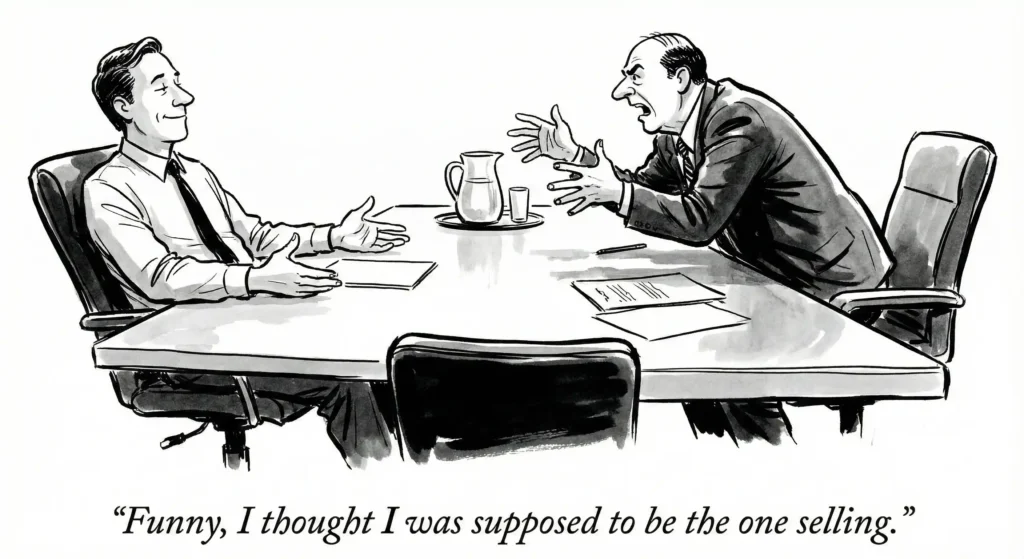
He started talking.
Not about my product. About his world. The board pressure he was under. The two initiatives that had failed last quarter. The competing priorities fighting for the same budget. The political dynamics between departments.
For twenty minutes, I didn’t sell anything. I just listened. Asked a few clarifying questions. Let him think out loud.
Then something shifted.
He started connecting dots himself. The problem our product solved was linked to one of the failed initiatives. The cost of not fixing it was connected to something the board was specifically asking about. He was seeing our solution not as another vendor pitch but as a potential answer to his actual problems.
“Let me ask you something,” he said. “If we did this, how fast could we show measurable impact? I need something I can take to the board in Q3.”
Now he was selling himself.
The Outcome
We closed the deal ten days later. Faster than any deal of that size I’ve closed this year.
But here’s what matters more than the outcome:
The CFO called me personally after the contract was signed. He said something I’ve never had a buyer say to me before: “That meeting was different. You didn’t try to convince me of anything. You helped me think through my own problem. I wish more vendors worked that way.”
He’s already introduced me to two other executives in his network.
Why This Moment Mattered
I’ve been writing about the inverse relationship for months. I’ve been testing pull-back tactics. I’ve been reading the research.
But this was different. This wasn’t a planned experiment. This was a high-stakes moment where everything in me said “push” and I chose to pull.
When he said “stop selling me,” he was telling me that my selling was triggering his resistance. He was describing reactance without knowing the term.
When I stopped – really stopped, not fake-stopped while looking for another angle – the resistance disappeared. The space I created let him move toward a conclusion on his own.
And because it was his conclusion, he acted on it. Fast.
The inverse relationship isn’t just theory. It’s not just a framework I’m playing with. In that moment, with real money on the line, it worked.
What I’m Taking Forward
I learned something important: there’s a difference between knowing something intellectually and trusting it under pressure.
I’ve “known” about the inverse relationship for months. But in that meeting, when the stakes were high and my instincts were screaming, I had to choose whether to actually trust it.
Closing my laptop was one of the hardest things I’ve done in a sales meeting. It felt like giving up. Like admitting defeat.
It was actually the opposite. It was the moment I stopped fighting the buyer and started helping him find his own way to yes.
I don’t know if I’ll have the courage to do it every time. But I know now that it works.
And that changes everything.
79% of Deals Don't Close.
That's not a performance problem. That's a methodology problem. The book explains why - and what to do instead.
Instant access. No spam. Unsubscribe anytime.