The most comprehensive cold email study I’ve seen came out recently. Belkins analyzed 16.5 million cold emails across 93 business domains.
The findings should alarm anyone running an outbound motion.
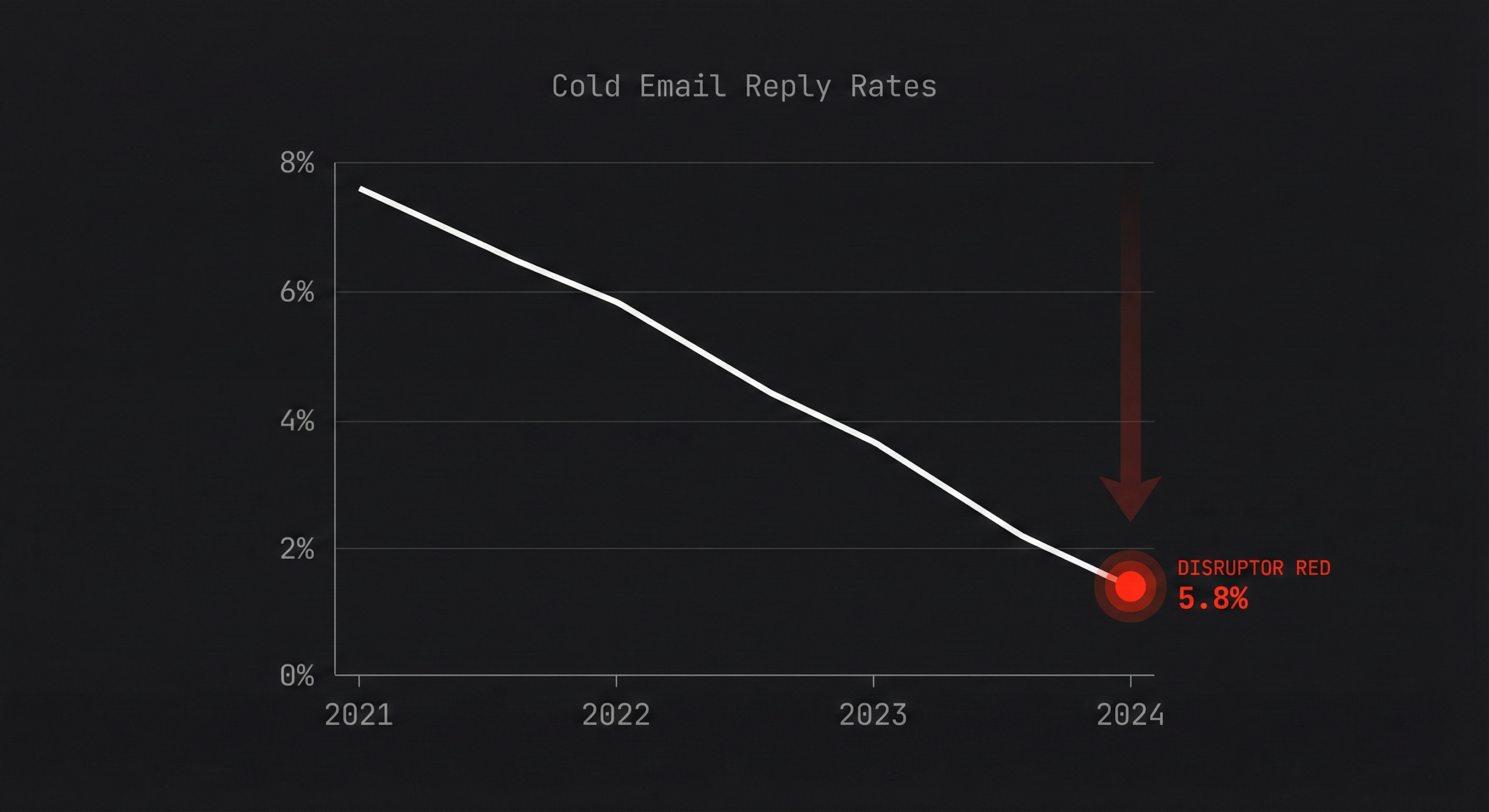
Reply rates dropped to 5.8% in 2024 – down 15% year-over-year from 6.8% in 2023. Open rates collapsed from 46% in early 2024 to 31-32% by mid-year. And the persistence myth that’s been drilled into every SDR? The data kills it.
The Numbers Nobody Wants to Talk About
Let’s look at what 16.5 million emails actually tell us:
Reply rates: 5.8%, down from 6.8% the previous year. That’s a 15% decline in twelve months.
Open rates: Started the year at 46%, ended at 31-32%. A collapse of over 30%.
The highest reply rate – 8.4% – came from just one email. Performance declined steadily with each follow-up.
Sequences of 4+ emails tripled unsubscribe and spam complaint rates.
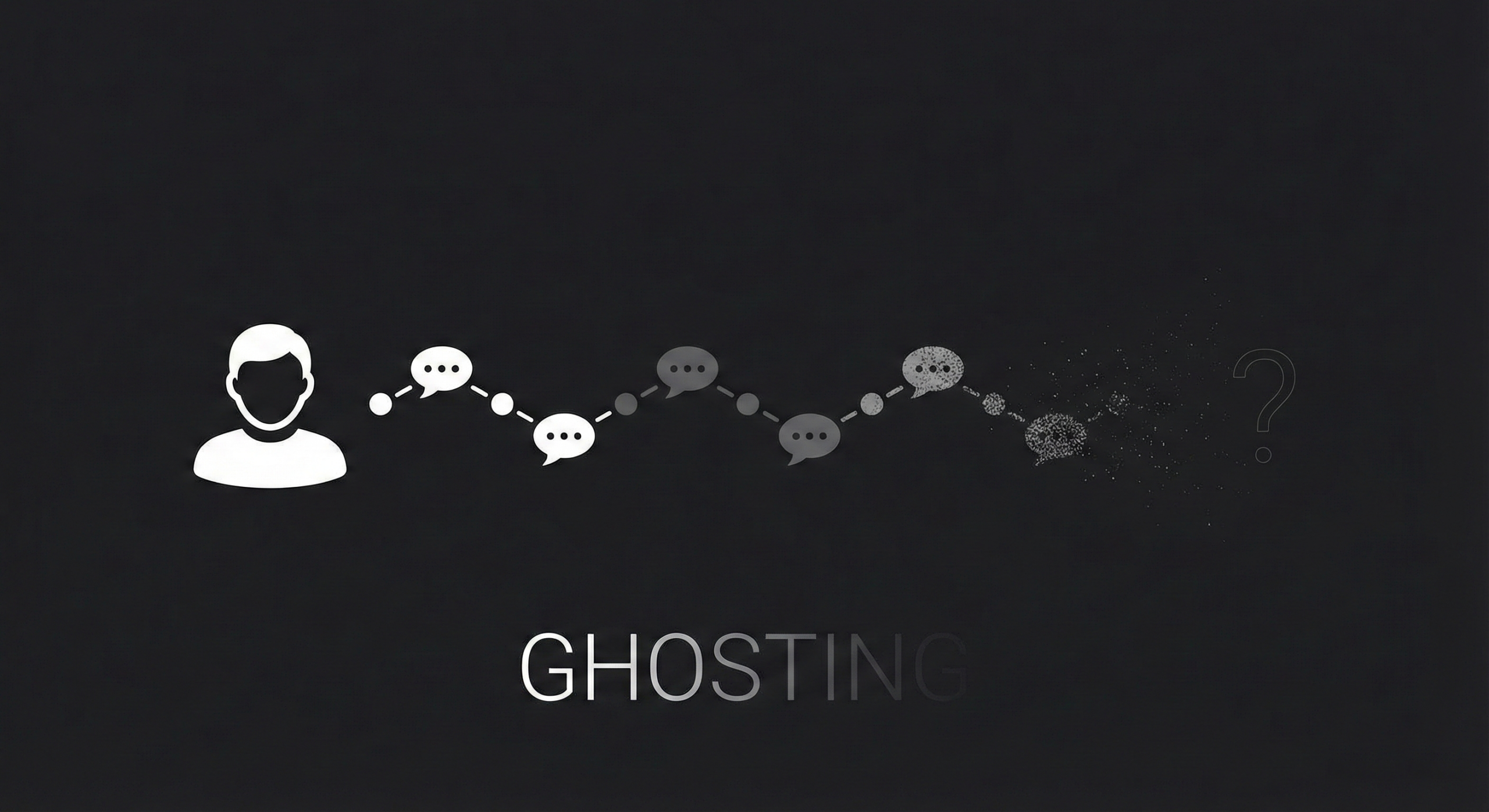
The math is brutal: if 32% of your emails are opened but only 5.8% generate any reply, the remaining 26% of openers made a conscious decision to ignore you. They saw your name, read your subject line, maybe skimmed your message – and categorized you as noise.
The Persistence Myth Is Dead
We’ve all been taught that persistence pays. The deal closes on the fifth touch, the eighth touch, the twelfth touch. Follow up until they buy or tell you to stop.
The Belkins data proves the opposite.
Every follow-up after the first email reduces your probability of engagement while increasing your probability of permanent brand damage. The more you persist, the worse your results – and the more you train prospects to filter you out.
This shatters decades of sales training dogma. But the data is clear across 16.5 million data points.
The 94% Waste Rate
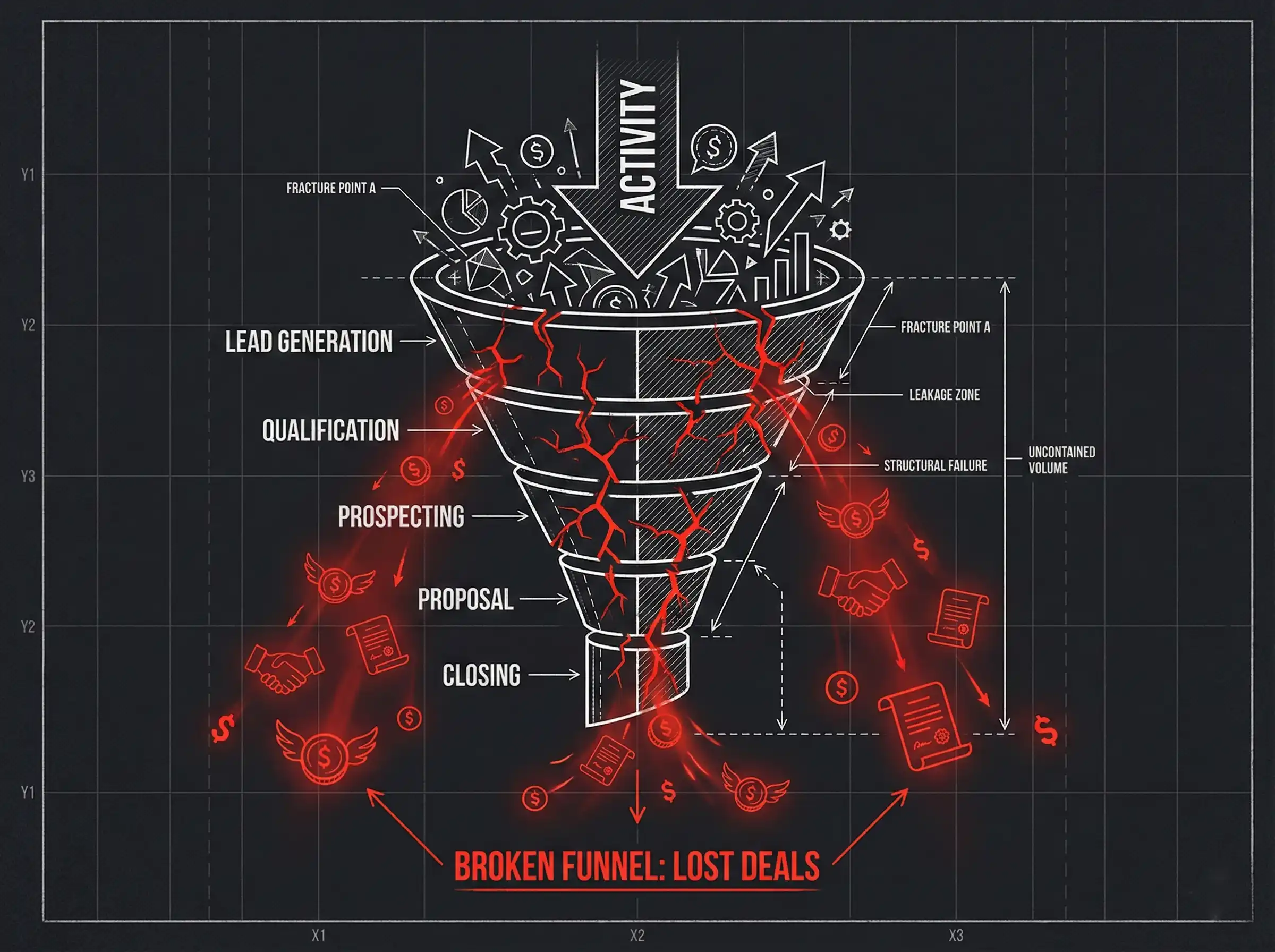
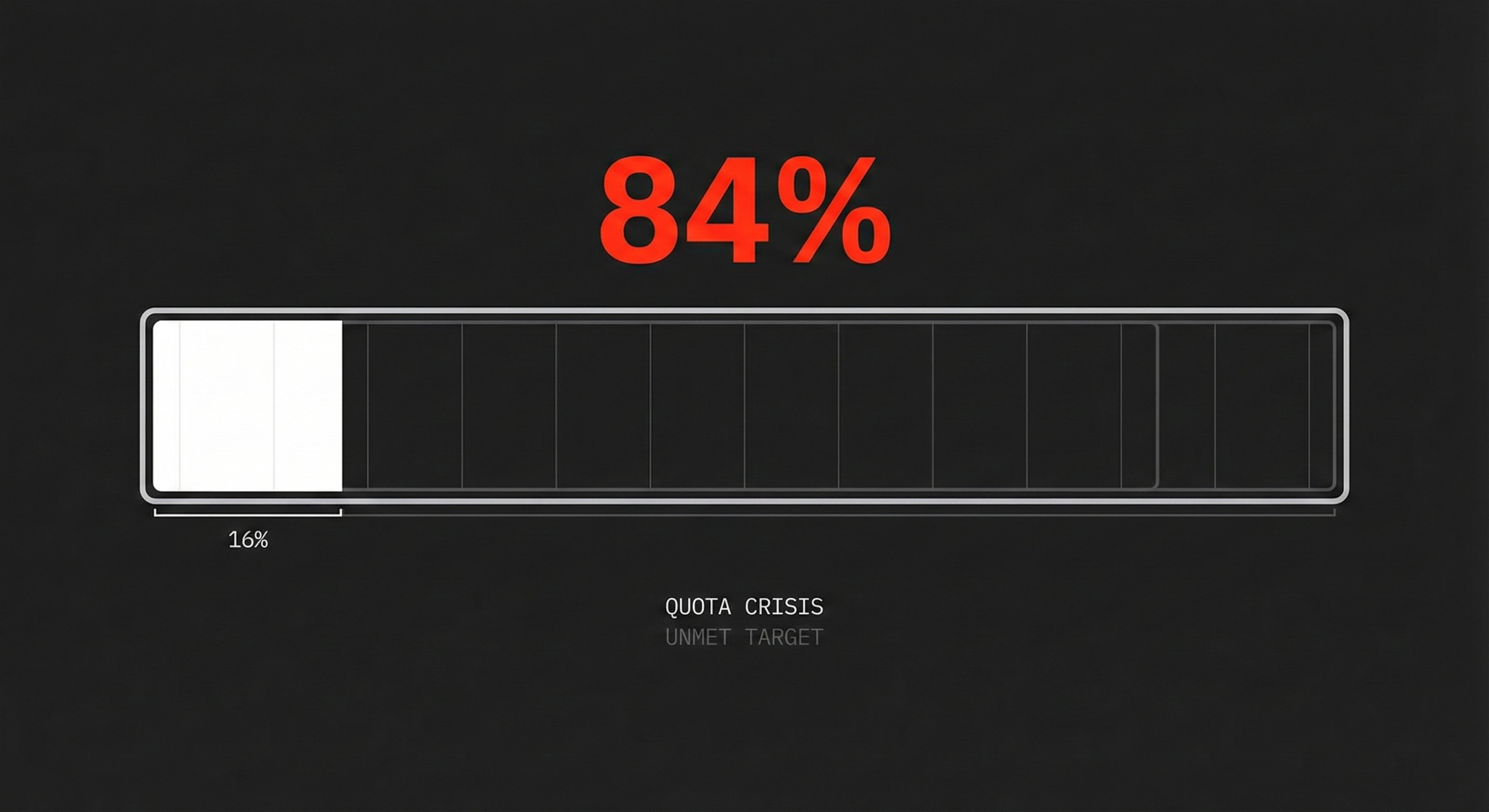
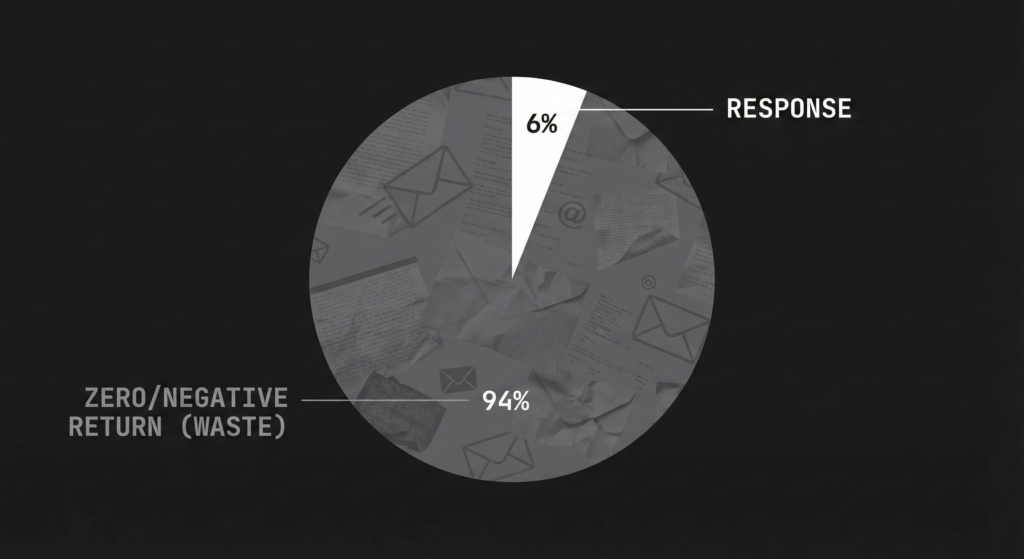
Here’s the number that should keep sales leaders up at night: 94% of mass-volume email effort generates zero or negative return.
In any other department – manufacturing, logistics, engineering – a 94% waste rate would shut down the operation immediately. Someone would get fired. Processes would be rebuilt from scratch.
In sales, we call it “grinding” or “hustle.” We celebrate the activity. We promote the reps who send the most emails.
This is a fundamental breakdown in management discipline.
The Hidden Cost Nobody Measures
The waste rate is bad enough. But there’s a cost that doesn’t show up on any dashboard.
According to Demand Gen Report’s 2024 research, 47% of buyers permanently avoid vendors who have spammed them. Not “for a while.” Not “until they have a need.” Permanently.
Think about what that means. Your SDR sends 1,000 emails this week. 5.8% reply – maybe 58 responses. But what about the other 942 people?
They didn’t just “not reply.” Many of them now associate your company with spam. When they actually have a problem six months from now and see your name, their reaction will be: “Ugh. Those guys.”
If even 20% of those non-responders permanently blacklist your company, you’ve destroyed 188 potential future opportunities to generate 58 conversations today.
You’re salting the earth to grow a single potato.
How We Got Here
When Predictable Revenue was published in 2011, a talented SDR could send 100 emails and expect 10-15 replies. The math worked. The model made sense.
Today, that same 100 emails generates 5-6 replies – and falling. But quotas haven’t adjusted. If anything, they’ve increased.
The response to declining conversion hasn’t been “work smarter.” It’s been “work more.”
Conversion rate dropped 50%? Send twice as many emails. Reply rate dropped to 6%? Increase sequence length to 12 touches. Meetings per rep dropped 30%? Hire more reps.
This is the logic of addiction, not strategy. When the drug stops working, addicts don’t question the drug – they increase the dose.
Aaron Ross himself has acknowledged the model is broken. The creator of “Predictable Revenue” has said the approach needs fundamental rethinking. But most sales organizations didn’t get the memo.
AI Is Making It Worse, Not Better
The introduction of generative AI isn’t solving this problem. It’s accelerating it.
With AI tools, a mediocre SDR can now write and send thousands of “personalized” emails in an hour. The seller perceives this as productivity. The market experiences it as pollution.
According to Salesforce’s 2024 State of Sales, 81% of sales teams are investing in AI. But only 20% have fully implemented it. The gap reveals the problem: most organizations are experimenting with AI as a volume multiplier rather than a precision tool.
Teams using AI for research and genuine personalization see 27% higher win rates. Teams using AI to send more generic emails faster see accelerated brand damage and declining response rates.
Same technology. Opposite outcomes. The difference is whether you’re using AI to add noise or to cut through it.

What This Means for Outbound
I’m not saying cold outreach is dead. I’m saying volume-based cold outreach is dead.
The data is clear: blasting hundreds of generic emails and hoping for a 5% reply rate isn’t a strategy. It’s a waste of resources that actively damages your brand and burns your territory.
What works now is different. It has to be. When the cost of sending an email trends toward zero, the only way to stand out is to send fewer emails – but make each one matter.
I don’t have the complete answer yet. I’m still working through what precision outreach actually looks like in practice. But I know the current model is broken, and the data proves it.
More on this as I figure it out.
The Old Way Is Dead.
57% miss quota. 40-60% lost to "no decision." The System is broken. This is the fix.
Instant access. No spam. Unsubscribe anytime.