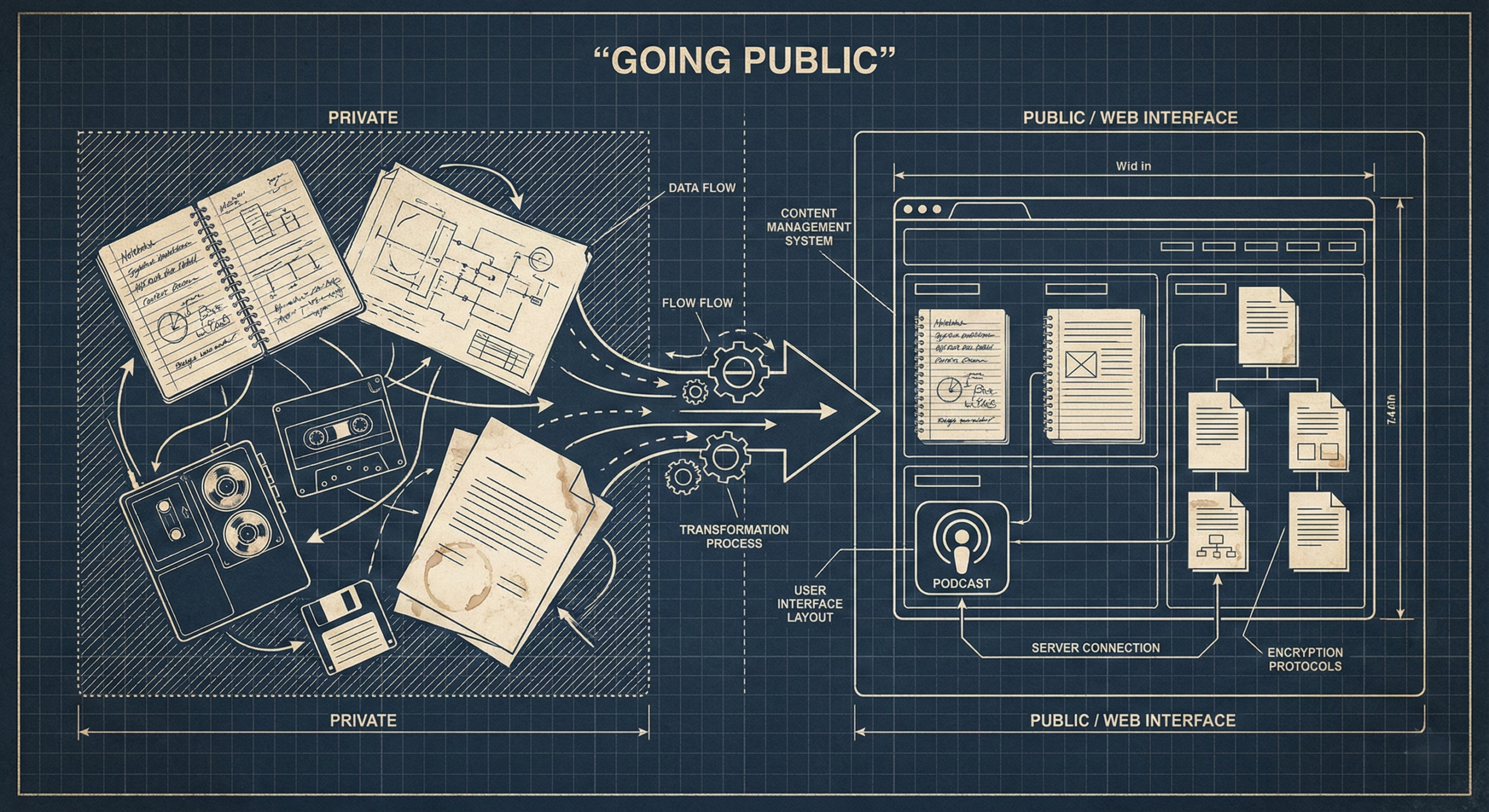
I printed everything out last weekend.
Every note. Every framework sketch. Every deal autopsy. Every observation scribbled on hotel notepads, airplane napkins, and the backs of conference agendas. Fifteen years of material, spread across my dining room table like evidence in a cold case.
It was chaos. And somewhere in that chaos, I finally saw the book.
The Problem with Having Too Much
Most people who want to write a book don’t have enough material. They have a concept, maybe a framework, and they’re trying to stretch it into 200 pages.
My problem was the opposite. I had too much.
Hundreds of deal notes. Dozens of framework iterations. Psychology research. Behavioral economics studies. Statistics I’d been collecting for a decade. Stories from every company I’d worked with. It wasn’t a book – it was a landfill.
The question wasn’t “what do I have to say?” It was “what order does this need to be in for someone else to understand it?”

The Architecture That Emerged
I kept asking myself: if someone picked this up knowing nothing about sales methodology, what would they need first? What comes before what?
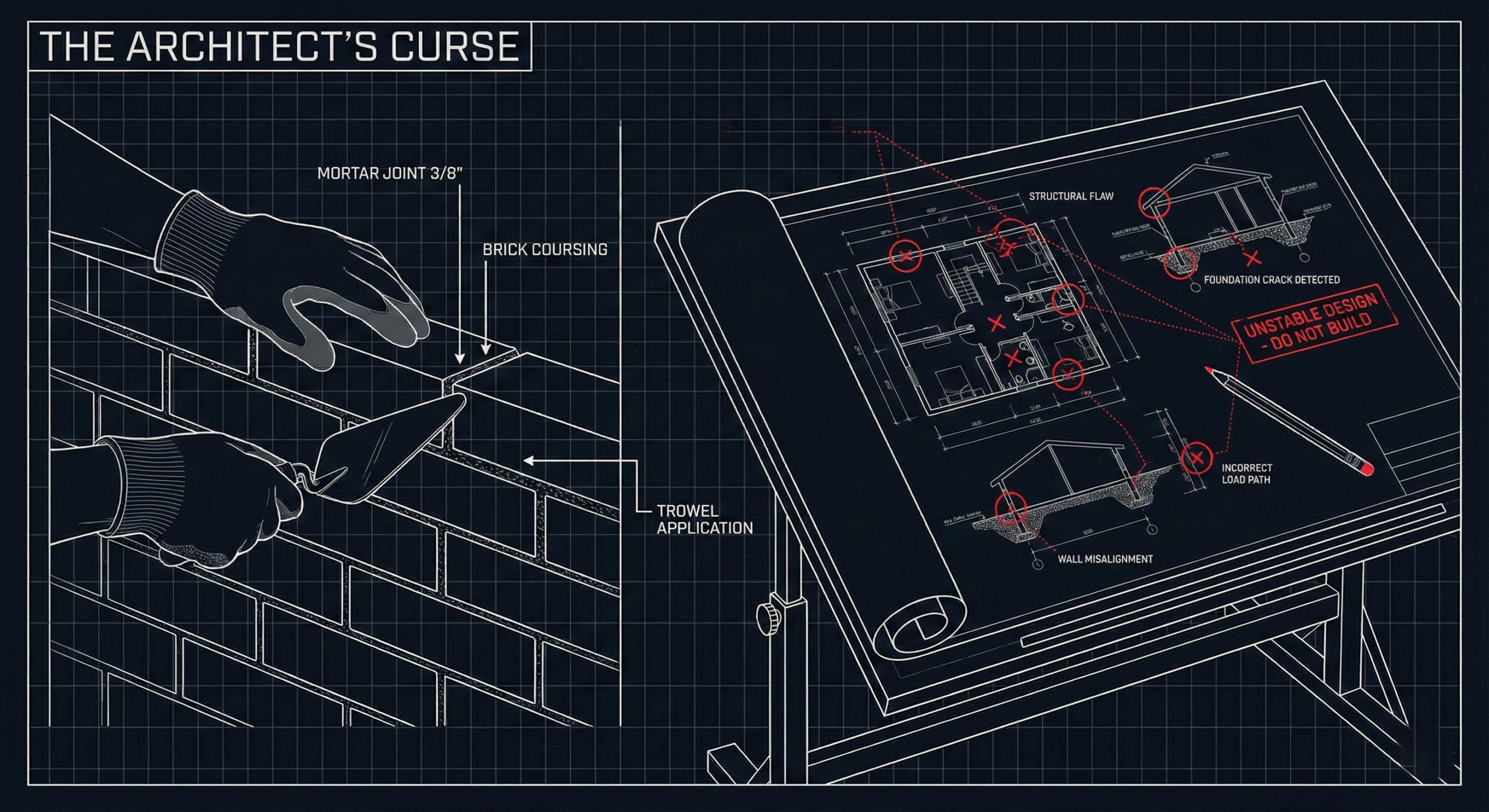
You can’t teach someone to build a house by starting with the paint color. You have to start with the foundation.
That realization unlocked everything.
The book needs to start with why. Why the old playbook is broken. Why the numbers are catastrophic. Why the methodologies everyone was trained on don’t work anymore. If a reader doesn’t believe there’s a problem, they won’t care about the solution.
Then it needs the physics. The behavioral science. The psychology. Why does the psychology I’ve observed actually work? Without the science, the tactics are just tricks. Why does status determine whether your words land or bounce? Without the science, the tactics are just tricks. With the science, they’re principles.
Then – and only then – the system. The pipeline stages. The qualification framework. The specific techniques for each phase of a deal.
Finally, how to scale it. How to implement this as a leader. How to coach it. How to measure it.
What It Looks Like Now
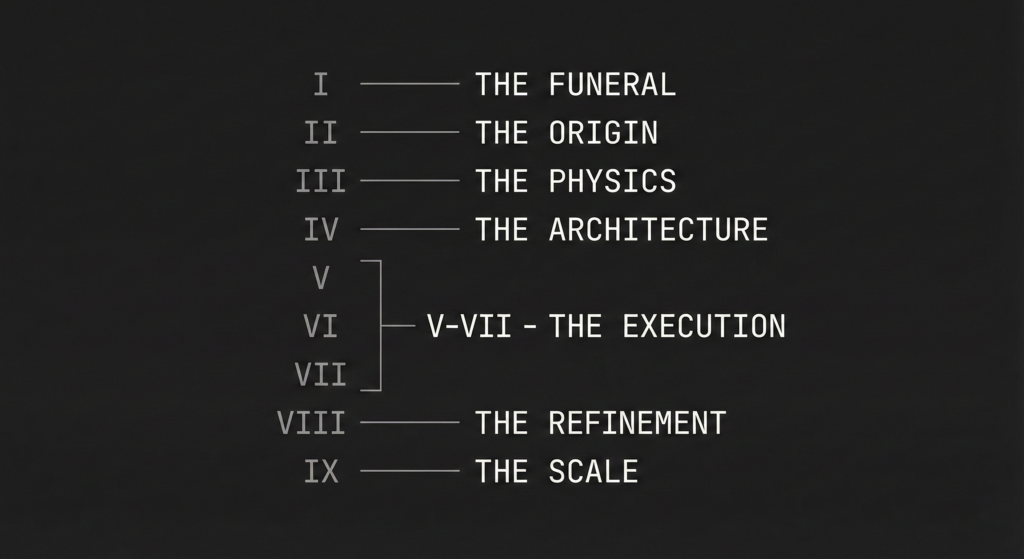
I’ve organized everything into nine parts:
Part I is the funeral. The death of the old model. The evidence that what we’re doing isn’t working.
Part II is the origin. Where this methodology actually came from – not theory, but field observation.
Part III is the physics. The behavioral science foundation that explains why inversion works.
Part IV is the architecture. The system. The structures that make everything else possible.
Parts V through VII are the execution – each stage of the pipeline, in sequence, with the specific techniques for each.
Part VIII is refinement. Tonality. Objection prevention. AI integration.
Part IX is scale. How leaders implement this across teams.
Twenty-plus chapters. Somewhere around 70,000 words when it’s done.
It’s ambitious. Maybe too ambitious. But anything less wouldn’t be complete.
What I’m Learning About Writing
I’ve never written a book before. I’ve written decks, proposals, emails, strategy documents – but never something this long that has to hold together as a single argument.
The hardest part isn’t the writing. It’s the sequencing.
Every chapter references concepts from other chapters. The pipeline stages reference the qualification framework. The qualification framework references the psychology. The psychology references the problem statement. Everything is connected, and if you explain things in the wrong order, none of it makes sense.
I’ve reordered the outline four times already. I’ll probably reorder it again.
But for the first time, I can see the whole thing. I know where each piece goes. I know what each chapter needs to accomplish before the next one can work.
Now I just have to write it.
What’s Next
I’m starting with Part I – the problem chapters. The evidence. The data. The funeral for the old model.
It feels right to begin there. Before I can convince anyone that inversion works, I have to convince them that what they’re currently doing doesn’t.
I’ll share more as it develops. The frameworks I’m refining. The research I’m incorporating. The decisions I’m making about what to include and what to cut.
Fifteen years of notes. One sales methodology. One book. The outline finally makes sense.
Now the real work begins.
Seeing Similar Patterns?
I'm writing a book about what happens when you flip the assumptions. Real stories. Real results. Anonymized, but true.
Instant access. No spam. Unsubscribe anytime.