You lost the deal.
Not to a competitor. Not to budget cuts. Not to bad timing.
You lost it to nothing.
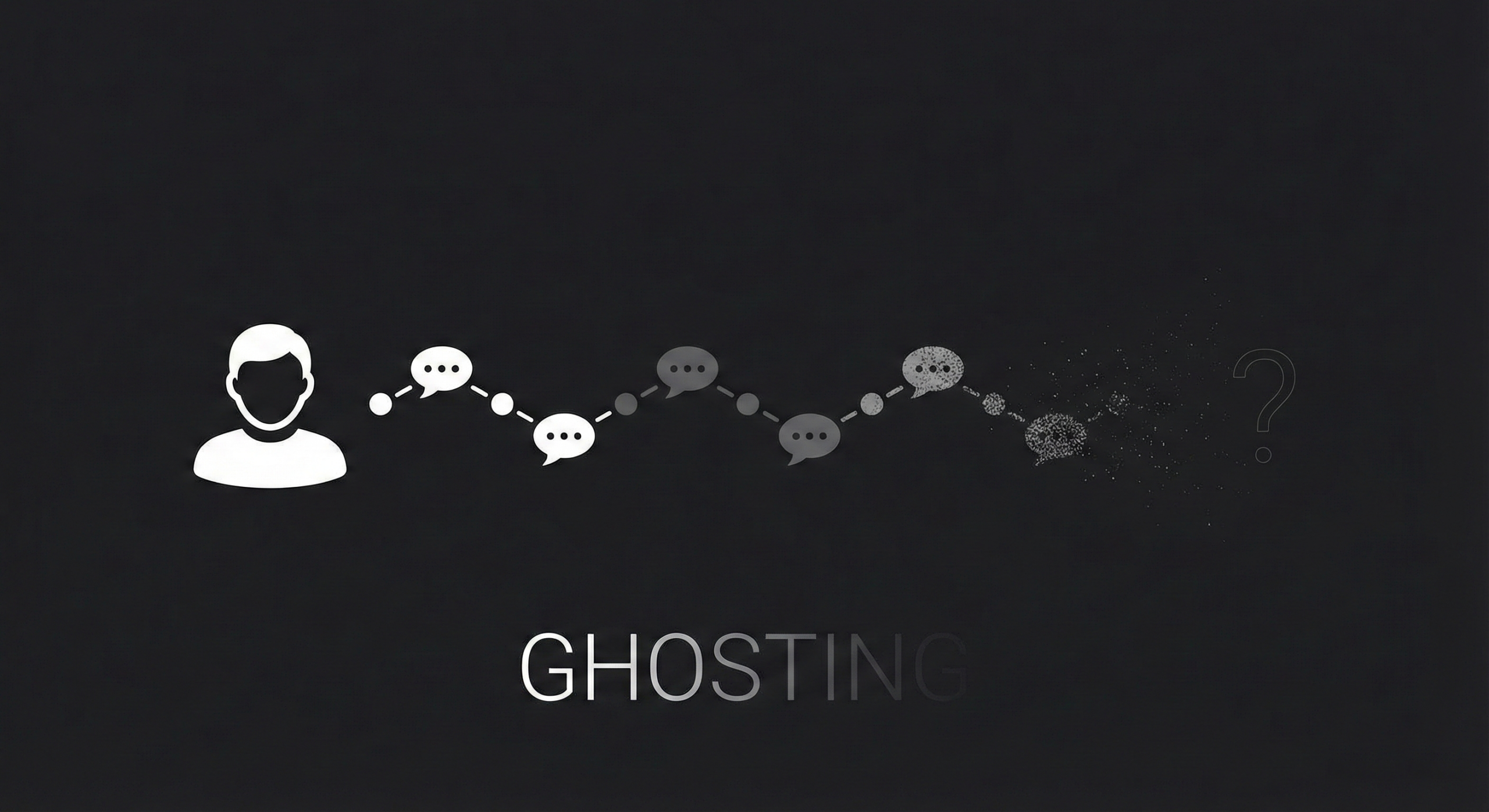
The buyer simply… didn’t decide. The deal sat in your pipeline for months, got pushed from quarter to quarter, and eventually died of neglect. No dramatic loss. No competitor celebration. Just silence.
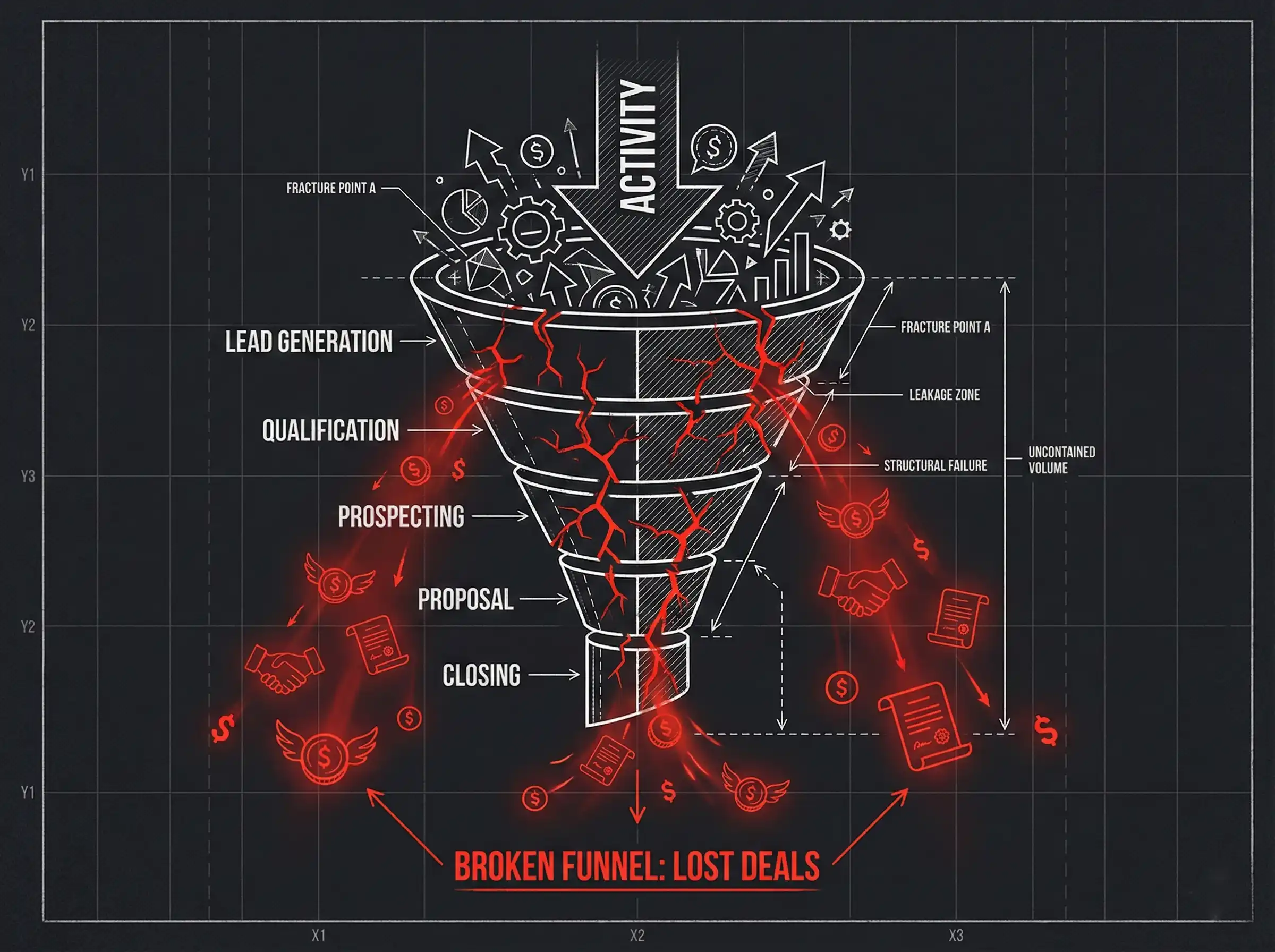
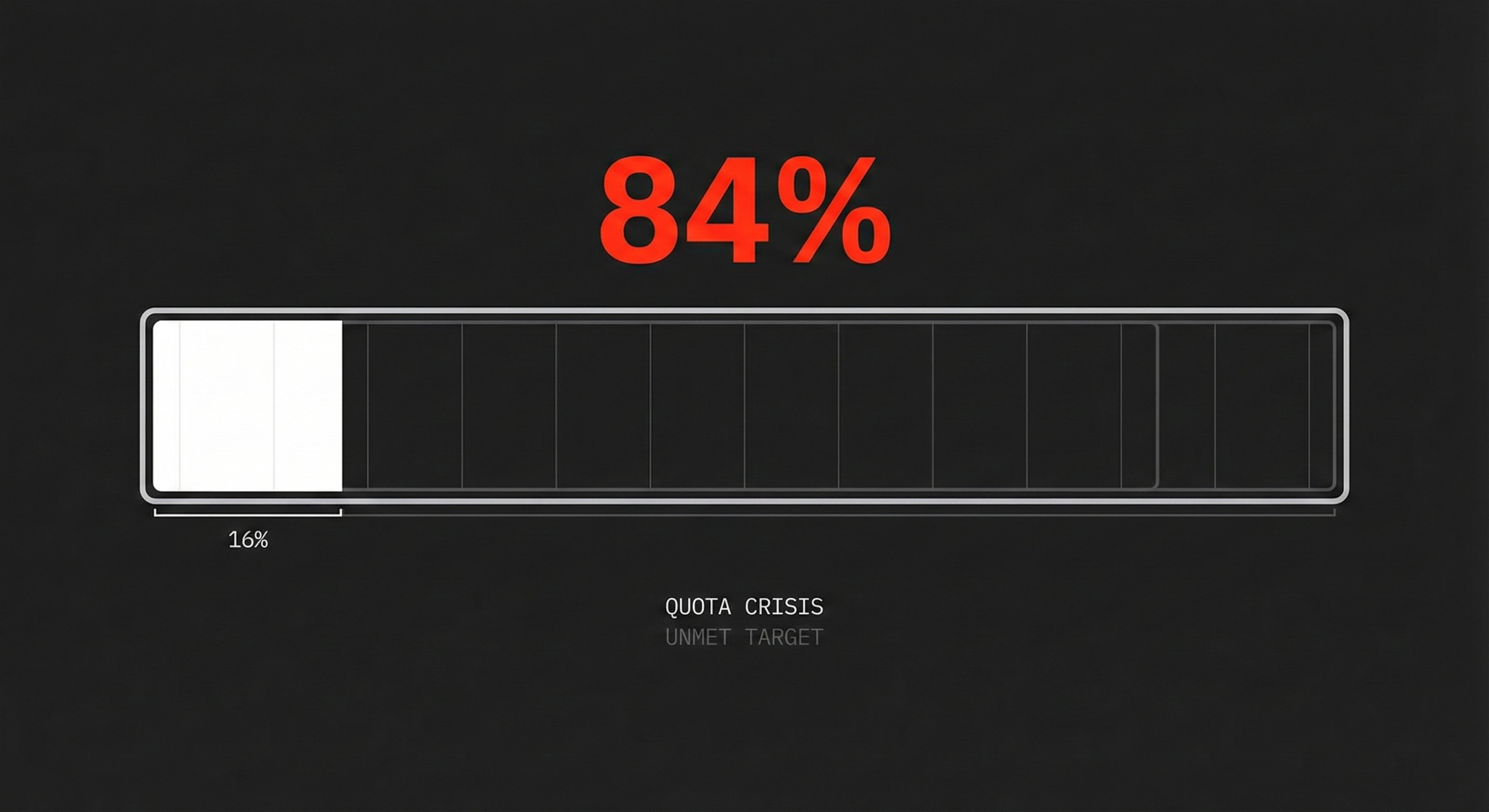
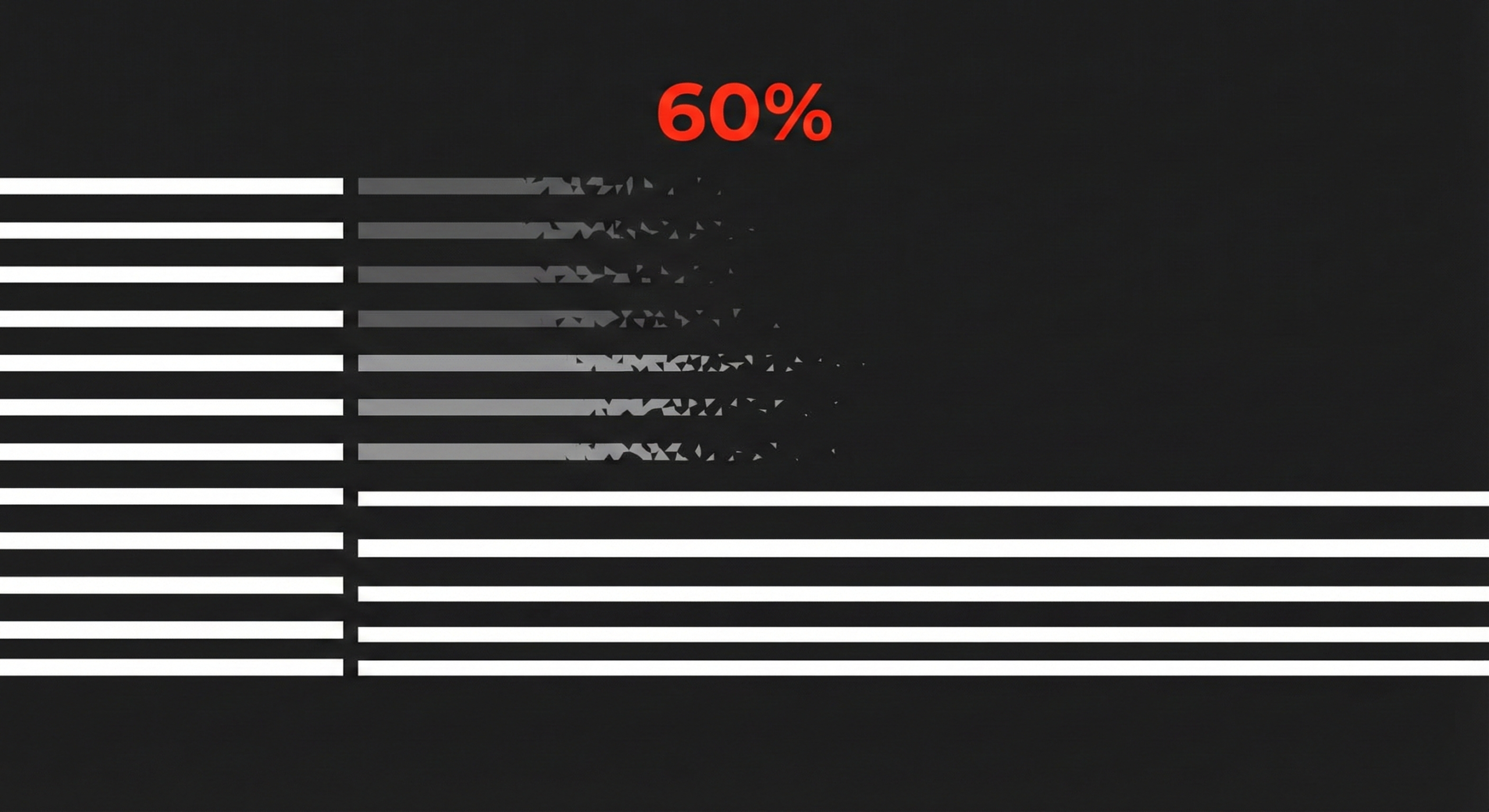
If this sounds familiar, you’re not alone. According to Matthew Dixon’s research for The JOLT Effect, 40-60% of the average salesperson’s pipeline is lost to “no decision” – not to competitors.
CSO Insights confirms it: 58% of forecasted deals end in “no decision.” Of those, 71% had a close date in the CRM. The average deal that ends in no-decision was pushed 4.2 times before being abandoned.
Your biggest competitor isn’t the company across town. It’s your buyer’s inability to decide.
Why Buyers Don’t Decide
Dixon’s research breaks down no-decision losses into two categories:
44% are status quo losses. The buyer underestimates the cost of doing nothing. The problem feels manageable. The pain is real but not urgent. “We’ll get to it next quarter.”
56% are pure indecision. Analysis paralysis. Too many options. Too many stakeholders. Too much risk. The buyer wants to decide but can’t.
Only 13% of buyers are truly decisive. The other 87% struggle with some form of indecision.
This is why pushing harder doesn’t work. You’re not losing to a competitor you can outsell. You’re losing to psychology you’re not addressing.
The Status Quo Trap
Daniel Kahneman and Amos Tversky documented this extensively: people inherently prefer their current state to any proposed change, even if the current state is mediocre.
Your buyer has a problem. They know it. They’ve admitted it. But the cost of fixing it – the internal friction, the vendor risk, the political capital required – still feels higher than the cost of living with it.
It’s the check engine light that’s been glowing for six months. The marriage that’s cold but still intact. A real problem that hasn’t yet become unbearable.
CEB/Gartner research confirms the pattern: 60% of qualified pipeline consists of deals with “latent pain” only – problems that are annoying but manageable. These deals close at less than 15%. Deals with verified “active pain” close at over 50%.
The Complexity Problem
Even when buyers want to decide, the modern B2B purchase makes it nearly impossible.
Gartner reports that 77% of B2B buyers rate their last purchase as “very complex or difficult.” The average B2B deal involves 6-10 decision-makers. For enterprise deals over $125K with 6+ month cycles, that number climbs to 8-11 stakeholders.
Forrester’s 2024 research pushes even higher: the average B2B purchase now involves 13 stakeholders across multiple departments – up from just 5 people a decade ago.
Here’s where it gets ugly: Gartner’s 2025 research found that 74% of B2B buying teams exhibit “unhealthy conflict” during the decision process. Conflicting objectives. Internal disagreements. Stakeholders overruling each other.
This is why deals stall. This is why “no decision” kills more pipeline than competitors do.
The Battle You’re Not In
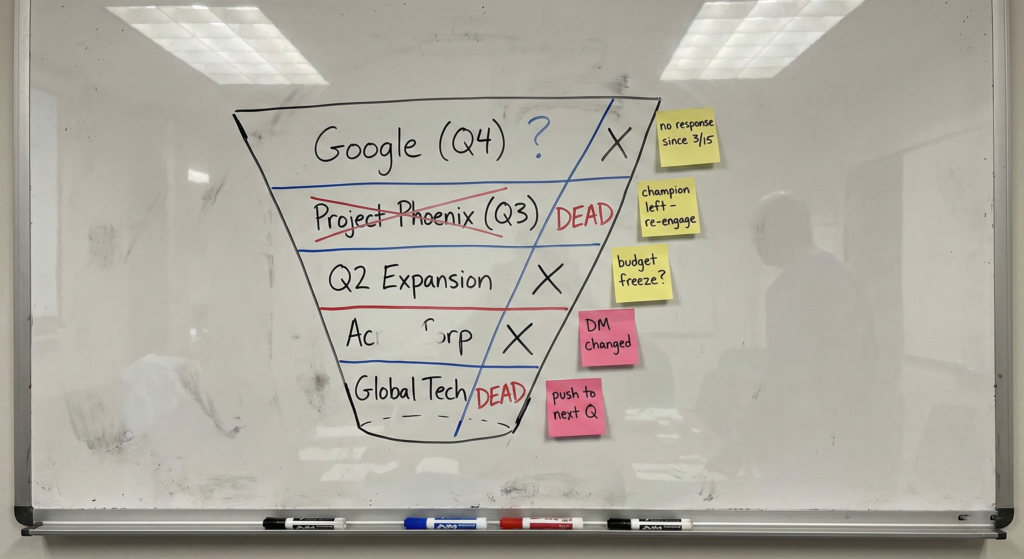
Only 17% of buying time is spent meeting with potential suppliers. The other 83%? Internal alignment and consensus-building. Meetings you’re not in. Conversations you can’t influence. Politics you don’t see.
CSO Insights found that the #1 reason for stalled deals is “inability to navigate customer organization.” Not product fit. Not price. Navigation.
Of deals that ended in no-decision, 67% had a qualified champion. Someone inside wanted it to happen. They just couldn’t make it happen alone.
The battle isn’t won in your meetings. It’s won in the meetings you’re not in.
What Actually Works
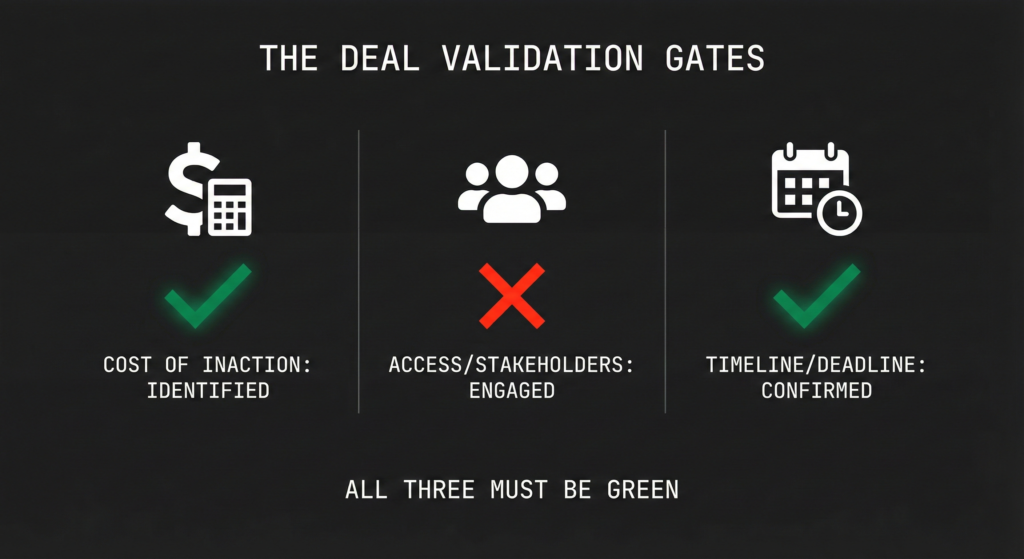
The data points to three interventions that dramatically reduce no-decision losses:
1. Make the Status Quo Unbearable
Stop selling the gain. Reveal the loss.
Losses hurt 2-2.5x more than equivalent gains. A buyer who understands they’re bleeding $47,000 per month by doing nothing will act. A buyer who might save $47,000 someday will wait.
The key is making them own the math. Not your ROI calculator – their Cost of Inaction, calculated with their numbers, verified by their team. A buyer who owns the math of their own failure closes themselves.
2. Win the Meetings You’re Not In
Forrester found that 74% of B2B buyers choose the vendor that was first to add value to their decision process. Deals where sellers helped structure the internal evaluation closed at 2.3x the rate of deals where sellers waited for buyers to define the process.
Your champion can’t sell internally alone. They need ammunition. They need a clear narrative. They need to know exactly who will object and what those objections will be – before the meeting happens.
Buying groups that reach genuine consensus are 2.5x more likely to close high-quality deals. Your job isn’t just to sell your champion. It’s to arm them to sell everyone else.
3. Create a Deadline That’s Real
When Forrester asked buyers why they delayed purchases, the top answer was: “Nothing forced us to decide now.”
Deals with a compelling event – a real deadline with real consequences – close at 3.4x the rate of deals without one.
This isn’t about manufactured urgency or discount deadlines. It’s about connecting the purchase to something the buyer already cares about: a product launch, a compliance deadline, a board meeting, a fiscal year.
No compelling event, no decision. It’s that simple.
The Real Pipeline Audit
Look at your current pipeline. For every deal in Stage 3 or beyond, ask:
Does the buyer own the math of their failure? Not your ROI – their Cost of Inaction, in their words, with their numbers.
Do you have access to everyone who can kill this deal? Not just your champion – the economic buyer, the technical veto, legal, procurement.
Is there a real deadline? Not your quarter-end – a date that matters to them, with consequences if they miss it.
If the answer to any of these is “no” or “I don’t know,” the deal isn’t qualified. It’s a wish.
And wishes don’t close.
79% of Deals Don't Close.
That's not a performance problem. That's a methodology problem. The book explains why - and what to do instead.
Instant access. No spam. Unsubscribe anytime.